Belgium produced one of the most dramatic results of the FIFA World Cup 2026 as they came from 2-0 down to beat Senegal 3-2 after extra time in Seattle to book their place in the last 16. Youri Tielemans put the game to bed with a 125th-minute penalty (after a VAR review) to complete a comeback that seemed unlikely for much of the contest.
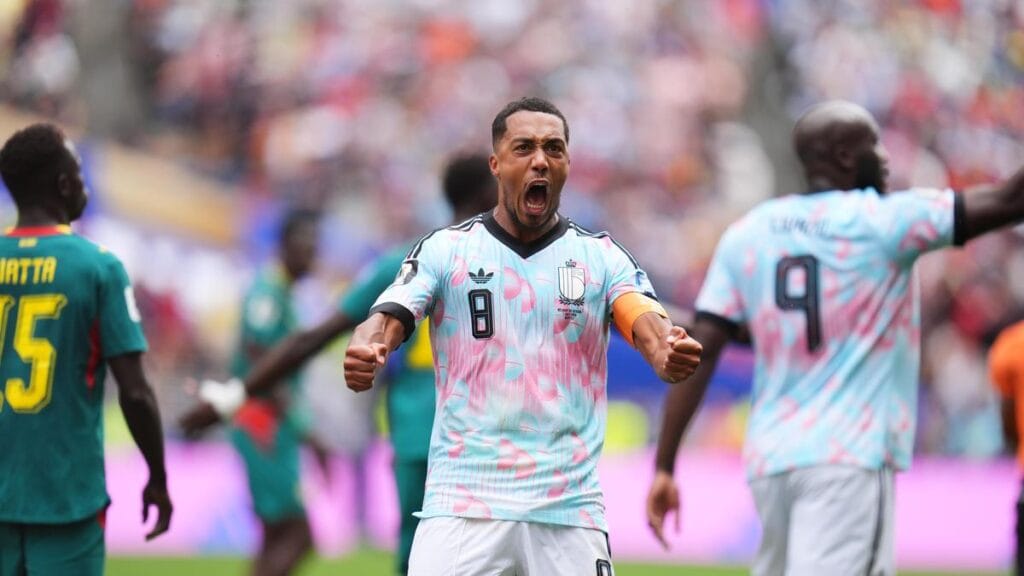
Belgium players celebrate after Youri Tielemans’ 125th-minute penalty sealed a remarkable 3-2 extra-time comeback win over Senegal in Seattle. Image Credit: The Hindu
Belgium stunned Senegal 3-2 after extra time in their World Cup last-32 clash in Seattle on Wednesday, completing a remarkable comeback from two goals down to move into the round of 16. The winning moment came deep into stoppage time of extra time, when Youri Tielemans converted a penalty after Senegal’s Lamine Camara was judged to have fouled him following a VAR review. The finish was clinical, but the road to that moment was anything but easy.
For a long time, Senegal looked set to pull off a major upset. They had Belgium on the ropes, built a 2-0 lead and forced the favourites into survival mode. But Belgium refused to collapse, kept pushing and slowly turned pressure into opportunity. That resilience ultimately changed the match. Yeh comeback kaafi special thi because it showed why experience still matters in knockout football.
How Belgium Turned It Around
Belgium’s comeback was built on persistence rather than panic. At 2-0 down, many teams would have lost shape or started forcing passes in desperation. Belgium instead kept the game alive, stayed committed to their attacking plan and waited for chances to appear. The Hindu has covered the full story.
Their first breakthrough gave them belief. Once Belgium scored, the momentum began to shift, even if Senegal still looked dangerous. The second goal brought real tension into the game, and from that point forward the contest became a mental battle as much as a football one. Senegal were still defending well, but Belgium had the upper hand in energy and urgency.
The deciding moment came in the 125th minute. As the ball flashed across the face of goal, Senegal’s Lamine Camara slid in on Tielemans and conceded a penalty after a VAR review. Tielemans stepped up under immense pressure and picked out the top corner. That finish was not just a goal; it was the full expression of composure in the most exhausting phase of the match.
Belgium deserves credit because this was not a lucky escape. They were down two goals, deep in extra time, and still found a way to win. That kind of recovery usually comes from belief, game intelligence and a willingness to keep attacking even when the odds look terrible.
Senegal’s Strong Start
Senegal will feel disappointed, but they also produced a performance that deserved respect. For much of the game, they played with confidence and structure, taking advantage of Belgium’s early uncertainty and turning that into a two-goal advantage. Their ability to strike first and then control the match for long periods showed why they are so difficult to play against.
The danger for Senegal was that they could not quite finish the job once Belgium began to push back. In knockout football, that can be decisive. A two-goal lead may look comfortable, but against a side with Belgium’s quality it is never truly safe. Once Belgium found their rhythm, Senegal were forced to defend deeper and deeper.
Losing in extra time is always painful, especially after leading by two goals. But Senegal’s performance was not wasted. They showed tactical discipline, physical strength and the attacking confidence to trouble one of the tournament favourites. In many ways, they left the field with pride, even if the result hurt badly.
Tielemans and the Big-Match Moment
Youri Tielemans will now have one of the defining moments of Belgium’s campaign on his record. A 125th-minute penalty is the sort of pressure kick that can shape a tournament, and he executed it perfectly. In knockout matches, the players who handle the final touch are often remembered more than those who spent the rest of the game working for it.
What made the moment more dramatic was the VAR review. Modern football has made such pauses part of the story, and this one was no different. The foul on Tielemans needed close inspection, but once the referee pointed to the spot, Belgium had the chance they had worked all match to create. Tielemans took responsibility and delivered.
That is the difference between good teams and resilient teams. Good teams create chances. Resilient teams keep believing until the final whistle. Belgium looked out of the tournament for long stretches, but Tielemans’ finish brought them back to life.
Background and Context
Belgium’s reputation in recent World Cups has often been tied to technical quality and tournament expectations. They are regularly among the teams viewed as capable of making a deep run, which means even a single poor result can put pressure on the squad. A comeback like this can change the mood around a team very quickly.
Senegal, meanwhile, continue to build a strong reputation on the world stage. They have become a side that brings athleticism, intensity and confidence to big matches. Even against elite opponents, they rarely look intimidated. That makes them dangerous in any tournament setting.
This match also fits into a broader World Cup theme: the knockout stages often reward teams that can absorb pressure and strike back under stress. Belgium did that here, but Senegal nearly did enough to stop them. The difference was just a handful of moments and one decisive penalty.
Timeline
Early stages: Senegal begin strongly and take control of the match.
First half / regulation period: Senegal build a 2-0 lead and appear to be in command.
Belgium response: Belgium scores and begins to shift momentum.
Late stages: Senegal defend under heavy pressure as Belgium chase an equaliser.
Extra time: The match remains level enough to go deep into the final phase.
125th minute: VAR awards Belgium a penalty after Camara’s challenge on Tielemans.
Final moment: Tielemans scores into the top corner and Belgium wins 3-2.
Also Read: Kane’s Magic Helps England Surmount DR Congo and Reach FIFA World Cup 2026 Round of 16
Why This Matters
This matters because knockout football is often decided by mentality as much as talent. Belgium showed they could survive when everything seemed to be going wrong, and that is a major sign of tournament strength. On the other hand, Senegal showed they can compete with elite opposition and make a favourite look vulnerable.
It also matters because results like this can change momentum for the rest of the tournament. A team that wins in dramatic fashion often carries emotional energy into the next round. Yeh issue kaafi important hai because confidence in football is real, and a comeback like this can lift an entire squad.
For fans, this is the kind of World Cup match that creates memory. Scores matter, but the emotional arc matters too. A 2-0 lead, a comeback, extra time and a 125th-minute penalty are exactly the kind of story that keeps people talking.
India Angle
For Indian football fans, Belgium’s comeback is easy to connect with because it shows how quickly a match can swing in knockout football. In Hinglish, seedhi baat yeh hai: jab aap sochte ho game khatam ho gaya, tabhi football kuch aur hi twist le leta hai. That unpredictability is why the World Cup has such a strong pull in India.
Indian readers also tend to appreciate underdog energy. Senegal’s brave performance will resonate because many fans enjoy seeing a less-fancied team challenge a global favourite. At the same time, Belgium’s comeback provides a lesson in never giving up until the last second.
There is also a broader sporting message for Indian audiences: pressure handling matters. Whether it is football, cricket or any knockout tournament, the ability to stay calm late in the game often decides the winner. That is exactly what Tielemans and Belgium managed here.
Analysis
My view is that Belgium’s win says as much about mentality as quality. They did not dominate the match for 90 minutes, but they proved they can fight through adversity. That is often the difference in World Cup knockout football, where a single tactical mistake or missed chance can end a campaign.
Senegal, however, should not be treated as the losing side in a simple sense. They showed tactical maturity, physical sharpness and the courage to take the game to Belgium. If anything, this match could enhance their reputation for future tournaments. They were only a few moments away from one of the biggest upsets of the stage.
The late VAR-driven penalty also reflects how modern football narratives are shaped. More than ever, tournament stories are decided by tiny margins, replay reviews and late composure. Belgium benefited from all three at once. That combination made the ending unforgettable.
What Next
Belgium now moves into the World Cup last 16, where the stakes will rise again and the margin for error will shrink further. They will need to recover physically and mentally from a long, high-pressure match before facing a tougher knockout test.
For Senegal, the tournament may be over, but the performance should still be seen as a statement. They pushed a heavyweight to the brink and only lost in the final seconds of extra time. That kind of display can shape respect and expectations going forward.
Belgium will likely review their defensive issues, because falling two goals behind in a knockout tie is dangerous no matter how good the comeback ends up being. If they want to go deeper, they cannot keep giving opponents that kind of head start.
Conclusion
Belgium’s 3-2 win over Senegal was one of the defining World Cup comeback stories of the tournament so far. Senegal led 2-0 and looked in control, but Belgium kept their belief, fought through extra time and won it with a 125th-minute Tielemans penalty. It was a match built on pressure, patience and late drama, with Belgium surviving and Senegal earning respect. In World Cup football, that is exactly the kind of game people remember long after the final whistle.
Written By A. Jack