Petar Sucic’s long-range strike gave Croatia the lead before Derrick Luckassen equalized from a set piece. But Vlasic’s late header ensured Croatia moved into the knockout stage, while Ghana finished third in the group.
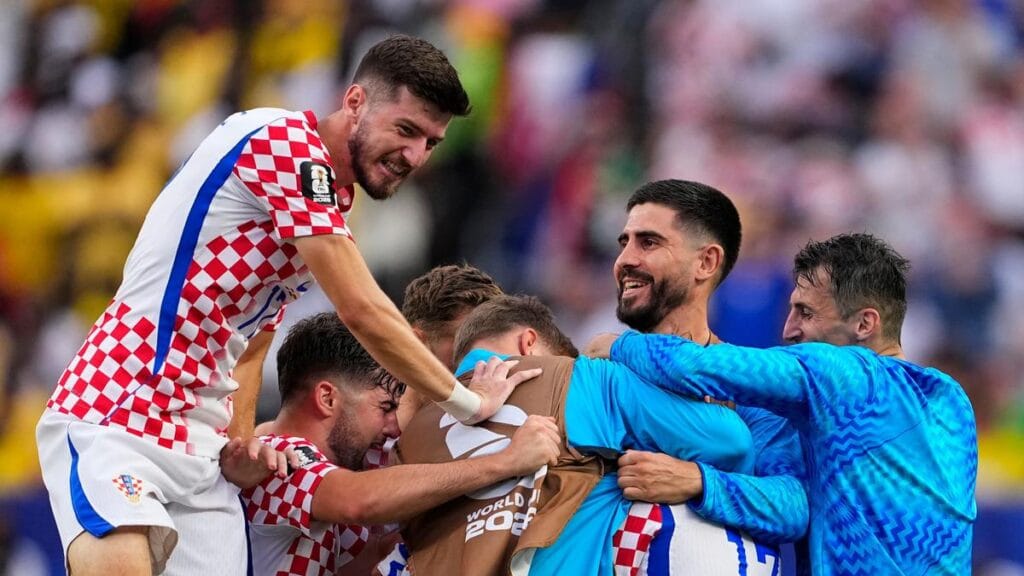
Croatia players celebrate Nikola Vlasic’s late header against Ghana. Image Credit: The Hindu
Croatia defeated Ghana 2-1 on Sunday, June 28, 2026, to secure their spot in the FIFA World Cup 2026 knockout rounds. The victory came in a closely fought Group L match in which Croatia took the lead through Petar Sucic’s long-range effort, only for Ghana to respond through Derrick Luckassen from a free kick. Just when the match seemed headed for a nervy finish, Nikola Vlasic rose to head in the winner from a Luka Modric corner in the 83rd minute.
The result means Croatia finishes second in Group L behind England, while Ghana end the group in third place. Ghana had already done enough to reach the last 32 after beating Panama 1-0 and drawing 0-0 with England, but Croatia’s win gave them the better position going forward. In a tournament where every small detail matters, Croatia’s late composure made all the difference.
How Croatia Won the Match
Croatia’s victory was built on patience, set-piece quality and the ability to keep pushing until the final stages. Petar Sucic gave them the lead in the first half with a long-range strike, a goal that rewarded Croatia’s willingness to test Ghana from distance. That opening goal mattered because it forced Ghana to take more risks later in the game. The Hindu has covered the full story.
Ghana was not passive, though. They fought back and equalized through Derrick Luckassen, who poked in from a free kick. That moment shifted the mood of the match completely. Suddenly, Croatia’s lead was gone and the game became a test of nerve. Both sides knew a single goal could decide the outcome.
That is where Croatia’s experience came through. Luka Modric, still one of the most influential midfielders in world football, delivered a precise corner and Vlasic met it with a decisive header. It was not a flashy goal, but it was a mature one. Tournament football often rewards teams that stay calm in the final moments, and Croatia did exactly that.
Vlasic’s Winner and Modric’s Influence
Nikola Vlasic’s 83rd-minute header was the kind of moment that can define a campaign. Coming from a corner, it showed both Croatia’s aerial threat and Modric’s enduring quality as a creator. Even at this stage of his career, Modric remains capable of producing the kind of delivery that changes games.
Vlasic’s finish also highlighted an important truth about Croatia: they are not a one-player team, but they do rely on experienced leaders to guide them when pressure rises. Modric is still the beating heart of that midfield, and his role in the winning goal underlined why Croatia continues to be so difficult to beat in major tournaments.
This was a proper knockout-style performance even though it took place in the group stage. Croatia did not panic after conceding the equalizer. Instead, they kept the shape, trusted their quality and found the winner late. That kind of maturity is why they remain one of the tournament’s most respected teams.
Ghana’s Strong but Incomplete Run
Ghana’s campaign ended in third place, but their tournament should not be judged too harshly. They had already secured a place in the last 32 thanks to a 1-0 win over Panama and a 0-0 draw with England. That means they were able to do enough in the earlier matches to stay alive even after this defeat.
Still, the loss to Croatia will leave some frustration. Ghana had shown they could be compact, competitive and hard to break down, but they could not resist Croatia’s late pressure. The equalizer briefly gave them hope of taking something from the match, but their defensive structure broke down at the most important moment.
In a group like this, finishing third instead of second can matter because it may affect the next opponent and the path through the knockouts. Ghana has survived, but they will need to reset quickly if they want to turn qualification into something more meaningful.
Background and Context
Croatia came into the World Cup with a reputation built on discipline, technical skill and tournament resilience. As the 2018 World Cup runners-up, they are no strangers to deep runs in major competitions. Their style is not usually based on high-tempo chaos but on control, structure and experience. Sunday’s result fit that identity perfectly.
Ghana, meanwhile, has often been one of Africa’s most watched sides at the World Cup because they combine athleticism, spirit and unpredictability. They have already shown enough to suggest they can trouble opponents, especially with set pieces and quick transitions. But against a team like Croatia, the margins are slim. One lapse at a corner can decide everything.
Group L itself produced a strong contrast. England topped the group after beating Panama 2-0, Croatia finished second, and Ghana advanced as third-place qualifiers. That kind of group dynamic is important because it affects the knockout bracket and shapes the tournament’s next stage.
Timeline
First half: Croatia takes the lead through Petar Sucic’s long-range strike.
Second half: Ghana level the match when Derrick Luckassen pokes home from a free kick.
83rd minute: Luka Modric delivers a corner and Nikola Vlasic heads in the winner.
Full time: Croatia wins 2-1 and advances to the round of 32.
Group conclusion: Croatia finishes second in Group L behind England; Ghana finishes third but also qualifies.
Also Read: England Clinch Group L Crown With Clean Sheet Against Panama as Harry Kane Makes World Cup History
Why This Matters
This matters because World Cup knockout qualification is about more than surviving the group. It also shapes momentum, confidence and the quality of the path ahead. Croatia’s late win means they go forward with belief and a stronger tournament identity. Ghana, meanwhile, will need to treat the loss as a lesson rather than a setback that defines their campaign. Yeh issue kaafi important hai because once the knockouts begin, one goal can decide the whole journey.
It also matters because Croatia continues to prove that experience can still matter in modern football. They may not always dominate matches, but they understand how to manage pressure. That is a huge asset in tournament play.
For Ghana, the result is a reminder that small margins separate a good group-stage campaign from a great one. They have qualified, but their next step will require more consistency and more defensive concentration.
India Angle
For Indian football fans, this match is easy to connect with because it shows the value of patience and smart game management. Croatia did not rush the win. They stayed calm, trusted their structure and waited for the right moment. In Hinglish, seedhi baat yeh hai: kabhi-kabhi jaldi nahi, sahi waqt pe goal chahiye hota hai.
India’s football audience also tends to appreciate players like Luka Modric because he represents technique, vision and control rather than just raw pace or power. His role in the decisive goal will resonate with fans who value intelligent midfield play.
There is also a lesson here for Indian football development. If teams want to go deep in tournaments, they need both discipline and set-piece strength. Croatia’s winning goal came from a corner, and Ghana’s equalizer came from a free kick. These moments matter a lot when open-play chances are hard to create.
Analysis
My opinion is that Croatia showed exactly why they are so respected in tournaments. They may not always produce the most eye-catching football, but they are usually in the right place at the right time. That consistency is often what takes teams through the biggest competitions.
Ghana, on the other hand, can take some pride from qualifying, but their inability to hold on after equalizing will be a concern. A team that wants to progress deep into the tournament needs to understand how to manage moments after scoring. That is where the next level lies.
The result also reinforces a bigger World Cup truth: experienced teams often survive on control, not excitement. Croatia did not need a flurry of goals. They needed one late header, and they got it.
What Next
Croatia moves into the round of 32 as Group L runners-up and will now prepare for a knockout match where the margin for error becomes even smaller. Their confidence should be high after a victory that required both quality and patience.
Ghana also progresses, but they will likely spend the next few days working on defensive detail and transition control. Their talent is clear, but they will need sharper concentration if they want to turn qualification into a real run.
Both teams now enter the most unforgiving part of the World Cup. The group stage is about survival. The knockouts are about execution. Croatia has shown they know how to do both.
Conclusion
Croatia’s 2-1 win over Ghana was a classic tournament victory: controlled, tense and decided by a late moment of quality. Petar Sucic’s first-half strike, Derrick Luckassen’s equalizer and Nikola Vlasic’s 83rd-minute header all shaped a game that had real knockout implications. Croatia finished second in Group L behind England, while Ghana also advanced despite the loss. In the end, Croatia’s experience and Modric’s brilliance made the difference when it mattered most.
Written by A. Jack