Mexico rolled to a 2-0 victory over Ecuador Tuesday in the Round of 32 in Mexico City as Julian Quinones starred in the first half and Raul Jimenez netted the second goal. The result saw Mexico through to the Round of 16, and marked the end of a long wait for a World Cup knockout-stage win.
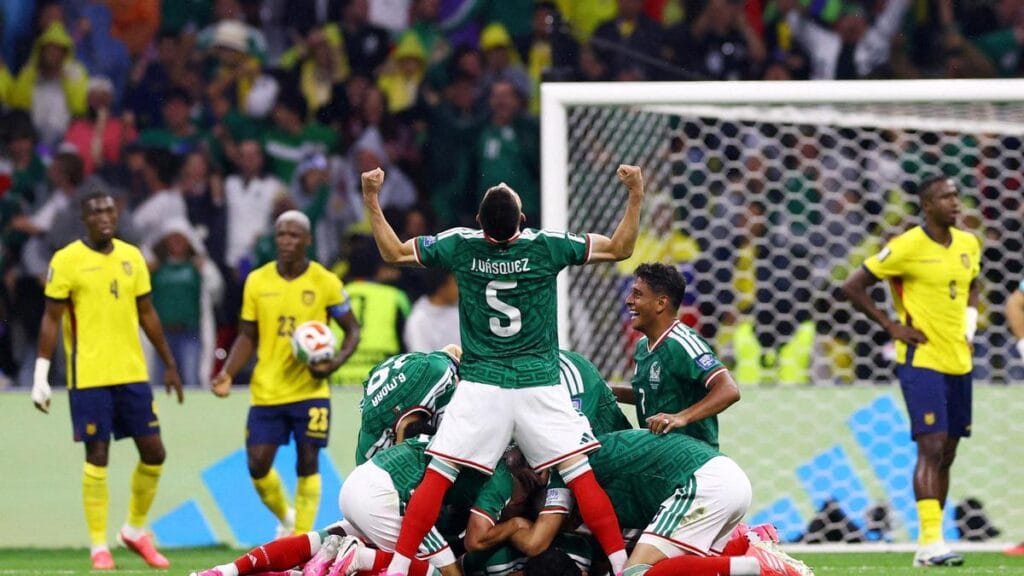
Mexico players celebrate after defeating Ecuador 2-0 in Mexico City to book a place in the FIFA World Cup 2026 Round of 16. Image Credit: The Hindu
Mexico took a major step forward at the FIFA World Cup 2026 on Tuesday by beating Ecuador 2-0 in a Round of 32 match at Mexico City. Julian Quinones delivered a goal and an assist in a dominant first half, while Raul Jimenez added another goal as Mexico stayed in full control throughout the contest. The win sent Mexico into the Round of 16 and marked their first knockout-round victory at a World Cup since 1986.
This result matters because it was not just a routine win. It was a statement performance in front of vocal home fans against a side that had already shown it could compete at this tournament. Ecuador had rallied to beat Germany in group play and looked capable on paper, but Mexico never let them build momentum. Yeh victory kaafi important hai because it gives Mexico both confidence and historical significance at the same time.
How Mexico Won the Match
Mexico’s success came from early control and clean execution in the final third. Julian Quinones was the standout player in the first half, contributing both a goal and an assist. That immediately put Ecuador under pressure and allowed Mexico to dictate the rhythm of the game rather than react to it. The Hindu has covered the full story.
Once Mexico went ahead, they did not lose shape. They kept possession, pressed intelligently and used the energy of the home crowd to maintain control. Ecuador struggled to find answers and was unable to turn the match into a balanced contest. Hernan Galindez was forced into action, but the goalkeeper made only one save, which shows how effectively Mexico limited Ecuador’s threat.
Raul Jimenez’s goal added another layer of comfort. Once Mexico had a two-goal cushion, the result was largely under control. In knockout football, that second goal is often the one that changes everything because it removes uncertainty and forces the opposition to chase the game. Ecuador could not do that here.
Why Ecuador Fell Short
Ecuador came into the match with some confidence after their group-stage comeback against Germany, but this was a very different challenge. Mexico began quickly, pressed aggressively and used the home atmosphere to their advantage. Ecuador was unable to match that early tempo.
The key issue was that Ecuador never found a reliable way to break Mexico’s structure. Even if they had moments of possession, they lacked the sharpness needed in the final third. The fact that Galindez made only one save suggests Ecuador was not creating enough serious chances to shift the game.
Their knockout record now tells a difficult story. Ecuador fell to 0-2-0 all time in knockout-round matches, which underlines how hard it has been for them to produce a breakthrough result in elimination football. This loss will sting because it came after a promising group stage, but knockout football rewards teams that can start fast and finish decisively. Mexico did both.
Mexico’s First Knockout Win Since 1986
One of the biggest themes of this result is the historical weight behind it. Mexico’s last knockout-round World Cup win came in 1986, which makes this victory especially meaningful for fans and the broader football culture in the country. That kind of drought creates pressure, expectation and a sense of unfinished business every time Mexico reaches the knockout rounds.
Ending that wait will matter emotionally as much as tactically. Supporters have waited decades for a result like this, and the fact that it came at home makes it even more memorable. Large tournament wins often become part of a nation’s football identity, and this one could be remembered for a long time if Mexico builds on it.
The role of Julian Quinones is also important in that story. A player who can influence a knockout game in both scoring and creativity becomes central to the team’s momentum. That kind of performance often sets the tone for the next round.
Background and Context
Mexico entered the tournament with strong home support and a clear incentive to make a deep run. Home advantage in major tournaments can be powerful, especially when the crowd stays emotionally invested and the players respond early. That is exactly what happened here.
Ecuador, on the other hand, had already shown grit in the group stage by rallying to defeat Germany. That result suggested a team with energy, resilience and the ability to compete under pressure. But knockout football is a different test. One strong group-stage performance does not guarantee survival in the next round, and Mexico exposed that reality.
The broader context also matters because this match adds another chapter to the World Cup’s knockout story. Big tournaments often hinge on teams that can combine belief with execution. Mexico did not just survive; they controlled the game and finished it efficiently. That is the kind of performance coaches want at this stage.
Timeline
Group stage: Ecuador beat Germany to qualify for the round of 32.
Early kickoff in Mexico City: Mexico starts strongly in front of their home fans.
First half: Julian Quinones scores and also provides an assist.
Later in the match: Raul Jimenez adds a second goal for Mexico.
Final whistle: Mexico win 2-0 and advance to the Round of 16.
Next round: Mexico will meet either England or the Democratic Republic of the Congo on Sunday.
Also Read: FIFA World Cup 2026: Mbappe Uncorks France as Sweden Are Swept Aside 3-0 in World Cup 2026
Why This Matters
This matters because Mexico’s World Cup narrative has changed. Breaking a knockout-round win drought that lasted since 1986 is a major psychological shift for the team and its supporters. Yeh issue kaafi important hai because football history can weigh heavily on a national side, and wins like this can change the mood around a program.
It also matters because Mexico did it with authority, not luck. There is a difference between scraping through and controlling a knockout game. This was the latter. That gives the result more value and makes it more sustainable as a confidence-builder.
For Ecuador, the result is a reminder that tournament success requires more than one good performance. Consistency, game management and sharper finishing are essential. A team that can beat Germany in one match still has to bring the same edge to the next one.
India Angle
For Indian football fans, this game offers a useful example of how home support and early momentum can shape a knockout match. In Hinglish, seedhi baat yeh hai: jab team pehle hi 20-25 minute mein game control kar leti hai, toh opposition ko comeback ka chance kam milta hai. Mexico did exactly that.
Indian readers who follow World Cup football will also appreciate the historical angle. Ending a long drought of knockouts is the kind of storyline that resonates in any footballing nation. India, which is still developing its international football profile, can draw lessons from how Mexico combined crowd energy, structure and attacking intent.
There is also a broader lesson for Indian sports fans: one strong result in the group stage does not guarantee knockout success. Ecuador’s win over Germany was impressive, but Mexico showed how the next step requires consistency and pressure handling.
Analysis
My opinion is that Mexico deserved this win because they controlled the match from start to finish. The numbers in the report tell the story: Ecuador made only one save’s worth of action on goal, while Mexico used their chances efficiently. In knockout football, control plus finishing usually wins.
Quinones deserves particular credit. A goal and an assist in a first half like that can decide a tournament match before emotional pressure even settles in before halftime. That is the kind of player who changes a team’s ceiling.
The historical angle also gives the result extra weight. When a team breaks a 1986 knockout drought, the win becomes bigger than the scoreline. It becomes a marker of progress, belief and national relief. That is why this story will likely get strong traction among football readers.
What Next
Mexico now moves into the Round of 16, where they will face either England or the Democratic Republic of the Congo on Sunday, again in Mexico City. That match will be much tougher, and the level of opposition will test whether Mexico can sustain this momentum.
For Ecuador, the focus will shift to reflection and rebuilding. They showed they could compete at World Cup level, but the knockout stage exposed the need for more attacking sharpness and better control under pressure.
For the tournament, Mexico’s win adds another important storyline. A host-backed team with a long knockout drought has now broken through, and that raises interest in how far they can go.
Conclusion
Mexico’s 2-0 win over Ecuador was a clear, confident and historically important World Cup result. Julian Quinones delivered the first-half spark, Raul Jimenez added the insurance goal and Mexico controlled the match from start to finish in front of a passionate home crowd. The victory ended a knockout-round wait stretching back to 1986 and sent Mexico into a Round of 16 match that now carries even more anticipation. For Ecuador, it was a disappointing end to a promising run, but for Mexico, it was a night that could define their tournament.
Written By A. Jack