The first major controversy of the FIFA World Cup 2026 has occurred in Saturday’s Group B game between Switzerland and Qatar, which finished 1-1. Switzerland’s Breel Embolo and Miro Muheim scored, but Embolo’s penalty prompted a worldwide debate on whether the striker was offside before the foul in the 18-yard box. FIFA had promised a “more robust semi-automated offside” before the World Cup, but there was no VAR intervention when Switzerland’s Remo Freuler was brought down.
Pundits and fans argue Freuler was offside before being brought down, meaning no penalty should have been awarded. FIFA later blamed the missing onside animation graphic on a brief technical outage but said the VAR workflow was not affected and the lines did not show an offside position.
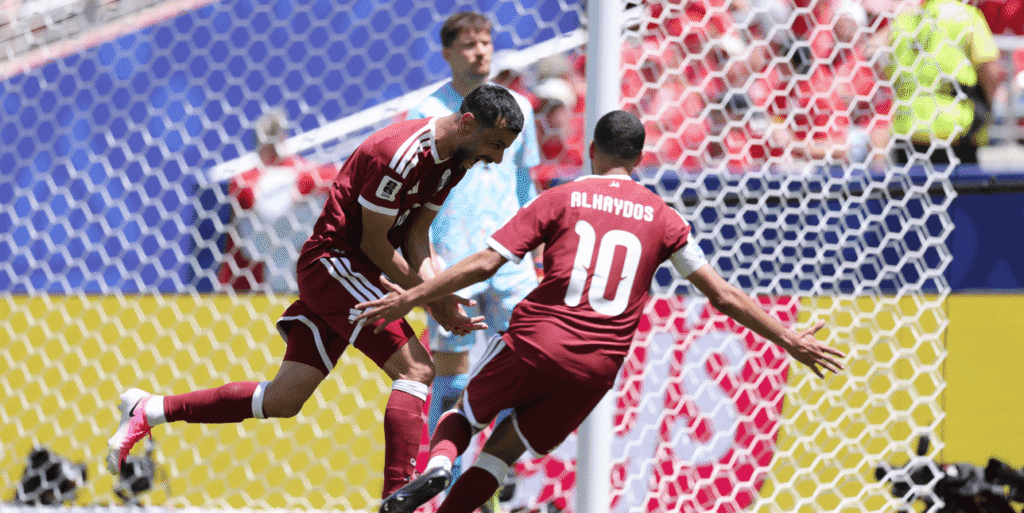
Switzerland’s Breel Embolo celebrates after scoring the penalty that sparked VAR controversy in the FIFA World Cup 2026 Group B match against Qatar in the San Francisco Bay Area. Image Credit: Opta Analyst
The FIFA World Cup 2026 met its first big controversy on Saturday in the Group B match between Switzerland and Qatar, which ended 1-1. Goals came from Breel Embolo and Miro Muheim, but Switzerland’s penalty strike from Embolo triggered a debate over whether he was offside before the foul in the 18-yard box. FIFA claimed to have launched a semi-automated offside mechanism before the World Cup, yet no VAR intervention took place when Switzerland’s Remo Freuler was brought down.
Many pundits and fans argue Freuler was offside before being brought down, meaning no penalty should have been awarded. FIFA later clarified that a brief technical outage prevented the onside animation graphic from being generated ahead of the penalty in the 14th minute, but the VAR workflow was unaffected, and lines showed no offside position.
Why and How the VAR Controversy Happened
The controversy began when Switzerland’s Remo Freuler was brought down in the 18-yard box, leading to a penalty awarded to Switzerland. The penalty was taken by Breel Embolo, who scored to make it 1-1. However, many believe Freuler was offside before the foul, which means the penalty should not have been given. NDTV Sports has covered the full story.
Before the World Cup, FIFA claimed to have put a more robust system in place by launching the semi-automated offside mechanism. This system was expected to provide instant offside animation graphics to fans and broadcasters. However, no VAR intervention occurred during the Freuler incident, and the onside animation graphic was not generated.
Gary Neville, a leading pundit, said on ITV, “We all think it here (that it was offside). Everybody at home thinks it. FIFA is the host broadcaster, and they have the semi-automatic decision that they can show us. There is a massive question over that because it is offside in my eyes until they prove to me otherwise. It’s like a dictatorship, this. The idea that they hold this evidence internally and don’t show fans of countries who are playing in tournaments is absolutely ridiculous. To not show the evidence of an offside, prove to us that it’s offside! Show it straight away. Why not have transparency?”
FIFA was reached out to for clarification and blamed a technical ‘outage’ for the decision. The body stated, “During the Qatar vs. Switzerland match in the San Francisco Bay Area, a brief technical outage prevented the onside animation graphic from being generated ahead of the penalty awarded to Switzerland in the 14th minute.
The issue was quickly resolved. The workflow of the VAR was not affected by this issue and followed the normal procedure in checking the on-field decision. The lines used by the VAR to check the position of the relevant players did not show the attacking player to be in an offside position in either of the two situations immediately before the penalty decision.”
In the Canada vs. Bosnia and Herzegovina clash, striker Tani Oluwaseyi was flagged offside before clashing with goalkeeper Nikola Vasilj. FIFA released a semi-automated animation, even though VAR did not get involved. However, no such steps were taken over the Freuler incident.
Quotes and Statements
Gary Neville said on ITV, “We all think it here (that it was offside). Everybody at home thinks it. FIFA is the host broadcaster, and they have the semi-automatic decision that they can show us. There is a massive question over that because it is offside in my eyes until they prove to me otherwise. It’s like a dictatorship, this. The idea that they hold this evidence internally and don’t show fans of countries who are playing in tournaments is absolutely ridiculous. To not show the evidence of an offside—prove to us that it’s offside! Show it straight away. Why not have transparency?”
FIFA stated, “During the Qatar vs. Switzerland match in the San Francisco Bay Area, a brief technical outage prevented the offside animation graphic from being generated ahead of the penalty awarded to Switzerland in the 14th minute. The issue was quickly resolved. The workflow of the VAR was not affected by this issue and followed the normal procedure in checking the on-field decision. The lines used by the VAR to check the position of the relevant players did not show the attacking player to be in an offside position in either of the two situations immediately before the penalty decision.”
A football fan commented, “This is frustrating. Fans want transparency. If there’s an offside, show the animation. Don’t hide evidence.”
A VAR expert said, “The technical outage is concerning. FIFA’s semi-automated system should be reliable. This controversy highlights the need for better testing and transparency in VAR decisions.”
FIFA’s Semi-Automated Offside Mechanism
Before the World Cup, FIFA claimed to have launched a semi-automated offside mechanism to improve accuracy and transparency in offside decisions. This system was expected to provide instant animation graphics to fans and broadcasters. Previous World Cups and tournaments have seen VAR controversies, with fans and pundits calling for more transparency in decision-making.
The Canada vs. Bosnia and Herzegovina clash saw striker Tani Oluwaseyi flagged offside before clashing with goalkeeper Nikola Vasilj. FIFA released a semi-automated animation for that incident, even though VAR did not get involved. However, no such steps were taken for the Freuler incident, sparking debate.
Gary Neville’s comments highlight growing frustration with FIFA’s handling of VAR evidence. Fans want transparency, and FIFA’s explanation of a technical outage may not fully satisfy concerns.
Timeline
Before World Cup 2026: FIFA claims to launch semi-automated offside mechanism for improved accuracy.
Saturday (Group B match): Switzerland vs Qatar ends 1-1 with goals from Embolo and Muheim.
14th minute: Remo Freuler was brought down in the penalty box; penalty awarded to Switzerland.
Post-penalty: Breel Embolo scores a penalty; debate over offside before the foul begins.
Immediate: No VAR intervention, no onside animation graphic generated.
Post-match: Gary Neville criticizes FIFA on ITV, calls for transparency.
FIFA clarification: Blames a brief technical outage for the missing animation, states the VAR workflow was unaffected, and lines showed no offside.
Earlier match: Canada vs. Bosnia, Tani Oluwaseyi flagged offside, and FIFA released semi-automated animation.
Ongoing: Controversy sparks global debate on VAR transparency and reliability.
Also Read: USA Achieve Historic First With 4-1 Drubbing Of Paraguay as Folarin Balogun Scores Twice
Why This Matters
This matters because VAR transparency and reliability are critical for fan trust in football. When animation graphics are not shown, fans feel evidence is hidden, leading to frustration and loss of confidence in VAR decisions.
It also matters for FIFA. The controversy highlights the need for more testing and transparency in the semi-automated offside mechanism. FIFA’s explanation of a technical outage may not fully address concerns, and future matches may face increased scrutiny.
For society, this is a reminder that transparency in decision-making is essential. Yeh issue kaafi important hai because it shows how VAR controversies can affect fan trust and how FIFA needs to improve transparency and reliability.
India Angle
The India angle is strong because Indian football fans are passionate about the World Cup and follow VAR decisions closely. This controversy will resonate with Indian viewers who want transparency in offside and penalty decisions.
In Hinglish, seedhi baat yeh hai: jab VAR decision clear nahi hota, toh fans frustrated hote hain. Indian fans want FIFA to show animation graphics and prove offside decisions, not hide evidence.
For Indian readers, this is a reminder that transparency in football decisions is critical. The controversy will be closely watched by Indian fans, and FIFA’s response may influence their trust in VAR.
Analysis
My opinion is that this controversy highlights the need for more transparency and reliability in VAR decisions. FIFA’s technical outage explanation may not fully satisfy fans, and the semi-automated system needs better testing.
The incident shows how VAR decisions can affect fan trust and match outcomes. Yeh issue kaafi important hai because it shows how FIFA needs to improve transparency and reliability in VAR to maintain fan confidence.
What Next
FIFA may review the semi-automated offside mechanism to improve reliability and prevent future technical outages. The body may also introduce more transparency in VAR decisions, such as showing animation graphics instantly.
VAR experts and pundits may call for more accountability in offside and penalty decisions. Fans may demand FIFA prove offside decisions with visible evidence.
Future World Cup matches may see increased scrutiny of VAR decisions, and FIFA’s response to this controversy will be closely watched by fans and media.
Conclusion
The FIFA World Cup 2026’s first major controversy came in the Switzerland vs Qatar Group B match, which ended 1-1. The penalty by Breel Embolo sparked debate over whether Remo Freuler was offside before the foul, but no VAR intervention occurred, and the semi-automated offside animation was not generated. FIFA blamed a brief technical outage for the missing graphic, stating VAR workflow was unaffected and lines showed no offside. Gary Neville criticized FIFA for not showing evidence, calling for transparency. This controversy highlights the need for more reliability and transparency in VAR decisions to maintain fan trust.
Yeh controversy kaafi important hai because it shows how VAR decisions affect fan confidence and how FIFA must improve transparency. The incident will be closely watched by fans worldwide, and FIFA’s response may influence future VAR practices.
Written By A. Jack