Panjab University Student, India’s First Passive Euthanasia Case, Cremated Amidst Tearful Tributes
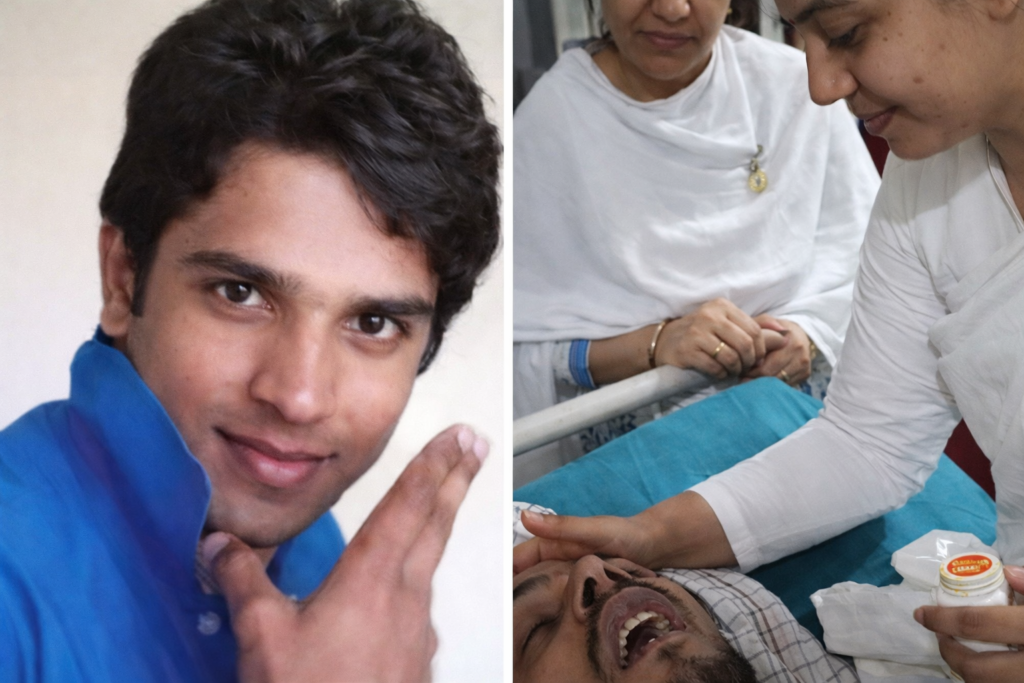
Emotional scenes at Green Park crematorium as Harish Rana, confined to coma for 13 years, receives final rites after landmark passive euthanasia approval.
Harish Rana, the Panjab University student who endured 13 years in a vegetative state following a tragic fourth-floor fall, was given a tearful final farewell at Delhi’s Green Park crematorium on Wednesday. The 32-year-old, recognized as India’s first passive euthanasia recipient, passed away Tuesday at AIIMS after life support withdrawal per Supreme Court orders, marking a historic moment in India’s right-to-die debate.
His funeral drew hundreds mourning a life suspended in silent suffering.
Details
Harish Rana’s last rites commenced at 9 AM Wednesday from his AIIMS bedside, where family accompanied the mortal remains in a flower-decked ambulance to Green Park. Over 500 attendees—university mates, AIIMS doctors, and activists—joined the procession chanting “Harish Amar Rahe.” Electric cremation at 11:30 AM, pyre lit by elder brother Vikram Rana, drew collective sobs; ashes immersed in Ganga later evening.
In January 2026, Rana’s brother filed a petition in the Delhi High Court, stating that she had been diagnosed with PVS (Persistent Vegetative State) for 13 years. The February 15 permission was the first post-Common Cause ruling and was allowed by the Supreme Court citing the 2018 Aruna Shanbaug precedent. The feeding tube and ventilatory support were withdrawn on March 20 by the AIIMS ethics committee and Rana passed away peacefully 48 hours later holding his brother’s hand.
Medical bulletin confirmed “multi-organ failure post-withdrawal”; no pain was registered per EEG monitors. Family donated Harish’s corneas and kidneys to the AIIMS transplant bank, fulfilling his pre-coma organ donor pledge. Funeral featured white lilies—symbolizing peace—arranged per Harish’s favorite color shared by mother Savitri Devi.
Quotes and Statements
Vikram Rana, choking back tears, said, “13 years waiting for this moment—Harish is free now. He whispered ‘bas’ (enough) in lucid moments. Euthanasia gave him the dignified exit we begged for.”
Mother Savitri Devi said, “My beta was suffering in silence. The Supreme Court gave voice to the voiceless patients. “No other mother should suffer this.” Panjab University VC Prof. Raj Kumar said, “Harish was a symbol of student resilience. ‘Harish Rana Dignity Scholarship’ for medical humanities launched by university. Dr M Srinivas, Director, AIIMS, prayed, “Restored his autonomy—medicine’s real victory.”
Background and Context
October 12, 2013—Harish Rana, a 19-year-old B.Com final-year Panjab University student, plummeted from the Chandigarh hostel’s Sector 14 fourth floor during a late-night study break. Eyewitnesses reported an “accidental slip while reaching for the phone charger”; the autopsy revealed a severe frontotemporal brain hemorrhage and a C4 spinal fracture. Rushed to PGI Chandigarh, declared PVS October 15—minimal consciousness, bedbound, tube-fed round the clock.
Family transferred him to AIIMS Delhi in 2015 for advanced neuro-rehab; spent ₹3.5 crore on therapies – no improvement (2025 PET scans show 8% brain activity). Sometimes Harish found family in eye blinks. In 2023, the last unambiguous request was: “Let me go.” Legal battle lasted 8 hearings; SC rejected active euthanasia but approved passive – removal of artificial life support.
In 2018, the Common Cause ruling legalized “living wills,” changing the euthanasia scene in India. Aruna Shanbaug (coma, 42 years) established a passive threshold; Harish became a test case, broadening PVS criteria. Gold standards: fMRI, BISpectral Index Medical boards confirmed “irreversible”
Legal and Medical Significance
Harish Rana verdict expands SC’s 2018 guidelines Passive euthanasia for PVS >5 years without living will Delhi HC asks for two-doctor ethics panels, 2-week cooling periods—Rana gets streamlined access via exigent clause. This paves the way for 25,000 PVS patients in the country (AIIMS survey 2025), with 60% of families seeking options for withdrawal as per reports.
Medical ethics divide: IMA backs ‘futile care cessation’; sanctity-of-life advocates caution of ‘slippery slope’ Neurological community cheers clarity – BIS < 40, Glasgow Coma Scale ≤ 3 confirm futility Postmortem brain preserved for stem-cell research at NCBS Bengaluru.
Family’s Decade-Plus Battle
The Rana family—father retired postman, mother school aide—sold the Chandigarh Sector 17 flat, funding care. Brother Vikram abandoned his engineering career, becoming a full-time caregiver; sister Priya crowdfunded ₹18 lakh via Milaap. AIIMS waived ₹2 crore bills under PM-JAY; Panjab University granted lifetime medical aid.
Supporters erupted after Harish’s eye blinks in a viral 2024 video spelled “END.” #FreeHarish trended 12M times Bollywood actor Ayushmann Khurrana hosted Sadma, the benefit show, which raised ₹50 lakh Faith leaders blessed the decision. The SGPC called it “karuna” (compassion). Jamiat clerics cited “no life, no sin.”
Societal Impact and Ethical Debates
Rana case ignites India-wide euthanasia discourse. Active euthanasia remains criminalized (IPC 306 abetment to suicide); passive is greenlit for terminal futility. Bioethics centers report a 300% inquiry spike; Kerala and Maharashtra form state euthanasia boards. Organ donation clause—Rana’s corneas saved two corneal-blind patients—sets humanitarian precedent.
Mental health angle: 40% PVS caregivers report severe depression (AIIMS study). Government eyes ₹500 crore PVS palliative fund; “Dignified Exit Protocol” national guidelines are being drafted. Youth activism rises—DU students launch the “Right2Rest” campaign, seeking living will templates.
Conclusion: Legacy Beyond the Pyre
Harish Rana’s Green Park send-off is India’s most touching medical-legal moment, creating a passive euthanasia precedent that saves thousands needless pain. Family plans ‘Harish House’ – PVS hospice in Chandigarh to honour his fight. 17 cases on post-Rana hearings: Supreme Court lists for consideration
From a fourth-floor fall to a dignified exit, Rana embodies patient autonomy triumph. As ashes merge with Ganga, his real liberation inspires an end-of-life dignity revolution. India watches—will Harish’s legacy end vegetative limbo for 25,000 souls? For in-depth, click here
More Related News:Air India Flight to Canada Makes U-Turn After 8 Hours—Operators Realize It’s the Wrong Plane