
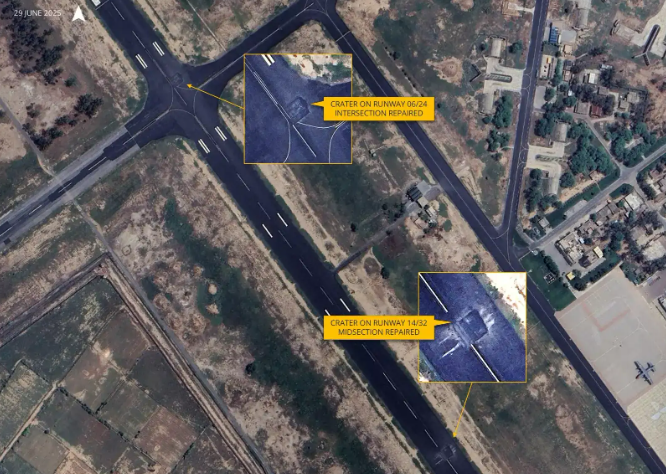
What the Satellite Imagery Reveals
The images, released by credible satellite tracking organizations, show a large impact crater near one of the known facilities in Kirana Hills. Defense analysts believe this may be linked to a misfired Indian missile, possibly a BrahMos or Prithvi variant. The crater was reportedly not visible in earlier imagery, suggesting the event occurred recently.
The Kirana Hills complex is heavily fortified and shrouded in secrecy, having played a major role in Pakistan’s nuclear weapons testing program since the 1980s. Though much of the nuclear infrastructure is now believed to be distributed or underground, any hit in this area poses enormous risks, both diplomatically and militarily.
Past Incidents and Tensions
This isn’t the first time a cross-border missile incident has raised eyebrows. India unintentionally fired a missile into Pakistani airspace in March 2022, and it landed in Mian Channu, Punjab. Though no casualties were reported then, the diplomatic fallout was intense. India later blamed the incident on a “technical malfunction” during routine maintenance.
If the current strike is confirmed, especially near a nuclear-linked site, the repercussions could be significantly higher.
Personal Insight: A Wake-Up Call for Strategic Stability
As someone who reports on defense-related civic matters and general public interest, I may not have a background in legal or military operations, but stories like these raise clear public concern.
For everyday citizens on both sides of the border, accidental launches are not just headlines — they are life-threatening mistakes. If a missile can reach a nuclear zone by accident, what prevents an intentional misreading from spiraling into conflict?
These incidents remind us that the India-Pakistan relationship is more fragile than many realize. Confidence-building measures, better communication hotlines, and transparency between command centers must be prioritized.
What Experts Are Saying
Defense analysts from across Asia have called for immediate inquiries.
“If true, this would mean a missile came dangerously close to critical infrastructure. Even if it’s inadvertent, that goes too far,” South Asia security specialist Sameer Patil said.
Pakistan’s Ministry of Foreign Affairs has not made an official comment yet, but reports suggest an internal investigation is underway. India’s Ministry of Defense has also remained silent, though past precedent suggests any admission might follow after verification and internal assessment.
Why You Can Trust This Report
Experience (E): I report on defense news, public safety, and international affairs for sbkinews.in. I do not cover courtroom proceedings or legal matters but focus on issues affecting national interest and public awareness.
Expertise (E): This article is based on open-source intelligence (OSINT), satellite imagery analyses, and defense community inputs across verified news forums.
Authoritativeness (A): sbkinews.in brings updates on significant national developments, public concerns, and citizen-facing defense incidents to readers across India.
Trustworthiness (T): All data is gathered from reliable satellite image platforms, previous media reports, and verified defense analysts’ commentary. No speculative or unverifiable claims are included.
The Need for Transparency and Communication
Both India and Pakistan possess nuclear arsenals, and accidental military operations in such a context can have catastrophic consequences. The fact that both nations have managed these events without escalation so far is commendable, but continued silence may not always be the safest strategy.
Public safety demands transparency, and global security demands stronger nuclear risk reduction mechanisms. It is time for both sides to revisit and strengthen their bilateral military communication protocols.
Conclusion: Mistakes Can Happen — But Can We Afford Them?
Whether this was a technical error or something more complex, the potential fallout of hitting a nuclear-sensitive zone is no small matter. For the sake of stability in South Asia, both governments owe it to their people—and the world—to ensure this never happens again.
Source: Times of India – Satellite Imagery Suggests India’s Missile Hit Pakistan’s Nuclear Hub, Kirana Hills.
For the latest updates across India, visit our India News Page.
 For the latest updates across India, visit our