From Maharashtra Day 2026, all licensed auto–rickshaw and taxi drivers in the State must clear a Marathi language test in reading, writing, and speaking, or risk licence cancellation.
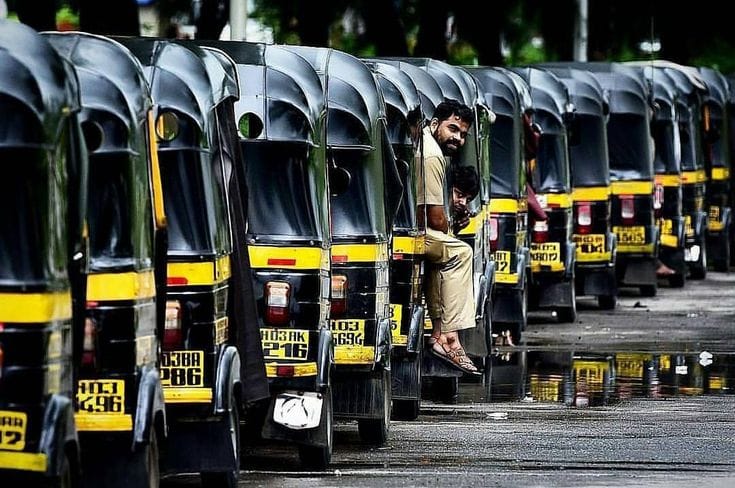
Auto‑rickshaw drivers in Mumbai during a routine check, with a Maharashtra transport official instructing them about the new Marathi‑language rule coming into force on May 1, 2026.
Introduction
The Maharashtra government has announced a sweeping new condition for road transport: from May 1, 2026, all licensed auto‑rickshaw and taxi drivers in the State must demonstrate proficiency in Marathi. The rule, introduced on Maharashtra Day and announced on April 14, 2026, will require drivers to pass a test in reading, writing, and speaking Marathi through the Motor Transport Department’s 59 regional offices. Those who fail may face suspension or cancellation of their licences, officials said.
For the millions of daily commuters who rely on autos and cabs in Mumbai, Pune, Nagpur, Nashik, and smaller towns, this move is not just a language check but a major policy shift—one that will directly affect livelihoods, access to public transport, and the State’s cultural identity. Yeh rule drivers ko emotional aur practical dono level pe affect karega: “Marathi bolna padega, warna licence khatam ho sakta hai,” as many have already started saying on the streets.
Why and How This Rule Is Being Implemented
The Maharashtra government frames the move as a measure to strengthen local language integration and ensure that drivers can communicate effectively with passengers, local authorities, and emergency services. Transport Minister Pratap Sarnaik stated that the rule will come into effect on Maharashtra Day—May 1, 2026—a date chosen for its symbolic weight, marking the formation of Maharashtra as a Marathi‑majority State in 1960. The Hindu has covered the full story.
Officials have clarified that the test will be on basic, functional Marathi, not advanced literature, to keep it realistic for working‑class drivers. Those who fail will be given a chance to re‑appear after a short refresher, but repeated failure may lead to cancellation of their licences. Sarnaik said a statewide awareness campaign will be conducted through all 59 offices, with translated posters, small training sessions, and helplines to guide drivers.
The idea behind the rule is simple: in a State where Marathi is the official language, transport workers who operate in public spaces should be able to communicate in the local tongue. In practice, though, the State is home to many migrants from Uttar Pradesh, Bihar, Madhya Pradesh, Rajasthan, and other non‑Marathi‑speaking regions, so the rollout will be a sensitive exercise. Logically, the government is trying to strike a balance between linguistic integration and livelihood protection.
Background and Timeline: Language, Policy, and Politics in Maharashtra
The push to make Marathi compulsory for drivers is not the first time Maharashtra has used language as a policy tool. The State has a long history of “linguistic activism,” with groups like the Shiv Sena (and its derivatives) historically demanding Marathi‑only signage, Marathi‑language counters in government offices, and Marathi‑medium education.
Over the years, several measures have tried to promote Marathi in public life:
Marathi signage in government offices and local transport (since 2010s).
Mandatory Marathi on hoardings and public advertisements in some cities.
Preferential hiring and training in Government jobs for Marathi speakers.
Politically, Maharashtra Day has become a stage for reinforcing Marathi identity. The 2026 decision to make Marathi mandatory for auto and taxi drivers fits into this narrative: tying the functioning of everyday public transport to the State’s official language.
This history shows that the new rule is not a flash decision but the latest step in a decades‑long linguistic‑policy trend. The difference now is its direct impact on livelihoods rather than just signage or ceremonial preference.
Why This Matters: Impact on People, Society, and Industry
The rule will hit hardest on the working class and migrant communities. Across Maharashtra, auto and taxi drivers come from diverse backgrounds—many are from UP, Bihar, Rajasthan, and rural Maharashtra who may know a little Marathi but struggle with formal reading and writing. For them, the threat of licence cancellation is a real and serious fear.
Key impacts:
Livelihood risk: If a driver fails the test and cannot clear the re‑test, losing his licence would mean losing his primary source of income. Many families in auto‑driver households depend solely on daily earnings.
Language‑based inequality: The policy may deepen a divide between “local” Marathi speakers and “outsider” drivers, especially in Mumbai, where a large share of cabbies hail from North and East India.
Passenger safety and communication: On the positive side, better Marathi proficiency can improve clarity during emergencies—police, hospitals, fire services, or traffic police mostly operate in Marathi in smaller towns. Drivers who can’t read basic Marathi signs may misread routes or traffic warnings, which is a safety concern.
For society, the move is a cultural reinforcement. Supporters argue that when the public‑facing face of transport understands Marathi, it strengthens local identity, boosts tourism, and reduces language‑barrier incidents. Critics, however, say it smacks of linguistic exclusion and may push some drivers toward the unregulated sector, where they can work without formal checks.
In the transport industry, auto and taxi associations are caught in a dilemma. They must support the State’s official language push, yet protect their members. There is talk of setting up free Marathi coaching camps and evening batches at depots, which could turn into a hidden “industry” of language training around garages and stand points.
From a broader governance perspective, the rule also highlights the conflict between inclusion and regulation. Should the State prioritize language integration, livelihood protection, or both? The way Maharashtra handles this balance will be watched closely by other States that may consider similar language requirements for public service workers. Also Read: Samrat Choudhary Named Bihar CM: Epic Rise After Vowing to Dethrone Nitish Kumar
Local Angle: Mumbai, UP–Bihar Drivers, and Hinglish Reality
In Mumbai alone, over 1.5 lakh registered auto and taxi drivers ply every day, many of them from non‑Marathi backgrounds. For a driver from Chāndpur, Azamgarh, or Faizabad trying to make a living in Mumbai, learning Marathi becomes as important as learning traffic routes. The streets already buzz in Hinglish—“Sir, Babulnath jana hai?”, “Meter ka rate confirm kare?”—but the new rule pushes functional Marathi into the spotlight.
For local Marathi‑speaking drivers, the news is mixed. Some see it as a welcome move that protects their culture and gives them a slight edge; others worry it will create unnecessary tension between drivers of different linguistic backgrounds at stands and cooperatives.
In UP, Bihar, and Rajasthan, the news of the rule is being treated both as a challenge and a warning. Families sending relatives to Mumbai for auto or taxi jobs now know that “Marathi learning” will be part of the migration package. Coaching centres around railway stations and driver unions in Mumbai are already advertising “Marathi for Auto Drivers – Fast Track” courses, which shows how the local economy is adapting to the policy.
Yeh rule is especially relevant in a Hinglish‑dominated metro like Mumbai, where people naturally mix Hindi, Marathi, and English. The test’s focus on basic, functional language—not high‑level grammar—should help reduce anxiety, but implementation will be the real test.
Expert Analysis: Reader’s Lens and SEO Perspective
This story is a classic mix of policy, emotion, and livelihood. It’s not just “language news”—it’s about jobs, identity, and daily life. As an SEO‑focused news writer, I see several angles that will drive traffic and engagement:
Long‑tail queries like “Marathi rule for auto drivers Maharashtra 2026,” “Marathi test for taxi drivers details,” “auto licence cancellation Marathi,” and “how to learn Marathi for drivers” will spike massively as the May 1 deadline approaches.
Informational content such as sample questions, test formats, and nearby Motor Transport offices will be highly shareable, especially in vernacular channels and WhatsApp groups.
Emotional hooks around “migrant drivers vs. local language” will generate strong social‑media conversation, which search engines favour in freshness and engagement.
From a purely analytical angle, the policy sits on shaky but symbolically strong ground. It is politically popular in Maharashtra, especially among Marathi‑centric groups, but practically challenging for non‑Marathi drivers. The government’s ability to provide affordable, accessible training will decide whether this policy becomes a success story or a source of resentment.
What Comes Next: Implementation, Challenges, and Possible Outcomes
The immediate next phase will be implementation chaos and adaptation. From May 1 onward, the 59 Motor Transport offices will start rolling out the test, but the timeline will not be uniform. Some cities may see quick checks, others slower, phased rollouts. Early reports will likely focus on:
How many drivers pass the first test.
How many are given re‑test chances.
How many licences are actually cancelled.
Several scenarios could emerge:
Soft enforcement: Initially, authorities may be lenient, using the rule mainly for awareness and training, with few real cancellations.
Strict enforcement: If political pressure builds, departments may start cancelling licences, leading to protests from unions and migrant associations.
Legal challenges: Advocates or NGOs may file PILs or legal challenges arguing that the language test is discriminatory against migrant workers, which could delay full enforcement.
Beyond the immediate compliance phase, the long‑term impact could be:
Formalisation of Marathi coaching: Regular coaching centres and mobile apps teaching “Marathi for Drivers” could emerge.
Multilingual policy responses: Other States may watch Maharashtra and adopt similar language rules for drivers, toll‑booth staff, or municipal workers.
Shift in hiring patterns: Some cab aggregators might start preferring Marathi‑speaking drivers in Maharashtra, reshaping job markets subtly.
Conclusion: Language, Livelihood, and the Future of Mobility in Maharashtra
The Maharashtra government’s decision to make Marathi mandatory for auto and taxi drivers from May 1, 2026, is a bold, controversial, and deeply symbolic move. On one side, it strengthens local language integration and the cultural identity of the State. On the other, it raises real questions about fairness, inclusion, and how far a government can go in tying language proficiency to livelihoods.
For drivers, yeh rule is a wake‑up call: “Ab sirf driving nahi, Marathi bhi padhna padega.”
For passengers, it may mean smoother communication and better‑labelled, better‑understood routes.
For policymakers, it is a test case on how to balance linguistic pride with social equity.
As Maharashtra Day 2026 arrives, the 59 Motor Transport offices will become classrooms and examination centres for thousands of drivers. The true measure of this policy will not just be how many pass the Marathi test, but how many lives are improved—or harmed—by the decision.
Written by A. Jack