
Chief Minister Devendra Fadnavis pauses enforcement for 12 months after drivers seek more time; the government will organize Marathi classes and provide study material for migrant transport workers.
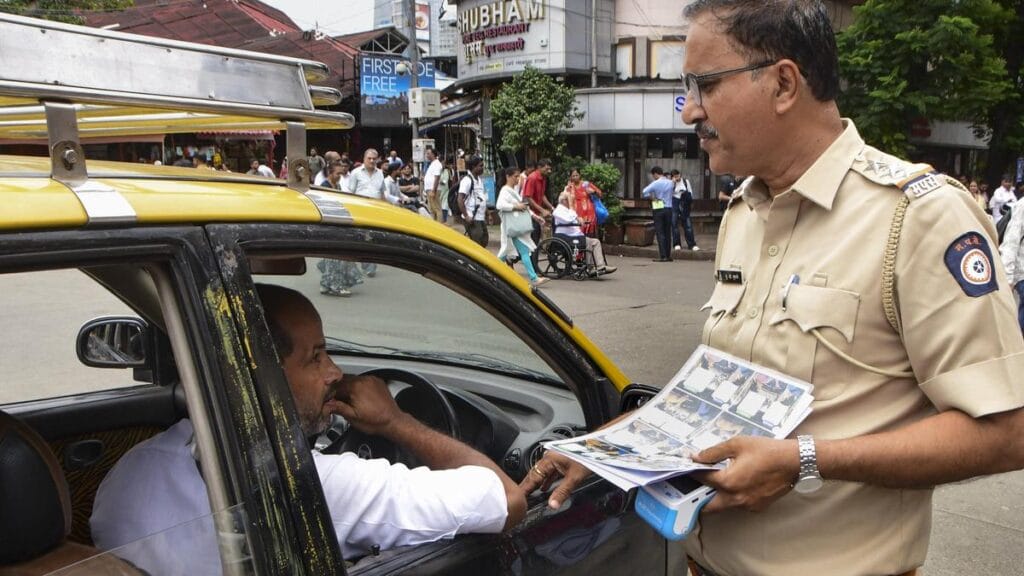
This image is only for illustrations.
Maharashtra Chief Minister Devendra Fadnavis has announced that autorickshaw and taxi drivers will be given one year to learn “functional Marathi,” with no punitive action to be taken against them during this period for not having adequate knowledge of the State’s official language.
The decision came after a delegation of autorickshaw and taxi driver representatives, led by Haji Arfat Shaikh, met the Chief Minister and sought more time to meet the language requirement.
Fadnavis said the government accepted the drivers’ request because many migrant drivers left formal education years ago and need structured support to learn a new language. Marathi classes will be organized, and study material will be provided during the one-year transition period.
The announcement comes after a Transport Department checking drive led to notices for drivers who were unable to demonstrate functional Marathi skills.
What the One-Year Relief Means
The Maharashtra government has not withdrawn the requirement that commercial passenger vehicle drivers should have functional knowledge of Marathi. Instead, it has paused action against drivers for one year and promised assistance to help them learn the language.
During this period:
Drivers will be given time to acquire basic, functional Marathi
No action will be taken solely for a driver’s lack of Marathi proficiency
Marathi classes will be organised
Study material will be provided
Driver representatives are expected to cooperate with the learning program.
Fadnavis said the drivers had shown willingness to learn Marathi but sought a realistic timeframe.
“They requested that they be given one year’s time. The State government has accepted their demand. No action will be taken during this period. Marathi classes will be organized and study material will be provided to help migrant drivers learn functional Marathi,” the Chief Minister said. This story was also covered by The Hindu.
He added that drivers of different age groups work in the profession, and many had left studies long ago. It would be difficult, he said, to expect them to learn the language within a very short period.
Why the Government Changed Its Approach
The move follows public criticism and protests after the Maharashtra Transport Department began a statewide enforcement drive on August 20.
During the drive, officials tested drivers for elementary conversational Marathi. Those unable to demonstrate functional knowledge were issued notices.
The early figures were significant:
| Category | Reported number |
|---|---|
| Commercial passenger drivers tested initially | 5,211 |
| Drivers issued notices | 777 |
| Notices in Mumbai Metropolitan Region | 722 |
| Drivers tested statewide later | Around 13,000 |
| Notices issued statewide later | Around 2,500 |
The original enforcement framework reportedly gave drivers one month to demonstrate basic Marathi proficiency. If they failed to comply, their badges could be suspended for three months, followed by possible license cancellation after further non-compliance.
This generated strong backlash, particularly among migrant auto and taxi drivers from Uttar Pradesh, Bihar, Rajasthan and other states.
The drivers argued that they were not against learning Marathi. Their concern was the short timeframe and the threat to livelihoods if licenses or badges were suspended.
The Fadnavis government’s new one-year window is therefore a political and administrative compromise: retain the language requirement, but replace immediate enforcement with training and support.
What Drivers May Need to Learn
The government has used the phrase “functional Marathi,” which suggests the aim is practical communication rather than academic fluency.
For a taxi or auto driver, functional Marathi could include the following:
Greeting passengers
Understanding destinations and common locality names
Discussing fares or meter issues
Giving basic directions
Responding to emergencies
Understanding RTO instructions
Reading basic traffic or service-related notices
Communicating with police, hospitals and public offices
For example, a driver may be expected to understand simple phrases such as the following:
“Kuthe jaycha aahe?” — Where do you want to go?
“Meter pramane bhada aahe.” — The fare is according to the meter.
“Thoda vel thamba.” — Please wait for a while.
“Rasta bandh aahe.” — The road is closed.
“Police station kuthe aahe?” — Where is the police station?
The policy will work only if the government clearly defines what level of Marathi is required and makes the assessment fair, practical and accessible.
The Marathi-Language Requirement
The Maharashtra government had made functional Marathi knowledge mandatory for drivers of commercial passenger vehicles, including auto-rickshaws and taxis.
The Transport Department, headed by Shiv Sena Minister Pratap Sarnaik, began the enforcement drive on August 20. The checks were planned to continue until September 30.
Officials were reportedly asking drivers practical questions to test conversational ability, not conducting a written examination.
The policy was linked to the idea that passenger-vehicle drivers should be able to communicate with local customers and government authorities in Maharashtra’s official language.
But the rapid implementation triggered protests. Some drivers stopped work, creating inconvenience for commuters, while driver associations argued that immediate punitive action could harm thousands of migrant workers.
Transport Minister Pratap Sarnaik later clarified that drivers would not be fined before the end of the initial one-month deadline.
The Chief Minister’s new announcement goes further, effectively expanding the learning period from one month to one year.
Maharashtra and Migrant Voters
The decision also has a political dimension.
Maharashtra’s major economic centers—Mumbai, Pune, Nashik, Thane, Nagpur and Aurangabad—have large migrant workforces. Auto-rickshaw and taxi services depend heavily on workers from Uttar Pradesh, Bihar, Rajasthan, Madhya Pradesh and other states.
The issue gained political attention because Uttar Pradesh is ruled by the Bharatiya Janata Party and is expected to hold Assembly elections in 2027. The perception that Marathi-language enforcement could target Hindi-speaking migrant drivers created concern for the BJP.
Fadnavis’s decision attempts to balance two constituencies:
Marathi-speaking voters who support stronger use of the State language
Migrant workers who depend on auto and taxi driving for their livelihood
The policy message is that Marathi should be learned and respected, but drivers will be given reasonable time and official support.
Also Read: Mumbai Woman Loses ₹7.21 Crore in Fake Money Laundering Scam
Timeline
Before August 2026: Maharashtra makes functional Marathi knowledge mandatory for drivers of commercial passenger vehicles.
August 20, 2026: The Transport Department begins statewide checks of autorickshaw and taxi drivers for functional Marathi proficiency.
First day of drive: Notices are issued to 1,268 commercial passenger vehicle drivers, mainly auto and taxi drivers, for allegedly lacking sufficient Marathi knowledge.
August 22: Officials report testing 5,211 drivers and issuing notices to 777 drivers.
After initial checks: The Transport Department says drivers who fail the assessment would receive one month to learn Marathi, with possible badge suspension for continued non-compliance.
Following protests and backlash: Driver groups object to the short deadline and possible livelihood impact.
August 27: A delegation led by Haji Arfat Shaikh meets Chief Minister Devendra Fadnavis and seeks one year to learn functional Marathi.
August 27–28: Fadnavis announces a one-year grace period, Marathi classes and study material; no action will be taken during the period for lack of Marathi proficiency.
Next 12 months: Government is expected to organize training and develop a practical system for assessing functional Marathi.
Why This Matters
Yeh decision is important because it affects thousands of drivers and millions of daily commuters across Maharashtra.
Livelihood protection: Drivers will not face immediate loss of badges or licenses merely because they cannot yet speak Marathi.
Language inclusion: The policy encourages learning Marathi rather than treating language as an exclusion tool.
Commuter communication: Basic Marathi may help drivers communicate better with local passengers, police and authorities.
Need for fair implementation: The government must define “functional Marathi” clearly so that assessments do not become arbitrary.
Migrant integration: Mumbai and Pune rely heavily on migrant labor. Giving drivers time and resources can support integration without threatening livelihoods.
For passengers, the practical outcome may be improved communication. For drivers, the main relief is that “Marathi nahi aati toh licence chala jayega” is not the immediate situation anymore.
India Angle
The Maharashtra decision reflects a wider Indian challenge: how should states promote regional languages while protecting the dignity and livelihoods of migrant workers?
India’s cities are built by migrants. Taxi drivers, auto-rickshaw operators, delivery workers, construction laborers, domestic workers and service-sector employees often move across states for employment.
Regional languages are important to cultural identity and public life. At the same time, language policy works best when it is educational and inclusive rather than punitive.
The Maharashtra model could become a useful example if it succeeds:
Set a practical language standard
Give workers enough time
Provide free classes and learning material
Avoid arbitrary enforcement
Recognise older workers’ learning needs
Use spoken language assessments rather than academic tests
Protect livelihoods during the transition
Yeh approach “language pride” aur “migrant respect” dono ko saath lekar chal sakta hai.
Analysis
The original one-month deadline was likely too short for many older drivers who have spent years outside formal education. A policy intended to improve communication had begun to look like a threat to jobs.
By giving one year, organizing classes, and providing study material, the government has shifted the tone from enforcement to support.
But execution will matter.
The state must answer several questions:
Who will conduct Marathi classes?
Will classes be free?
Will they be available at flexible times for drivers working long shifts?
Will material be in Hindi, Urdu, English and other languages?
What counts as “functional” Marathi?
Will tests be standardized?
What happens after one year?
How will officials prevent harassment during checks?
In my view, the policy can work if it remains practical. A driver should be assessed on real-world communication—not grammar, spelling or formal literary Marathi.
What Next
The next phase will focus on implementation.
Training modules: The Maharashtra government is expected to design Marathi learning classes and distribute study material.
Driver registration: Authorities may create lists of drivers who need training and monitor participation.
Standard assessment: Transport officials may develop a basic, spoken Marathi test after the grace period.
No action for one year: Drivers should not face punitive action solely for inadequate Marathi knowledge during the announced 12-month period.
Union involvement: Driver associations may work with the government to ensure that classes are practical and accessible.
Commuter impact: The immediate risk of service disruption from driver protests may reduce after the relief announcement.
Political debate: Language policy is likely to remain a major issue in Maharashtra as parties seek to balance regional identity with migrant-worker concerns.
Conclusion
Maharashtra Chief Minister Devendra Fadnavis has given auto-rickshaw and taxi drivers one year to learn functional Marathi, with no action to be taken during that time for lack of language proficiency.
The decision follows protests and criticism after the Transport Department began Marathi-proficiency checks and issued notices to drivers who failed the assessment.
By promising Marathi classes and study material, the government has chosen a more inclusive approach. The aim remains to encourage drivers to use the State’s official language, but the method has changed from immediate punishment to supported learning.
Yeh policy tabhi successful hogi jab training free, flexible, and practical ho—and when drivers are judged on basic communication, not textbook grammar. Maharashtra ko Marathi pride bhi protect karna hai aur migrant workers ki dignity aur livelihood bhi.
Written By A. Jack