
The long-awaited Mumbai-Pune Expressway Missing Link is being inaugurated on May 1, but regular motorists will only be able to use it from the morning of May 2 after the ceremony and clearance work are completed. The new stretch is being opened in phases, with restrictions on vehicle categories and a permanent ban on hazardous and inflammable cargo vehicles.
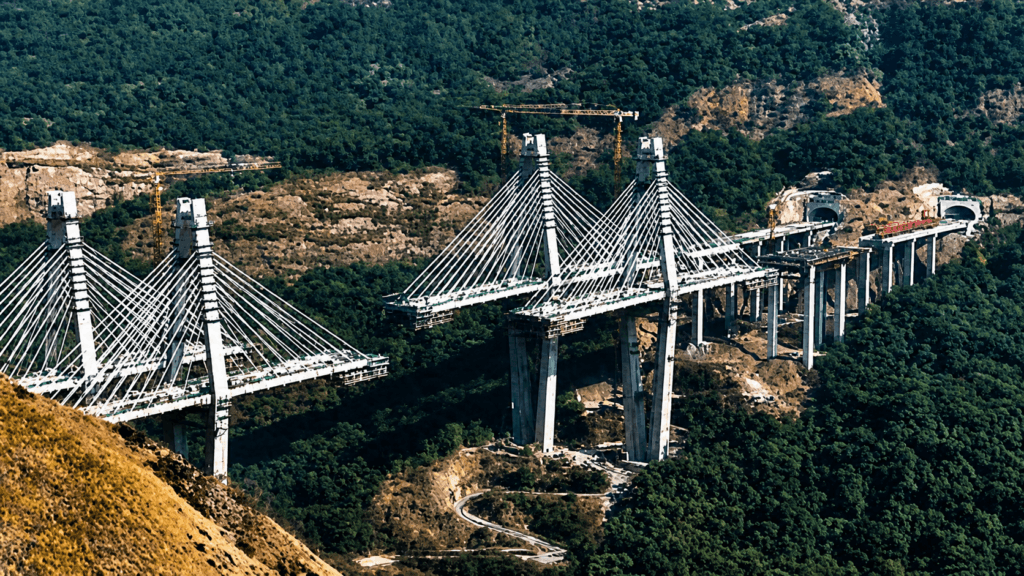
The Mumbai-Pune Missing Link, a major new stretch on the expressway, is set for inauguration on Maharashtra Day before public traffic begins later.
The Mumbai-Pune Missing Link, one of Maharashtra’s most anticipated road infrastructure projects, is set to be inaugurated by Chief Minister Devendra Fadnavis on May 1. But for commuters hoping to drive on it immediately after the ceremony, the reality is different: public access will effectively begin only from the morning of May 2, once the event infrastructure is cleared and the site is made ready for traffic.
The distinction matters because the opening is not a simple switch-on moment. The inaugural function is scheduled for noon on May 1, and the dismantling of the ceremonial pandal along with clearance of vehicles from the site is expected to push actual commuter access well past midnight.
What The Missing Link Is
The Missing Link is a 13.3-km stretch of the Mumbai-Pune Expressway designed to bypass the accident-prone Khandala/Bhor Ghat section. It connects Khopoli to Kusgaon and is meant to reduce the old route’s distance by around 6 km while also cutting travel time by about 25 to 30 minutes. News 18 has covered the full story.
This is not just another road expansion. It is an engineering workaround for one of the expressway’s most challenging stretches, where hairpin turns, congestion and landslide risks have long made travel slower and less predictable. For commuters, the project has been talked about for years as a safer and faster alternative.
Why Access Starts Later
Although the inauguration happens on May 1, the road will not be usable by the general public during the event. Large government ceremonies require barricading, security arrangements, equipment removal and traffic coordination, all of which take time. That is why the usable opening is delayed until the morning of May 2, even though the formal launch is on Maharashtra Day.
This is a very practical point, and many drivers may miss it if they only see the headline about the inauguration. So the short version is simple: the ribbon-cutting is on May 1, but the real drive begins on May 2. That small gap is important because it prevents confusion, traffic jams and unsafe movement near the project site.
Vehicle Rules And Restrictions
The initial phase will not be open to every type of vehicle. Reports indicate that only light motor vehicles and passenger buses will be allowed on the Missing Link at first, while heavy goods vehicles will remain barred during the opening phase.
More importantly, vehicles carrying hazardous, inflammable or explosive materials will never be allowed on this stretch. That permanent ban is tied to tunnel and safety protocols, which makes sense because this route includes highly sensitive engineered sections where such cargo would pose serious risk.
Why Hazardous Cargo Is Banned
A road corridor with tunnels, steep gradients and controlled access needs tighter safety rules than a normal highway. Hazardous or inflammable cargo can create risks that are much harder to manage in enclosed or semi-enclosed infrastructure, especially if there is an accident, leak or fire.
The ban is therefore not just a formality. It is a safety-first decision that fits the nature of the Missing Link itself. For ordinary commuters, this means the road may be faster and safer, but it will also remain more regulated than older highway stretches.
Also Read: Splitsvilla X6’s Preet Singh Alleges Brutal Assault at Mumbai Club
Background And Project History
The Mumbai-Pune Expressway has long been one of India’s most important intercity road links, carrying huge passenger and freight movement between two major economic centres. But the ghat section near Khandala and Lonavala has always been a bottleneck because of steep terrain, sharp bends and weather-related disruptions.
The Missing Link was conceived as a permanent solution to those traffic and safety issues. According to reports, nearly 2,000 workers were deployed on the project at one stage, with around 1,500 focused on tunnelling work alone. The project has been described as one of Maharashtra’s major infrastructure efforts, and officials have repeatedly framed it as an engineering solution to a decades-old travel problem.
Timeline
1980s-2000s: The ghat stretch remains the expressway’s most difficult section.
2020s: Work on the Missing Link intensifies as the state pushes for a better route.
February 2026: Reports suggest the project is close to completion and May 1 is the target opening date.
April 2026: Authorities confirm phased access and safety restrictions.
May 1, 2026: Chief Minister Devendra Fadnavis inaugurates the project.
May 2, 2026: Public traffic is expected to begin on the stretch.
Why This Matters
This matters because the Mumbai-Pune corridor is one of Maharashtra’s busiest travel routes. Any reduction in congestion, travel time or accident risk has a direct impact on lakhs of people who use the road for work, business, tourism and family travel.
It also matters because infrastructure projects are judged not just by inauguration day but by how safely and smoothly they are opened to the public. If the Missing Link performs as promised, it could reduce pressure on the old ghat section and make the drive much more predictable. If miscommunication happens at launch, commuters could face avoidable confusion.
India Angle
For Indian travellers, this is a big development because the Mumbai-Pune route is a lifeline between two of the country’s most economically active cities. Many people commute for business, education, logistics and leisure, so even a 25-minute saving can matter in daily life.
Yeh issue kaafi important hai because road connectivity in India is not just about convenience — it affects productivity, fuel consumption, tourism and safety. A smoother Mumbai-Pune link can make a real difference for middle-class commuters, transport operators and weekend travellers alike.
Analysis
My analysis is that the phased opening is the right move. Infrastructure openings often create confusion when formal inauguration and actual public use happen on different dates. Here, officials appear to be avoiding that problem by making the ceremonial event separate from the operational start. That is practical, and in a route as important as this one, clarity is essential.
What Next
The next step is public rollout from May 2, followed by traffic monitoring and enforcement of the route’s vehicle restrictions. Authorities will likely watch how the new stretch handles light vehicles, bus movement and tunnel safety in the first few weeks.
There may also be future phase reviews, especially for heavy vehicle policy and operational adjustments after the opening period. If the stretch performs well, it could become one of the most important new road upgrades in western India.
Conclusion
The Mumbai-Pune Missing Link is finally here, but not quite in the way many commuters may have expected. The project will be inaugurated on May 1, yet regular public access will start from May 2 after the ceremonial setup is cleared away.
With phased vehicle access, a permanent ban on hazardous cargo and the promise of reduced travel time, the route is set to change how people move between Mumbai and Pune. For now, the key takeaway is simple: the Missing Link opens today on paper, but for most motorists, the real journey starts tomorrow.
Written By A. Jack