The CBI conducts coordinated raids across India after a Rajasthan SOG tip; five suspects are arrested in Jaipur, Gurugram, and Nasik as agencies seize devices and search NTA offices for paper‑handling records.
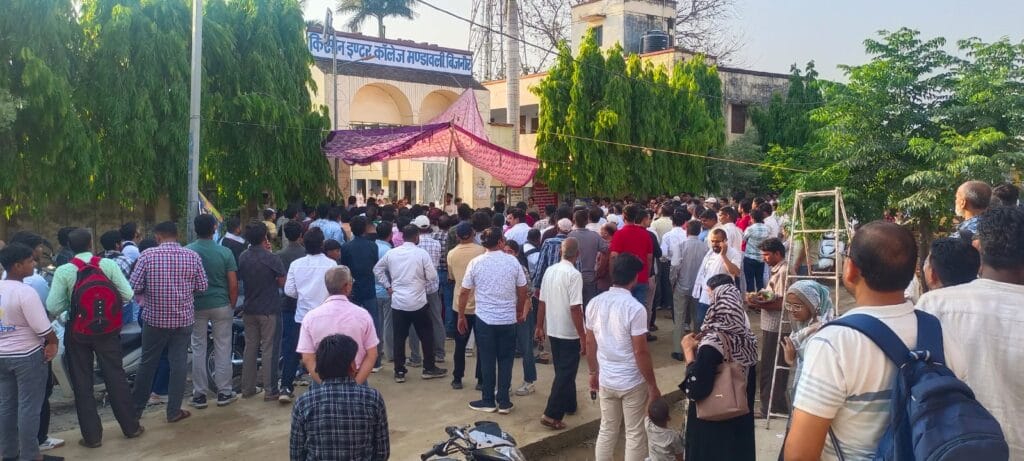
On the second day of the registration of the FIR, the Central Bureau of Investigation (CBI) on Wednesday carried out massive coordinated raids against the alleged network of the NEET-UG question-paper leak case in several states.
CBI teams intensified action in Jaipur, Gurugram, and Nasik and arrested five persons identified by officials as Mangilal Bival, Vikas Bival, and Dinesh Bival from Jaipur; Shubham Khairnar from Nasik; and Yash Yadav from Gurugram. Searches and questioning have taken place in several other towns and city addresses at the same time, and more detentions or arrests are possible as investigators piece together the distribution chain.
The agency also raided National Testing Agency (NTA) offices to recover documents and digital records related to the exam process. Forensic teams seized a large number of digital devices from accused persons and places connected to the case.
How the raids unfolded and why investigators acted
The decision by the CBI was based on information received from the Rajasthan SOG, which had seized a sample or “guess” paper that had shown significant similarities to the NEET question paper. Since the initial matches had been established, and some arrests had already taken place at the state level, the center took up the case, and an FIR was lodged by the CBI to track down the source of the leak and those involved in distributing the papers.
Wednesday saw raids being carried out by CBI personnel at both residential and business properties in various states. As per reports, the raid locations were identified based on the digital trail left behind by suspects who were considered important nodes in the distribution channel. These raids included printing press premises, couriers’ contact details, coaching hub addresses, and even individual residences. On the other hand, the CBI raided all related NTA premises to look for procedural documents, dispatch manifests, printing records, and communication records of exam-related officials. The raid was characterized as two-pronged—one to trace the physical trail and the second one to check the processes followed by the institution.
Verified facts so far
Five arrests have been made in Jaipur, Gurugram, and Nasik. Names mentioned by agencies include the Bival three brothers in Jaipur, Shubham Khairnar in Nashik, and Yash Yadav in Gurugram.
CBI teams raided NTA offices and held talks with officials involved in the examination to collect documentation.
Several digital devices, including mobile phones and laptops, were collected from the accused. Forensic tests will be conducted to extract chat and file records.
Rajasthan SOG has cooperated as one of the involved agencies, and it was they who gave the first copy of the question paper, which sparked off the central investigation.
Further investigations and arrests are taking place in other areas as well.
Why investigators believe this was systemic
According to CBI reports, the investigation aims to trace various sources of the information leak: unauthorized access while setting questions, a breach during printing/distribution, collusion within local testing centers, or a sophisticated business network that provides “guess” papers for sale. The leaked paper was found to match a considerable number of questions from the actual NEET examination paper, implying that the leak was due to access to confidential information instead of a lucky guess. Therefore, investigators are currently analyzing:
Documents on printing and delivery for security weaknesses.
Financial accounts for any suspicious transactions between the suspects and the buyers (coaching institutes/brokers).
Instant messaging services, cloud storage, and other forms of shared documents for any contact lists and dissemination pace.
Connections between the arrested persons and individuals with access to the test papers.
It is also worth noting that the officials stated that the CBI was investigating any involvement of high-level authorities or employees responsible for handling test papers.
Key quotes and reactions
An official from the CBI stated that “We have exhausted all the leads. While the arrest of five individuals is crucial, the investigation is ongoing with the objective of tracing the source as well as the entire chain.” (reported paraphrase)
An official from the Special Operation Group, Rajasthan, added that “our initial recovery led to triggering the process of investigation.” We will cooperate fully and share information.” (reported paraphrase)
Parents of students, along with the students themselves, were worried yet relieved. Although the arrests mean that something was being done about it, most of the candidates were worried about re-exams and admission processes getting postponed due to this scandal.
Background and context
NEET‑UG is the biggest undergraduate medical entrance exam in India, with millions of aspirants fighting for MBBS/BDS seats every year. The earlier rumors and reports of ‘guess’ papers and question overlaps have led to state probes, including by Rajasthan SOG which traced and recovered sample material. The recovery, and the extent to which it resembled the actual paper, caused the case to be referred to the central agencies.
The CBI was brought in only after initial verification that the matches were not a coincidence or a one-off leak but were a sign of systematic distribution. The National Testing Agency (NTA) had earlier declared options for cancellation or re-examination (based on the specific timeline and official orders), and the Supreme Court and student bodies have called for independent oversight of any retest. The nationwide raids and arrests mark the most decisive operational phase of the probe in its latest development.
Why this matters
This is one such highly critical case from multiple perspectives. For instance, this impacts around 23 lakh candidates who have a career at stake. While arrests can be a reassuring factor for stakeholders, a timely and transparent investigation will play a crucial role in restoring their trust. Second, an examination of the incident reveals potential weaknesses within the examination process, starting from the development of questions until their printing and local dissemination. Any flaws in the process can have serious repercussions on the reputation of the concerned institutions (NTA, etc.), and some structural changes should be made in response to the incident.
India’s angle
The arrests in Jaipur, Nasik, and Gurugram highlight the multi-state and regional nature of the alleged network, a reminder of how exam malpractice can be orchestrated across state borders. The SOG in Rajasthan, which gave the crucial sample, illustrates how local policing can be instrumental in uncovering breaches at the national level. The fallout for students in smaller towns and aspirants from economically weaker backgrounds is severe. Resitting exams means additional travel, accommodation, and loss of income time. On social media in India, calls for accountability and judicial oversight of any retest have been ablaze.
Also read: NEET Paper Leak Scandal 2026 : Rajasthan SOG Uncovers 120 Matching Chemistry Questions in Guess Paper
Expert analysis
As a veteran news professional, several things are clear: First, the seizures of digital devices and quick arrests suggest investigators have actionable leads—chat groups, traces of payments or logistics data—and are moving quickly to prevent evidence from being destroyed. Second, there needs to be systemic reform: papers must be better secured in the chain of custody, distributed encrypted and time-bound; the personnel involved must be rigorously vetted; and independent audits must be performed. Third, judicial or senior-level oversight of the retest process will be critical in order to maintain legitimacy.
Forensically, a seized device will probably reveal the message chains—what apps, what groups, and what intermediaries were involved in circulation. Financial forensics can identify who paid for access, implicating coaching hubs and brokers as potential players on the demand side. If there is any official collusion, criminal and administrative proceedings must be initiated.
What next?
Forensic investigation: The seized mobile phones and laptops will be subjected to thorough forensic examination to retrieve chat logs, cloud data, and any deleted information.
Future arrests: According to CBI officials, further arrests may follow from investigations into digital evidence and finances.
NTA assessment: The files at the NTA and its employees will be examined, and if there are violations, there could be penalties or even prosecutions.
Judicial supervision: With the petitions being filed in the superior courts and the case receiving immense media attention, a court-monitored retest committee or panel seems probable.
Retest process: The government will determine the methods of conducting the retest—using several versions, imposing stringent custody measures, and maybe appointing judicial observers. This story also covered by NDTV
Conclusion
However, the CBI’s raids across the country are indicative of the fact that authorities have adopted a more assertive stance in the NEET-UG leak investigation and wish to get to the bottom of the matter. For 23 lakh candidates, it is not enough to just arrest some of the culprits involved; it is imperative that the investigation take place in a prompt manner, along with appropriate retests, in order to ensure that justice is served. Yeh issue kaafi important hai!
Written by Arif