The National Commission for Women (NCW) has issued hearing notices to comedian Pranit More and web developer Himanshu Jangra, directing them to appear before the Commission on June 22, 2026, while Maharashtra Cyber Department has registered an FIR against More, Jangra, Dr Sejal Pawar and others over a viral stand-up video where Jangra claimed he wanted to “vasool” Rs 370 spent on chicken biryani—widely interpreted as implying entitlement to physical intimacy in exchange for paying.
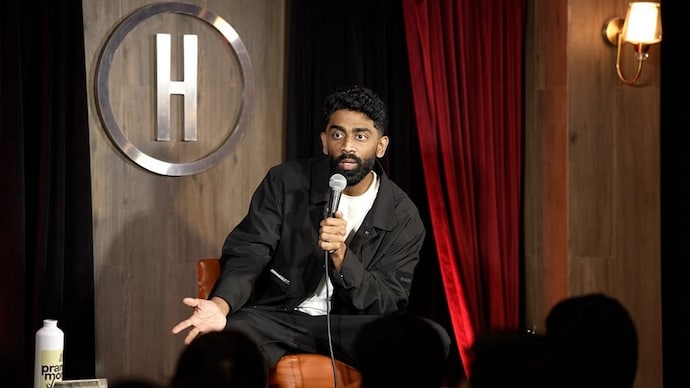
Stand-up controversy involving comedian Pranit More. Image Credit: India Today
The controversy surrounding comedian Pranit More’s viral stand-up video has escalated beyond social media outrage, drawing the attention of the National Commission for Women (NCW) and Maharashtra Cyber Department. During More’s show, audience member Himanshu Jangra—a web developer—shared a personal anecdote about spending approximately Rs 370 on chicken biryani during a date and later saying he wanted to “recover” or “vasool” the money when the woman asked him to drop her home. The remark was widely interpreted as implying entitlement to physical intimacy in exchange for paying for the meal.
The NCW has taken suo motu cognisance of the matter after the clips dominated online conversations for days. In a letter to Haryana’s Director General of Police, NCW Chairperson Vijaya Rahatkar sought swift police action, including registration of an FIR under relevant provisions of the Bharatiya Nyaya Sanhita (BNS), and requested a detailed Action Taken Report within seven days. Hearing notices have been issued to both Pranit More and Himanshu Jangra, directing them to appear before the Commission on June 22, 2026, at 4 pm.
The Maharashtra Cyber Department has registered an FIR against Pranit More, Himanshu Jangra, Dr. Sejal Pawar, and others at the Nodal Cyber Police Station under various provisions of the Bharatiya Nyaya Sanhita and the Information Technology Act. Cyber officials allege the content was circulated through YouTube, Instagram, and other social media platforms, featuring Jangra making comments suggesting an expectation of physical intimacy in return for money spent during a date while portraying women in a derogatory manner and trivializing issues of consent and dignity.
How and Why the Event Happened
During Pranit More’s stand-up show, audience member Himanshu Jangra was invited to share a personal anecdote. Recalling a recent date, he spoke about spending approximately Rs 370 on chicken biryani. When the woman later asked him to drop her home, Jangra claimed he wanted to “recover” or “vasool” the money he had spent—a remark widely interpreted as implying entitlement to physical intimacy in exchange for paying for the meal. NDTV has covered the full story.
The audience reportedly responded with laughter and applause, while More appeared to encourage the exchange, at one point describing it as “peak Gurgaon content”. Videos of the interaction quickly spread across social media, prompting widespread criticism. As the backlash intensified, Jangra was identified online and subsequently dismissed by his employer, Starvik Design, which stated that his comments did not align with the company’s values.
Both Jangra and More later issued public apologies, and some related content was reportedly removed from digital platforms. The controversy triggered legal action in Maharashtra, where the Maharashtra Cyber Department registered an FIR against More, Jangra, Dr. Sejal Pawar, and others. Investigators allege the content was recorded, promoted, published, and widely distributed across digital platforms to boost viewership, audience engagement, and monetization revenue.
Quotes and Statements
NCW Chairperson Vijaya Rahatkar said in the Commission’s statement, “The normalization or glorification of behavior that undermines a woman’s consent, dignity, and bodily autonomy has far-reaching consequences for women’s safety and social attitudes towards gender-based violence.”
Starvik Design, Jangra’s employer, stated, “His comments did not align with the company’s values,” leading to his dismissal.
An expert-style statement: “This case highlights the tension between comedic freedom and social responsibility. When jokes imply entitlement over a woman’s body, they cross from edgy comedy into harmful reinforcement of coercive attitudes,” said a gender studies expert.
A social media user commented, “Comedy should not trivialize consent. This ‘vasool’ remark was deeply problematic and needed consequences.”
Comedy, Consent, and Digital Accountability in India
The controversy has fuelled a wider debate about the boundaries of comedy, accountability, and free expression. Supporters of the comedians argue that the remarks were part of an edgy comedic performance taken out of context, while critics maintain that jokes rooted in entitlement and coercion can reinforce harmful attitudes and have real-world consequences.
In recent years, India has seen multiple controversies where stand-up comedy or online content sparked debates over consent, dignity, and free speech. Cases include comedians facing backlash for remarks on gender, religion, or social issues, leading to FIRs, platform bans, or employment consequences. The NCW has increasingly taken suo motu cognizance of such matters, reflecting growing institutional concern over content that trivializes non-consensual behavior.
The Bharatiya Nyaya Sanhita (BNS), India’s new criminal code replacing the IPC, includes provisions on insult to dignity, harassment, and electronic offenses. The Information Technology Act governs digital content liability, including distribution of harmful material online. Maharashtra Cyber’s FIR under these laws signals that authorities view the viral clip as potentially violating digital and criminal provisions.
Timeline
Before viral spread: Pranit More’s stand-up show includes Himanshu Jangra’s anecdote about Rs 370 biryani and a “vasool” remark.
Immediately after: Audience laughs and applauds; More calls it “peak Gurgaon content.”
Days later: Videos spread across YouTube, Instagram, and social media; backlash intensifies.
Identification: Jangra identified online; Starvik Design dismisses him.
Apologies: Both Jangra and More issue public apologies; some content removed.
NCW action: NCW takes suo motu cognizance; sends letter to Haryana DGP seeking FIR under BNS.
June 22, 2026, 4 pm: Hearing notices issued to More and Jangra to appear before NCW.
Maharashtra Cyber: FIR registered against More, Jangra, Dr. Pawar, and others at Nodal Cyber Police Station under BNS and IT Act.
Investigation ongoing: Authorities cite another viral clip involving Dr. Sejal Pawar making derogatory remarks about deceased male bodies.
Also Read: 3 Dead, 6 Rescued After Massive Fire At Residential Building In Delhi’s Tughlakabad
Why This Matters
This matters because the normalization of behavior that undermines consent and dignity has real consequences for women’s safety and social attitudes. The NCW’s statement highlights that glorifying entitlement can reinforce harmful attitudes toward gender-based violence [source text].
It also matters for the entertainment industry. Platforms and performers now face scrutiny over content that trivializes consent. The FIR and NCW summons signal that digital distribution of such content can lead to legal consequences.
For society, this is a reminder that comedy must respect boundaries of consent and dignity. Yeh issue kaafi important hai because it shows how viral content can trigger job loss, legal action, and institutional scrutiny, and it highlights the need for responsible content creation.
India Angle
The India angle is strong because this controversy involves Indian comedians, digital platforms popular in India (YouTube, Instagram), and institutional bodies like NCW and Maharashtra Cyber. The debate resonates with Indian audiences concerned about gender safety, consent, and free expression.
In Hinglish, seedhi baat yeh hai: jab comedy mein consent ki baat hoti hai, toh yeh pura society ko affect karta hai. This case shows how viral clips can lead to job loss, FIR, and NCW summons, and it highlights the need for responsible content in India.
For Indian readers, this is a reminder that digital content has real-world consequences, and authorities are increasingly holding performers and platforms accountable. The controversy will be closely watched by families, gender activists, and policymakers.
Analysis
My opinion is that this case highlights the tension between comedic freedom and social responsibility. When jokes imply entitlement over a woman’s body, they cross from edgy comedy into harmful reinforcement of coercive attitudes. The FIR and NCW summons signal that digital distribution of such content can lead to legal consequences.
The controversy may influence future comedy standards and platform policies. Authorities may require performers and venues to ensure content does not trivialize consent. Yeh issue kaafi important hai because it shows how viral content can trigger job loss, legal action, and institutional scrutiny.
What Next
Pranit More and Himanshu Jangra will appear before NCW on June 22, 2026, at 4 pm for questioning and statement recording. Maharashtra Cyber will investigate the digital distribution of the content and may summon additional persons involved in recording, promotion, or monetization.
Authorities may review platform policies on content that trivializes consent. Performers and venues may adopt stricter guidelines to prevent similar incidents. The case could influence future comedy standards and digital content regulations in India.
Conclusion
The “Rs 370 Ki Biryani” stand-up controversy has escalated beyond social media, with NCW issuing hearing notices to Pranit More and Himanshu Jangra and Maharashtra Cyber registering an FIR against them, Dr. Sejal Pawar, and others. Jangra’s “vasool” remark about biryani was interpreted as entitlement to physical intimacy, sparking backlash, job loss, and legal action.
Yeh case kaafi important hai because it shows how viral content can trigger job loss, FIR, and NCW summons. The NCW’s statement highlights that normalizing behavior undermining consent has far-reaching consequences for women’s safety. The controversy fuels debate on comedy boundaries, accountability, and free expression and may influence future standards in India.
Written By A. Jack