
In his last messages, the deceased, Khalil Shaikh, spoke of betrayal by business partners, monetary losses and alleged threats. The investigation now turns to the claims made in the videos and suicide note.
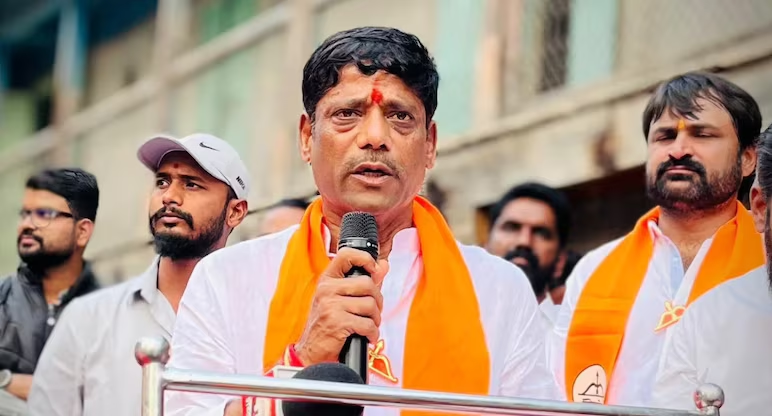
Police in Pune investigate after contractor Khalil Shaikh allegedly died by suicide in Gultekdi and named multiple people. Image Credit: NDTV
A serious and emotionally charged case has emerged from Pune after a 65-year-old contractor allegedly ended his life at his residence in the Gultekdi area on Thursday. Police said the deceased, Khalil Shaikh, left behind videos and a suicide note in which he named former Shiv Sena MLA Ravindra Dhangekar, Dhangekar’s wife and 12 others.
According to the police official, a case has been registered against 14 people at Swargate police station under the Bharatiya Nyaya Sanhita for abetment of suicide, criminal breach of trust, criminal intimidation and other offences. The allegations in the note are serious, but police have also made it clear that the investigation is still underway. Yeh case kaafi sensitive hai because it combines allegations of financial betrayal, political names and a tragic loss of life.
What Police Say Happened
Police said Shaikh died by suicide at his home in Gultekdi. Before taking the extreme step, he allegedly recorded videos and wrote a suicide note naming several people connected to his business dealings. The official said Shaikh described severe financial losses and claimed he had been betrayed by business partners in multiple projects around the city. This story was also covered by NDTV.
He also reportedly said that he was under stress because of threats from some of those individuals. That part of the allegation is important because it suggests the case may involve more than one type of dispute: financial conflict, alleged intimidation and possible criminal breach of trust. For investigators, the next task will be to separate emotional statements from factual evidence.
The police have not publicly confirmed the claims in the note. They have only said that a case has been registered and that a further probe is in progress. That is a standard but important distinction. At this stage, the note is part of the evidence, not the conclusion. Seedhi baat yeh hai: a suicide note can guide the probe, but it does not automatically prove every allegation inside it.
Why the Case Is Serious
This case is serious for three reasons. First, it involves a death by suicide, which always demands sensitive handling. Second, it names a former elected representative and his family, which gives the matter public and political importance. Third, it points to possible business-related fraud, betrayal and intimidation, which means the police may need to examine financial records, communication trails and business agreements.
When a contractor leaves behind a note and video testimony, investigators usually treat those materials as significant leads. They may check bank transactions, project documents, partnership details and any previous complaints or warnings. If threats were really received, there may be messages, call records or witness statements to examine. If financial losses were central to the distress, the accounting trail could become key evidence.
At this stage, the facts available are limited to what police have disclosed. But the seriousness of the allegations means the case will likely attract close public attention in Pune and across Maharashtra. Yeh issue kaafi important hai because it touches both the legal system and public trust in business relationships.
Background and Context
The deceased, Khalil Shaikh, was reportedly involved in contractor and business work in Pune. The police official said Shaikh’s note referred to multiple business projects around the city and named people he claimed were connected to those dealings. That suggests the disputes may not have been isolated to one transaction or one person. Instead, this could involve a broader web of business relationships that went sour over time.
Contracting work often involves delayed payments, partnership tensions, project disputes and local influence networks. In a city like Pune, where construction and infrastructure projects are active, financial disagreements can quickly escalate if expectations are not met. If someone believes they have been cheated or sidelined, distress can deepen fast, especially when large sums of money are involved.
The mention of an ex-MLA adds a political dimension. Public figures are often named in such complaints because they may have had links to business, local mediation or project influence. However, being named in a note is not the same as being found guilty. That distinction will matter a great deal as the case moves ahead. Indian readers are likely to follow this story closely because it blends politics, local business and a tragic personal end.
Timeline
Before Thursday: Khalil Shaikh reportedly records videos and writes a suicide note.
Thursday: Shaikh allegedly dies by suicide at his residence in Gultekdi, Pune.
After the death: Police review the note and videos.
Same day: A case is registered at Swargate police station against 14 people, including former MLA Ravindra Dhangekar.
Now: Further investigation is underway into the allegations of abetment, breach of trust and intimidation.
Also Read: Pune Police Visit Rajasthan Temple to Verify Secret Marriage Claim in Ketan Agarwal Murder Case
Why This Matters
This matters because suicide cases linked to alleged financial betrayal often reveal deeper problems in business dealings and dispute resolution. When a person leaves a note naming multiple individuals, police must investigate whether the distress came from a genuine pattern of harassment, economic loss or intimidation. If those claims are supported by evidence, the case can lead to serious criminal consequences. Yeh issue kaafi important hai because the law treats abetment of suicide as a grave offence, not just a personal tragedy.
It also matters because the case involves a former legislator and his family. That automatically increases public scrutiny and places pressure on authorities to investigate fairly and transparently. On the one hand, there will be concern that politics should not influence the probe. On the other, there will be concern that political names should not be shielded if evidence exists. The only way forward is a clean, document-based investigation.
The human side is equally important. A death by suicide leaves behind questions that often cannot be answered easily. Families, business associates and authorities are left trying to understand what pushed the person to such a point. For society, the case is a reminder that financial disputes and emotional pressure can become deadly if they are left unresolved. That is why early intervention and proper legal channels matter so much.
India Angle
For Indian readers, this case resonates because contractor disputes and business betrayals are common complaints in many cities, especially where construction and local development projects are involved. In Hinglish, seedhi baat yeh hai: jab paisa, partnership aur pressure ek saath aa jaate hain, toh situation bahut quickly toxic ho sakti hai. This is especially true in sectors where delayed payments and personal influence are often part of the ecosystem.
The story also has a political angle that India’s audience will immediately notice. Whenever a former MLA or any public figure is named in a serious case, people want to know whether the system will respond without fear or favour. That is why this case may become part of a larger public conversation about accountability and the role of political connections in business.
Pune itself is an important urban centre where construction, real estate and contractor networks are active. A case like this is not just a local tragedy; it reflects broader urban business pressures that can be found in many Indian cities. The lessons from this case may therefore matter beyond Pune alone.
Analysis
My opinion is that the investigation needs to be especially careful because this case sits at the intersection of grief and accusation. A suicide note can be emotionally powerful, but the police must verify every financial and factual claim before any legal conclusion is reached. That is the right approach, not only for fairness to the accused but also for credibility in the eyes of the victim’s family and the public.
I also think the case shows how vulnerable contractors can be when business relationships turn hostile. The note’s mention of financial losses and threats suggests pressure that may have built over time. If true, that points to a serious failure in dispute resolution and personal safety. In India, many business disputes are handled informally until they become too big to contain. This case is a reminder of how dangerous that delay can be.
From an editorial perspective, this story has strong emotional weight because the deceased left behind videos and a note. That makes the narrative more direct and potentially more impactful. But it also means journalists must be careful not to overstate allegations before police findings are clear. The line between reporting and speculation must remain firm.
What Next
The next step will be the police investigation, which may include examining the suicide note, video recordings, business records and possible communication between Shaikh and the named individuals. Investigators may also question those named in the case to understand the business background and any alleged threats.
If the evidence supports the allegations, the case could move forward with stronger legal action. If not, police may narrow the scope of the probe or revise parts of the complaint. Either way, the court and investigators will be central to what happens next.
The timing of the matter is also important because judicial scrutiny often increases once a case involves a public figure and a suicide note. The registered FIR will likely draw attention from both legal observers and the public. Over the coming days, the case may either deepen into a broader financial and political controversy or remain focused on the limited evidence uncovered by police.
Conclusion
The death of contractor Khalil Shaikh in Pune has led to a serious police case involving former Shiv Sena MLA Ravindra Dhangekar, his wife and 12 others, all named in the suicide note and videos left behind. The allegations point to financial losses, betrayal by business partners and claims of threats, but police have stressed that the investigation is still ongoing. As the probe moves ahead, the focus will be on facts, records and evidence rather than accusation alone. This is a tragic case, a legally significant one and a reminder of how quickly business disputes can become matters of life and death.
Written By A. Jack