
PUNE: A seven-year-old boy was killed after he got trapped in a lift at a residential society in Sinhagad Road area of Pune on Monday night. Police have registered an Accidental Death Report as investigators look into how Shivansh Shailesh Dhoot got stuck inside the lift at Riddhi Siddhi Apartment in Nimbajnagar.
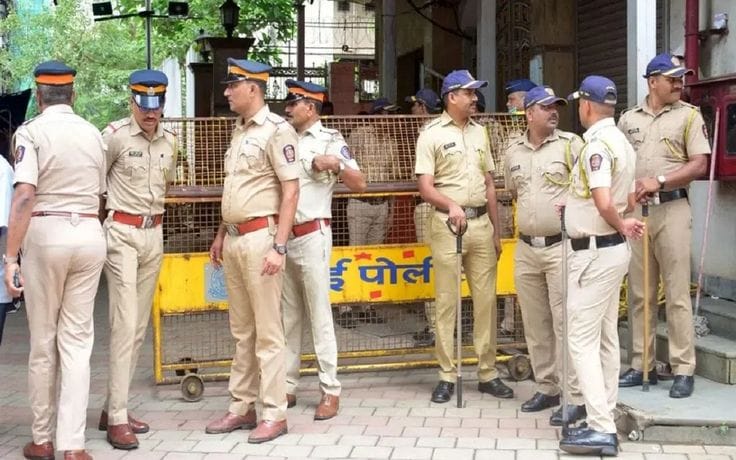
Police and fire brigade personnel at Riddhi Siddhi Apartment in Pune’s Sinhagad Road area after a seven-year-old boy died in a lift-related tragedy.
Pune Lift Tragedy
A heartbreaking incident in Pune has left a residential society in shock after a seven-year-old boy died after getting trapped between a lift door and the wall at Riddhi Siddhi Apartment in the Sinhagad Road area. The child, identified as Shivansh Shailesh Dhoot, was found unresponsive after a search operation involving family members, residents, police, and fire brigade personnel.
According to police, the incident took place around 10:30 pm on Monday when Shivansh was reportedly playing inside the housing society premises and entered the lift. He pressed one of the buttons, after which the lift began moving but stopped midway before reaching the second floor. Police believe the child may have remained trapped in the enclosed space for a prolonged period, leading to his death. This is a deeply tragic case because it combines the innocence of a child’s routine play with what appears to be a fatal lapse in safety or response. Yeh issue kaafi important hai because it raises urgent questions about residential lift safety in India.
What Happened
The available details suggest that Shivansh was playing on the society premises as he normally did. At some point around 10 pm, he appears to have entered the building lift and pressed a button. The lift then moved but stopped midway, creating a dangerous situation where the child became trapped. When he did not return home for a long time, his family and society residents started looking for him. NDTV has covered the full story.
As the search continued, some residents suspected the lift may have become stuck. Police and the fire department were informed around 11.30 pm. After rescue personnel reached the spot and opened the lift, the boy was found unresponsive. Police later said preliminary findings did not show an immediate technical fault in the lift, though maintenance responsibility rests with the housing society management.
The exact cause of death is still under investigation. Police suspect he may have died because of the prolonged confinement inside a closed space, but only further examination can confirm whether the death was due to suffocation, compression, panic, or a combination of factors. That uncertainty is important because it means investigators still need to establish the precise mechanism of the tragedy.
Why the Incident May Have Happened
Based on the preliminary details, this tragedy appears to have unfolded through a combination of vulnerability and delay. A seven-year-old child inside a lift is already at risk if the lift stops unexpectedly. If the lift gets stuck between floors or fails to open properly, even a short delay can become dangerous for a child who may not know how to respond.
Another important angle is the society’s role in maintenance and monitoring. The police have indicated that there was no immediate technical fault found in the lift, which shifts attention toward maintenance practices, operational checks, and emergency response readiness. If a lift is being used frequently by residents, especially children, then the housing society must ensure regular servicing, proper safety features, and quick access in case of malfunction.
The gap between the child going missing and the rescue call reaching emergency teams is also critical. The incident appears to have become known only after family members and residents searched for a while. In such cases, every minute matters. A shorter response time might have changed the outcome, though that cannot be assumed with certainty. Still, the timeline suggests that the rescue effort began only after concern had already built up in the society.
Police Statement and Probe
Sinhagad Road Police have registered an accidental death report and are continuing their investigation. An ADR is typically filed when a death appears accidental but still requires official examination. Police are now likely to look into lift maintenance records, societal responsibility, the condition of the equipment, and the sequence of events inside the building.
Preliminary findings showing no immediate technical fault do not mean the matter is closed. Instead, they suggest that investigators are examining whether the lift’s condition, the society’s maintenance system, or some other operational issue contributed to the tragedy. In cases like this, the final picture often depends on a detailed technical review, witness statements, and any available CCTV footage from the society premises.
Background
Lift-related accidents in residential societies are rare but deeply alarming because they happen in places people consider safe and routine. In India, apartment complexes increasingly depend on lifts for daily movement, especially in multi-story buildings. That makes maintenance and safety checks absolutely essential.
Children are particularly exposed in such environments because they often play in common areas and may not understand the risks of enclosed mechanical systems. Residential societies sometimes assume that a lift is safe as long as it is functioning normally, but incidents like this show how quickly a small disruption can become fatal. Pune, like many fast-growing cities, has seen rapid residential expansion, which also increases the burden on building maintenance systems. When societies grow faster than their safety systems, small failures can turn into serious tragedies.
Timeline
Around 10 pm, Monday: Shivansh was reportedly playing on the society premises.
Soon after: He entered the lift and pressed a button.
Midway movement: The lift stopped before reaching the second floor.
Around 11.30 pm: Residents informed police and the fire department after searching for him.
Rescue operation: Fire brigade and police opened the lift and found the boy unresponsive.
Afterwards: Police registered an accidental death report and began further investigation.
Also Read: Maharashtra’s Big Nuclear Power Push: Rs 6.5 Lakh Crore Deals Signed With 4 Energy Giants
Why This Matters
This matters because it is a reminder that safety in residential buildings is not just about large disasters; even a single lift malfunction or delay can have fatal consequences. Families, children, and elderly residents rely on these systems every day, often without thinking twice. When something goes wrong, the impact can be devastating in seconds.
It also matters because housing societies across India often underestimate the importance of maintenance records, emergency checks, and safety drills. Many residents assume that lift problems will be obvious or that service providers will catch them in time. But this case shows that the margin for error is very small. For parents, the story is especially painful because it involves a child in a familiar setting, not a risky public space. In simple words, yeh sirf ek accident nahi hai—it is a warning about how everyday infrastructure can become dangerous if not properly managed.
India Angle
For Indian readers, this case will feel especially close to home because apartment living is now a normal part of urban life in cities like Pune, Mumbai, Bengaluru, Delhi, and Hyderabad. More families live in multi-story buildings than ever before, which means lift safety is now a daily concern, not a rare issue.
In many Indian societies, children play around lifts, staircases, and common corridors with minimal supervision. That makes preventive safety measures even more important. Regular maintenance, clear warning signage, child awareness, and prompt response systems are all part of a responsible housing setup. This tragedy in Pune should prompt societal committees across India to ask a basic question: are our residential buildings truly safe, or do we only think they are? Yeh point kaafi important hai because urban safety starts at home.
Analysis
My view is that the biggest takeaway here is not just the individual tragedy but the larger system failure it points to. If a lift can trap a child for long enough to become fatal, then something in the safety chain clearly needs urgent review, whether it is maintenance, design, monitoring, or emergency response. The preliminary statement that no immediate technical fault was found should not lead to complacency. Even if the lift itself did not show an obvious failure, the society’s overall safety environment still needs scrutiny.
What’s Next?
The next step will be the detailed investigation by police, likely including technical inspection of the lift, statements from society members, and a review of maintenance logs. The housing society management may also come under scrutiny to determine whether service intervals were followed properly and whether emergency procedures were in place.
If any negligence is found, the matter could move beyond an accidental death report into further legal action. More importantly, the incident may lead other residential societies to review their own safety systems, especially in buildings where children and elderly residents depend heavily on lifts. The hope now is that this tragedy leads to real prevention efforts, not just condolences.
Conclusion
The death of seven-year-old Shivansh Shailesh Dhoot in a Pune residential society is a heartbreaking reminder of how quickly a routine part of daily life can turn into a fatal accident. Police say the boy got trapped inside a lift at Riddhi Siddhi Apartment on Sinhagad Road, and an accidental death report has been registered as the investigation continues.
While the exact cause of death is still being examined, the incident has already raised serious questions about residential lift safety, maintenance responsibility, and emergency response. For Pune and for urban India more broadly, this is a painful wake-up call: safety in apartment complexes must be treated as a daily responsibility, not an afterthought.
Written By A. Jack