
The Pune district administration has decided to frame a standard operating procedure (SOP) for Ready-Mix Concrete (RMC) plants within three weeks, while the Pune RMC Association says operations across the district will resume from May 9. The move comes after rising concerns over air pollution, traffic congestion and construction-related issues in the Pune metropolitan region.
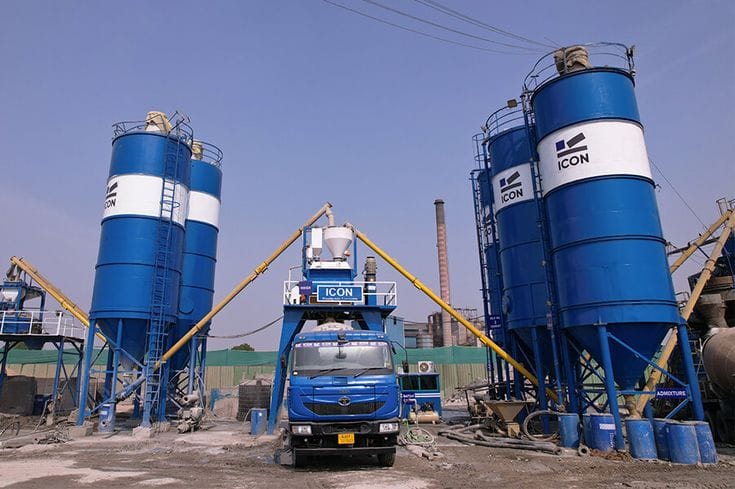
Pune district administration and RMC industry representatives meet to discuss pollution control, traffic management, and a future SOP for Ready-Mix Concrete plants.
Pune RMC Plants
Pune district administration and RMC industry representatives meet to discuss pollution control, traffic management, and a future SOP for Ready-Mix Concrete plants.
Pune’s Ready-Mix Concrete sector is back in focus after a high-level meeting chaired by District Collector Jitendra Dudi led to two important decisions: the administration will prepare a formal SOP for RMC plants within three weeks, and the association has announced that operations will resume from May 9. The development is significant because the RMC industry plays a central role in Pune’s infrastructure and construction ecosystem, yet it has also become linked to pollution and traffic complaints from residents.
What Happened
The district administration said it is responding to increasing air pollution, traffic congestion, and construction-linked concerns in the Pune region. At a meeting held at the collector’s office on Thursday, officials decided to coordinate with multiple agencies to create a more structured regulatory framework for RMC operations. The Indian Express has covered the full story.
According to the reports, the SOP will be jointly prepared with the help of the Pune Metropolitan Region Development Authority, Pune and Pimpri-Chinchwad municipal corporations, police commissionerates, and the Maharashtra Pollution Control Board. Until the SOP is finalized, authorized RMC plants that are following the rules will be allowed to continue operations under specific conditions. The administration has also indicated that illegal and unauthorized plants will face strict action and closure.
Why The Decision Was Taken
The immediate reason is the growing complaint that RMC plants and their transit mixers are contributing to dust, air pollution, and road congestion in a rapidly expanding urban region. Pune and Pimpri-Chinchwad have seen massive construction activity over the years, and that growth has created new conflicts between development and environment.
Collector Dudi reportedly said that the administration wants a coordinated approach to deal with these overlapping concerns. The idea is not to stop construction activity altogether, but to regulate it better so that public inconvenience and environmental damage are reduced. That is the basic balance the administration is now trying to strike: construction chalta rahe, but discipline ke saath.
What The Association Said
The Pune RMC Association welcomed the administration’s approach and expressed gratitude to the district collector and other authorities for listening to the industry’s concerns. Association president Pradip Walhekar said more than 300 members were consulted, and the outcome allows operations to restart from May 9 in line with the instructions of the district collector, PMC commissioner, traffic police, and MPCB.
The association also said it is launching a toll-free helpline for complaints related to transit mixers, traffic violations, rash driving, pollution from plants, and other nuisances. That is a notable step because it shows the industry trying to present itself as accountable rather than defensive. In public-policy terms, this is a useful signal: industry and administration are now working from the same table instead of opposite sides.
Background And Context
The RMC sector has become essential to Pune’s construction growth, especially as the city and its surrounding zones continue to expand. Ready-Mix Concrete is used in roads, buildings, flyovers, and large infrastructure projects, so any long shutdown can affect the pace of work across the region.
At the same time, urban residents have increasingly complained that RMC plants and mixers add to dust pollution, road blockages, and unsafe movement on busy corridors. That tension has been building for years, and this latest SOP discussion is essentially the government’s attempt to bring long-term order to a fast-growing but messy sector. In simple words, the issue is not just about concrete; it is about how a modern city manages growth without choking itself.
Timeline
April 15, 2026: RMC plants across Pune district had earlier paused operations as part of a structured compliance initiative.
May 7, 2026: District administration announces that an SOP for RMC plants will be prepared within three weeks.
May 8, 2026: Pune RMC Association says operations will resume from May 9 and announces a citizen helpline.
Next three weeks: SOP consultations will continue with civic bodies, police, and pollution authorities.
The timeline shows that this is not a one-day decision. It is a staged process that combines temporary operational relief with long-term regulation.
Also Read: Bihar Viral Horror: Vendors Caught Painting Cucumbers Green at Railway Station
Why This Matters
This matters because Pune is one of India’s most rapidly changing urban regions, and construction activity is tied directly to housing, roads, and industrial expansion. If RMC plants are not managed properly, the city risks more pollution, traffic jams, and public frustration. If they are over-restricted, infrastructure work slows down and costs rise.
It also matters because the administration is trying to build a framework that can be enforced consistently. A clear SOP gives everyone—plant operators, transporters, traffic police, and residents—a common rulebook. That kind of clarity is important in any city, but especially in a growth hub like Pune. Yeh issue kaafi important hai because it affects daily life, not just industry data.
India Angle
For Indian cities, Pune’s case is a familiar story. Rapid urbanization often creates a clash between construction needs and environmental concerns, and many metros are still trying to find the right balance. Pune’s RMC decision may become a model for other cities facing similar problems with transit mixers, dust control, and route discipline.
For local residents, the impact is very direct. Cleaner roads, fewer traffic jams, and better compliance from construction vehicles can improve daily commutes. For builders and developers, the bigger benefit is regulatory certainty — if the rules are clear, projects can move ahead without sudden disruptions or confusion. This is why Pune’s next three weeks of SOP drafting will be closely watched across Maharashtra.
Analysis
My assessment is that the administration is trying to move from a reactive mode to a managed framework. Instead of repeated shutdowns and protests, the SOP route gives regulators a chance to define operating hours, movement rules, signage standards, camera requirements, and penalties in advance. That is a smarter long-term solution than handling complaints case by case. At the same time, the industry’s decision to launch a helpline shows it understands that public trust is now part of business survival.
What Next
The next step is the drafting and finalization of the SOP over the next three weeks. That document will likely set conditions for plant operations, transit mixer movement, pollution controls, and enforcement norms across Pune and Pimpri-Chinchwad.
After that, the administration will be expected to monitor compliance more closely, especially in red-zone areas where vehicle movement may remain restricted. The RMC Association’s helpline will also be important, because if it works well, complaints can be resolved faster and public anger can be reduced. If the system is implemented sincerely, Pune could see a more orderly RMC ecosystem in the months ahead.
Conclusion
Pune’s RMC decision is a practical attempt to balance economic growth with environmental and traffic concerns. The district administration wants a formal SOP, the industry wants operations to continue with clarity, and residents want cleaner, safer streets.
That balance is difficult, but it is necessary. The next few weeks will show whether Pune can turn a conflict over concrete plants into a workable model of urban regulation. If done right, this could become a useful example for other Indian cities facing the same development-versus-discipline challenge.
Written By A. Jack