
The victim, identified as Tanish Vikas Rayakwar, was found dead after an alleged attack linked to a personal dispute that turned violent. Police say the main accused, Rohit Sandip Khade, had a criminal record and lured the teenager away before killing him.
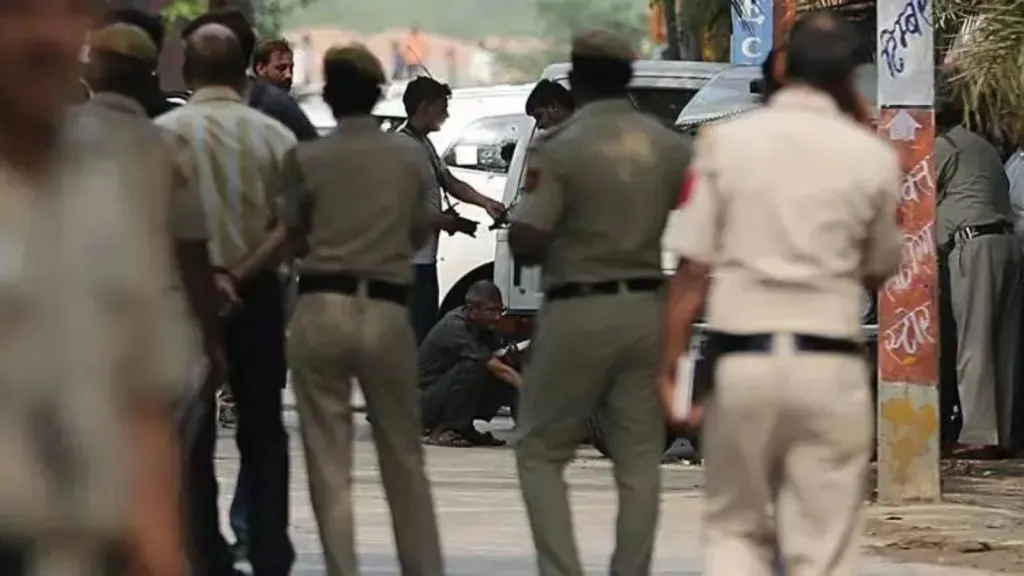
Police investigate the area in Fursungi where a 16-year-old boy was allegedly killed by a youth over a dispute linked to the victim’s relationship with the accused’s sister. Image Credit: IndianExpress
A shocking murder in Pune has raised fresh concerns about how quickly personal disputes can escalate into deadly violence. On Saturday morning, a 20-year-old man allegedly killed a 16-year-old boy over the latter’s relationship with his sister, police said. The deceased has been identified as Tanish Vikas Rayakwar, a resident of Kondhwa Budruk.
Police have arrested the main accused, Rohit Sandip Khade, who lives in Pansare Nagar in Yewalewadi, while a minor alleged to have assisted him has also been detained. The case was registered after the victim’s uncle, Ajay Rayakwar, filed a complaint at Fursungi police station.
The incident has stunned local residents because it involves not just a violent attack but a planned one. According to police, the victim was taken to an isolated spot near a garbage depot in Fursungi, where he was attacked with a sharp weapon and a stone.
What Police Say Happened
Assistant Police Inspector Bhushan Potawade, who is leading the investigation, said Khade had a criminal record and was upset over Tanish’s relationship with his sister. According to him, Khade and his minor accomplice allegedly took the teenager to a secluded location before assaulting him fatally.
Police say the attack was not a spur-of-the-moment outburst. The fact that the accused allegedly moved the boy to an isolated area suggests planning and intent. That makes the case more serious, because it indicates a deliberate act rather than a sudden fight. This story was also covered by The IndianExpress.
In cases like this, investigators usually look at whether the victim was warned, lured, threatened or tracked before the attack. The use of both a sharp weapon and a stone also points to a violent and sustained assault.
Why the Case Escalated
The immediate trigger, police say, was a dispute over the victim’s relationship with the accused’s sister. In many parts of India, especially in emotionally charged family conflicts, relationships outside parental or family approval can become a source of anger. But while the dispute may have started as a personal matter, the response here allegedly crossed into criminal violence.
This is where the case becomes deeply troubling. What may begin as a family disagreement can spiral into intimidation, stalking, assault or even murder if there are no checks. Yeh issue kaafi important hai because it shows how dangerous unresolved anger and possessiveness can become when combined with violence and criminal behaviour.
The fact that the accused had a criminal record makes the case even more alarming. It suggests the person may already have had prior contact with the law, which raises questions about supervision, social intervention and how repeat offenders are handled.
The Victim and the Complaint
Tanish Vikas Rayakwar was only 16 years old and lived in Kondhwa Budruk. At that age, a person is still a minor under the law and especially vulnerable in disputes involving older youths or adults. His uncle, Ajay Rayakwar, filed the FIR, setting the criminal process in motion.
For the family, this is not only a legal case but a devastating personal loss. A teenager’s death in this manner leaves behind grief, fear and anger, and it often prompts wider concern in the neighbourhood about safety, youth violence and the risks associated with local disputes.
Police are expected to examine the victim’s last movements, witness statements, phone records and the exact sequence of events before the attack. Those details will help establish how Khade and the minor accomplice allegedly brought Tanish to the spot and how the assault unfolded.
Background and Context
Pune has seen a mix of urban growth and social strain in recent years. As the city expands into areas like Yewalewadi, Kondhwa Budruk and Fursungi, old community tensions sometimes get amplified by changing neighbourhood dynamics, youth rivalries and poor conflict resolution.
Cases involving relationships often become especially sensitive because they combine personal emotion with social pressure. Families may see such relationships as a threat to honour or control, while young people may see them as private matters. That mismatch can become dangerous when anger is handled outside the law.
This is not just a Pune issue. Across India, there have been repeated cases where romantic relationships or perceived “family honour” disputes end in violence. The pattern is familiar, but each case is still tragic in its own right. It shows how urgently communities need better awareness around consent, communication and non-violent dispute resolution.
Timeline
Before Saturday: A dispute develops over the victim’s relationship with the accused’s sister.
Saturday morning: Tanish Vikas Rayakwar is allegedly taken to an isolated spot in Fursungi.
At the spot: Police say he is attacked with a sharp weapon and a stone.
After the incident: The victim’s uncle files an FIR at Fursungi police station.
Later: Police arrest Rohit Sandip Khade and detain a minor accomplice.
Why This Matters
This matters because it highlights the deadly risks of turning personal disputes into violent revenge. Once a disagreement becomes physical, the consequences can be irreversible, especially when minors are involved or when vulnerable teenagers are targeted.
It also matters because it raises serious concerns about youth violence in urban areas. When a 20-year-old and a minor are allegedly involved in a murder, the case points to deeper social problems, including anger management, criminal influence and lack of intervention before violence escalates.
For parents and communities, the message is clear: trust, communication and legal restraint are far safer than private retaliation. In simple Hinglish, seedhi baat yeh hai — gussa kabhi bhi jaan se bada nahin ho sakta.
India Angle
For Indian readers, this case hits a familiar nerve because relationship-related violence remains a serious social issue in many cities and towns. Families often view such matters through emotion, reputation and control, while young people may be navigating the situation differently. When those worlds collide, tragedy can follow.
The India angle is also about policing and prevention. Urban neighbourhoods need faster intervention, stronger community awareness and better support systems for at-risk youth. If early signs of threat, stalking or intimidation are ignored, the result can be violence like this case in Pune.
This story may also prompt discussion about how criminal records are monitored. If the accused had prior cases, people would naturally ask whether stronger supervision or rehabilitation could have reduced the risk of another serious crime.
Analysis
My opinion is that what makes this case especially disturbing is not just the murder itself, but the age difference and the alleged planning. A 16-year-old should never end up in a situation where a personal relationship dispute escalates into a fatal ambush. That is a sign of deeper failure in conflict resolution.
I also think the involvement of a minor accomplice is crucial. It suggests that younger people are being drawn into criminal acts with alarming ease. That should concern police, parents, schools and local leaders alike.
What Next
The next step will be the formal investigation, including interrogation of the arrested accused and questioning of the detained minor. Police will likely try to reconstruct the crime scene, establish motive and verify whether others knew about the plan in advance.
If the evidence supports the FIR, the main accused may face serious charges, and the minor’s case will be handled under juvenile justice procedures. The court process will determine the exact legal consequences, but the police investigation will set the tone for the case.
There may also be a wider local response if residents feel unsafe or if more details emerge about prior disputes or threats. In crimes like this, the aftermath often includes a demand for better policing, stronger youth counselling and community vigilance.
Conclusion
The alleged killing of 16-year-old Tanish Vikas Rayakwar in Pune is a heartbreaking reminder of how quickly personal conflict can turn fatal. What police describe as a dispute over a relationship with the accused’s sister ended in a violent attack involving a sharp weapon and a stone, with a minor also allegedly involved.
The case now rests with investigators, but its human cost is already clear. A teenager has lost his life, a family is in mourning and the city is once again confronted with the dangerous consequences of unresolved anger and impulsive violence.
Written By A. Jack