
NCP leader and Baramati MP Supriya Sule said her vehicle was hit by another car on the Mumbai-Pune Expressway while she was travelling from Pune to Mumbai on Saturday. Sule said everyone travelling with her was safe and used the incident to urge motorists to drive carefully, wear seat belts and avoid reckless driving.
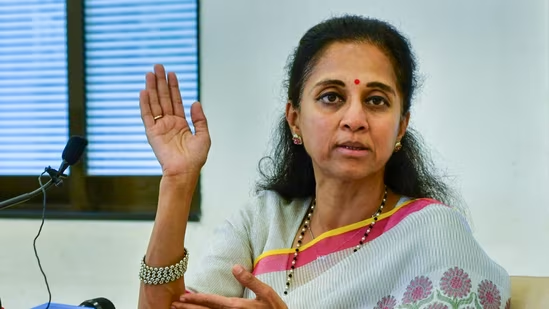
Supriya Sule’s vehicle was reportedly hit from the side on the Mumbai-Pune Expressway, prompting fresh concern over highway safety and rash driving.
The incident involving Supriya Sule has once again put the spotlight on highway safety in Maharashtra, especially on one of the country’s busiest and fastest-moving road corridors. According to her post on X, a vehicle bearing registration number GJ13CF5257 rammed into her car from the side due to reckless driving while she was travelling from Pune to Mumbai. Thankfully, she confirmed that no one in her car was injured.
What Happened
Sule said the incident occurred on the Mumbai-Pune Expressway during her journey from Pune to Mumbai. In her statement, she described the experience as “awful” and said the other vehicle hit her car from the side because of reckless driving. She added that she and her companions were safe, which likely prevented the episode from becoming far more serious. NDTV has covered the full story.
The exact sequence of events has not been detailed publicly beyond her post, but the key fact is clear: a high-speed road incident took place on an expressway known for heavy traffic, fast-moving vehicles and a long history of accident-related concerns. On roads like this, even a side impact can be dangerous because vehicles travel at high speed and drivers often have only seconds to react.
Why This Incident Matters
This matters because it involves a sitting public representative and highlights a risk that ordinary commuters face every day. When a leader like Supriya Sule speaks about such an incident, it brings national attention to a problem many people already know too well: reckless driving on Indian highways.
The Mumbai-Pune Expressway is one of Maharashtra’s most important road links, used by office travellers, tourists, transport vehicles and political convoys. Any lapse in driving discipline on such a road can quickly turn into a major safety issue. Yeh issue kaafi important hai because highway safety is not just about one car or one leader — it affects thousands of passengers, families and drivers every single day.
Sule’s Message On Safety
After the incident, Sule used the moment to make a broader public appeal. She urged motorists to wear seat belts, remain alert and follow responsible driving practices to make highways safer for everyone. That message is simple, but it is also necessary, because many highway accidents in India are caused by overspeeding, lane jumping, distracted driving and poor vehicle discipline.
Her response is likely to resonate because it does not turn the incident into political drama. Instead, it frames it as a road safety warning. In a country where expressway accidents often make headlines, such reminders matter. They are especially useful when they come from someone who has personally experienced the risk.
Background And Context
The Mumbai-Pune Expressway is among the busiest and most important highways in western India. It connects two major cities and handles a large flow of private vehicles, buses and freight traffic. Because of the speed at which vehicles travel, even small errors can have large consequences.
Over the years, highways in India have seen repeated concerns over rash driving, lane indiscipline, fatigued drivers and speeding. This is especially true on routes where drivers get overconfident because the road appears broad and modern. But expressways are not immune to accidents. In fact, the speed itself can magnify every mistake. So while the Supriya Sule incident may not have caused injuries, it still serves as a reminder that “safe road” and “fast road” are not the same thing.
Timeline
Saturday: Supriya Sule travels from Pune to Mumbai on the Mumbai-Pune Expressway.
During the journey: Another vehicle, identified by registration number GJ13CF5257, reportedly hits her car from the side.
Immediately after: Sule confirms on social media that everyone in her vehicle is safe.
Later: She appeals to motorists to wear seat belts, stay alert and follow responsible driving practices.
This short timeline shows how quickly a routine road journey can turn into a frightening moment.
Also Read: Woman Killed in Tiger Attack in Maharashtra’s Gondia; Second Big Cat Attack in Two Days
Local Angle
For Maharashtra residents, especially daily travellers between Pune and Mumbai, this story feels close to home. Many people use the expressway for business, family visits, and weekend travel, so the road is part of everyday life. When a public figure reports a crash-like incident on the route, it naturally renews concern about how safe the highway really is.
There is also a practical local lesson here. Many Indian motorists still underestimate the danger of side impacts, sudden lane changes and over-speeding on expressways. People often think highway driving is simpler than city driving, but the opposite can be true when speed and traffic density rise together. In simple terms, yeh sirf ek VIP incident nahi hai — yeh har regular commuter ke liye warning signal hai.
Analysis
My take is that the value of this story lies less in the political identity of the person involved and more in the message it sends. If a leader with access to secure travel arrangements can still face a serious road scare, then ordinary motorists are even more vulnerable. The key issue is not just the one car that caused the impact but the wider culture of driving behavior on Indian highways. Better enforcement, more driver discipline, and greater awareness are all needed.
Why It Matters For Road Safety
This matters because road safety remains one of India’s most pressing everyday issues. Highways are designed for faster travel, but faster travel also requires greater discipline. Seat belts, lane discipline, steady speeds and alertness are not optional habits — they are the difference between a near-miss and a serious injury.
Political leaders speaking up after such incidents can help reinforce this message. The public often pays attention when someone prominent mentions road safety in personal terms. That may encourage more people to buckle up, slow down and think twice before making rash manoeuvres. It is a small step, but road safety is built on many small steps.
What Next
The immediate next step is likely public discussion about the incident and whether any action will be taken regarding the driver of the vehicle involved. Sule’s post has already created awareness, and authorities may look into the circumstances if a formal complaint or traffic report is filed.
More broadly, the incident may spark fresh reminders from traffic officials and road safety advocates about safe driving practices on the Mumbai-Pune Expressway. It could also lead to renewed calls for stronger enforcement against speeding and reckless lane changes. If that happens, the incident may end up producing at least one positive outcome: greater caution among highway users.
Conclusion
Supriya Sule’s report that her car was hit on the Mumbai-Pune Expressway is a reminder that even a routine journey can turn dangerous in seconds when drivers are careless. The good news is that she and her companions were safe, but the incident itself underlines a much bigger problem — reckless driving on one of Maharashtra’s busiest highways.
Her appeal to motorists to wear seat belts, stay alert and drive responsibly is timely and practical. Highway safety is not just the job of police or transport authorities; it is a shared responsibility. If this incident makes even a few drivers slow down, stay in lane and think more carefully behind the wheel, then the message has done its job.
Written By A. Jack