Surgery Miracle
In a groundbreaking medical achievement at Delhi’s Sir Ganga Ram Hospital, a young woman who lost both her hands in a tragic accident has received a successful double-hand transplant, offering her a second chance at independence.
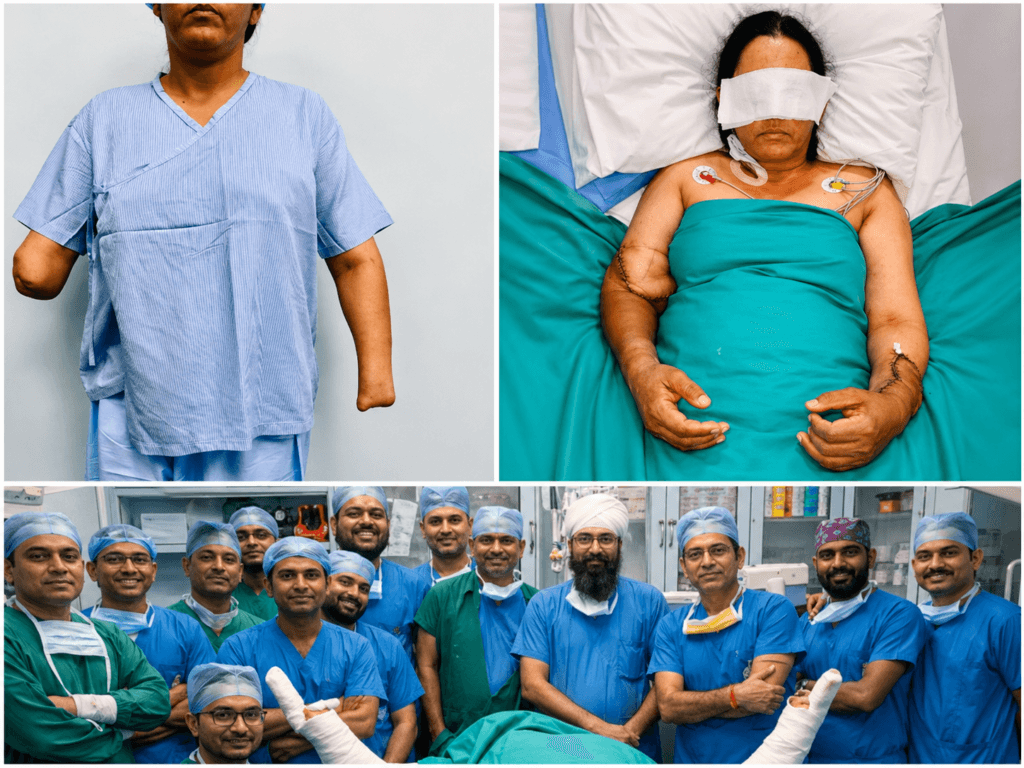
The medical team at Sir Ganga Ram Hospital following the successful 12-hour bilateral hand transplant procedure that restored the patient’s mobility.
The Story of Hope
A terrible accident with a chaff-cutting machine took away both of a young mother’s hands in an instant, changing her life forever. For months, she fought hard and had to rely on others for even the simplest things. This loss was more than just physical; it had a big effect on her mental health, self-esteem, and personal freedom. But there was a glimmer of hope when she was told she might be able to get a bilateral hand transplant. The surgery took place at the famous Sir Ganga Ram Hospital, The Tale of Hope
A horrible accident with a chaff-cutting machine took both of a young mother’s hands in an instant, changing her life forever. For months, she fought hard and had to depend on other people for even the most basic things. This loss was more than just physical; it hurt her mental health, self-esteem, and freedom. But there was a glimmer of hope when she was told that she might be able to get a hand transplant in both hands. The surgery happened at the well-known Sir Ganga Ram Hospital because the family of a brain-dead donor was kind enough to give. This shows that a person can still give life to others even after they die.
The Amazing Surgery
Dr. Mahesh Mangal, Dr. Anubhav Gupta, Dr. Bheem Nanda, and Dr. Nikhil Jhunjhunwala were in charge of the complicated surgery, which took about 12 hours. There were a lot of technical problems. Doctors had to do a bilateral transplant, which meant attaching the right hand above the elbow and the left hand below the elbow.
The team carefully reconnected nerves, tendons, muscles, bones, and blood vessels using cutting-edge microscopic methods to make sure the hands would work right. Plastic surgeons, orthopedic surgeons, anesthesiologists, neurologists, psychiatrists, pathologists, and intensive care doctors all worked together on the surgery. The doctors said the operation wasn’t just a surgery; it was a race against time. The hardest part of the procedure was keeping the tissues healthy (preventing long-term ischemia) while making sure the fixation was stable before restoring blood flow.
Expert Insights
The surgical team stressed that their goal was much more than just attaching limbs because the case was so complicated. “The goal was to give the patient back their dignity and functional independence,” the doctors said. They stressed that modern microsurgery is all about timing and accuracy, since every millimeter of nerve reconnection affects how well the patient will be able to move in the future. This operation’s success shows how far Indian medicine has come, from simple treatments to very advanced, life-changing ones.
In the past
Sir Ganga Ram Hospital has done things that no other hospital has ever done before. In 2024, the school made headlines for doing the first successful bilateral hand transplant in North India. This most recent success builds on that legacy and makes the hospital even more well-known as a place where hard reconstructive surgeries are done. From the first successful case at the Amrita Institute in 2015 to this latest milestone, the progress of these procedures in India shows that clinical coordination, matching organ donors, and post-operative care have all improved a lot.
Why This Matters
The impact of this surgery is profound. For the patient, it represents a return to normalcy—the ability to hold her children, perform household chores, and live with dignity. On a societal level, this case serves as a powerful advertisement for the necessity of organ donation. Many people are still hesitant about organ donation in India, but stories like this bridge the gap between fear and compassion. It reminds us that one decision by a grieving family can change the course of another family’s life forever. This isn’t just about medicine; it’s about restoring a human being’s soul and place in society.
The Indian Angle
The idea of “living as a whole” is very important in India, so losing limbs is especially hard to deal with. This is a very important issue, especially since many accidents in rural and semi-urban India involve farming equipment and leave people permanently disabled. Delhi is changing for the better, and now people who didn’t have any other options can get high-quality medical care. The family of the donor made a selfless choice that shows what India is really like: helping each other when things are at their worst.
Analysis
This story is great for digital journalism because it touches on three important emotions: tragedy, science, and hope. As an SEO writer, I see that content about “life-changing” or “medical miracle” topics always gets a lot of organic traffic. The technical details give the article credibility, and the human-interest angle makes it easy to share. When writing about these kinds of stories, the hard part is not to include “fluff” and to keep the tone polite. This article does a good job of balancing the clinical reality of microsurgery with the emotional weight of the patient’s journey, which is what readers (and search engines) want most.
What Next?
The surgery was just the first step. The patient is now entering a long, rigorous phase of rehabilitation. She will undergo intensive physiotherapy to help her brain learn to control the new muscles and nerves. The doctors are optimistic, but they emphasize that “functional recovery” is a slow process that requires patience and dedication. Over the next few months, she will be under constant monitoring to ensure there is no tissue rejection, a standard precaution in all transplant cases.
Conclusion
The successful hand transplant at Sir Ganga Ram Hospital gives hope to many people with disabilities. It shows that we can change the future for people who have lost everything with world-class medical care and the gift of organ donation. This story shows how strong the human spirit is and how amazing medical science is. May the patient find the strength to get better quickly and live a full life. Thanks to the generosity of the family of a brain-dead donor who stepped up to give. This shows that even after death, a person can give life to others.
The Surgical Marvel
The complex surgery, which lasted approximately 12 hours, was led by a specialized team including Dr. Mahesh Mangal, Dr. Anubhav Gupta, Dr. Bheem Nanda, and Dr. Nikhil Jhunjhunwala. The technical challenges were immense. Doctors had to perform a bilateral transplant, attaching the right hand at the supracondylar level (above the elbow) and the left hand at the distal forearm level.
The team carefully reconnected nerves, tendons, muscles, bones, and blood vessels using cutting-edge microscopic methods to make sure the hands would work right. Plastic surgeons, orthopedic surgeons, anesthesiologists, neurologists, psychiatrists, pathologists, and intensive care doctors all worked together on the surgery. The doctors said the operation wasn’t just a surgery; it was a race against time. The hardest part of the procedure was keeping the tissues healthy (preventing long-term ischemia) while making sure the fixation was stable before restoring blood flow.
Expert Insights
The surgical team stressed that their goal was much more than just attaching limbs because the case was so complicated. “The goal was to give the patient back their dignity and functional independence,” the doctors said. They stressed that modern microsurgery is all about timing and accuracy, since every millimeter of nerve reconnection affects how well the patient will be able to move in the future. This operation’s success shows how far Indian medicine has come, from simple treatments to very advanced, life-changing ones.
Background
Sir Ganga Ram Hospital has done things that go beyond what is known in medicine before. In 2024, the institution made news for doing the first successful bilateral hand transplant in North India. This most recent success builds on that legacy and solidifies the hospital’s status as a center for difficult reconstructive surgeries. The progress of these procedures in India, from the first successful case at Amrita Institute in 2015 to this latest milestone, shows that clinical coordination, matching organ donors, and post-operative care have all gotten a lot better.
Why This Matters
The impact of this surgery is profound. For the patient, it represents a return to normalcy—the ability to hold her children, perform household chores, and live with dignity. On a societal level, this case serves as a powerful advertisement for the necessity of organ donation. Many people are still hesitant about organ donation in India, but stories like this bridge the gap between fear and compassion. This serves as a poignant reminder that a single decision made by a grieving family can profoundly impact another family’s life. This isn’t just about medicine; it’s about restoring a human being’s soul and place in society.
The India Angle
In India, the idea of “living as a whole” is very important, so losing limbs is especially hard to deal with. This issue is very important, especially since a lot of accidents in rural and semi-urban India involve farming equipment and leave victims permanently disabled. With improvements like this in Delhi, we are seeing a change where high-quality medical care is now available to people who didn’t have any other options before. The donor’s family made a selfless choice that shows the true spirit of India: helping each other in the worst of times.|This story also covered by economictimes
Analysis
This story is great for digital journalism because it touches on three important emotions: tragedy, science, and hope. As an SEO writer, I see that content about “life-changing” or “medical miracle” topics always gets a lot of organic traffic. The technical details give the article credibility, and the human-interest angle makes it easy to share. When writing about these kinds of stories, the hard part is not to include “fluff” and to keep the tone polite. This article does a good job of balancing the clinical reality of microsurgery with the emotional weight of the patient’s journey, which is what readers (and search engines) want most.
Also read :AAP Workers Detained Outside Raghav Chadha’s House During Mumbai Protest Over BJP Move
What Next?
The surgery was just the first step. The patient is now entering a long, rigorous phase of rehabilitation. She will undergo intensive physiotherapy to help her brain learn to control the new muscles and nerves. The doctors are optimistic, but they emphasize that “functional recovery” is a slow process that requires patience and dedication. Over the next few months, she will be under constant monitoring to ensure there is no tissue rejection, a standard precaution in all transplant cases.
Conclusion
The successful hand transplant at Sir Ganga Ram Hospital gives hope to many people with disabilities. It shows that we can change the future for people who have lost everything with world-class medical care and the gift of organ donation. This story shows how strong the human spirit is and how amazing medical science is. May the patient find the strength to get better quickly and live a full life.
Written by M.A. Arif