On the occasion of Thalapathy Vijay’s 52nd birthday, here’s a look at five major films that show how his on-screen roles were a precursor to the political leader he is today. Even before he took to active politics, his characters stood for social justice, public welfare and leadership with the people at the heart of it all.
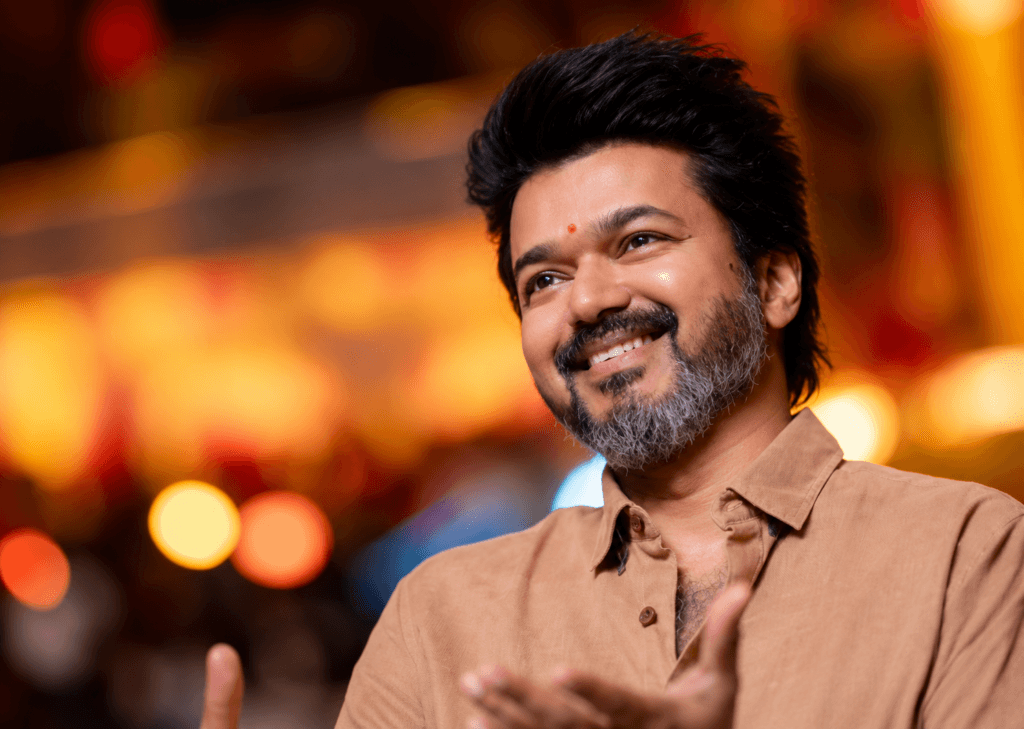
Thalapathy Vijay’s 52nd birthday is not just an opportunity to celebrate a film star’s incredible career but also a moment to reflect on a metamorphosis that few actors in India have managed to pull off. Over the years, Vijay’s journey was from a commercial entertainer to a cultural icon whose impact was felt far beyond the cinema halls. He is now the Chief Minister of Tamil Nadu and a popular political figure. His journey continues to fascinate millions of people.
The interesting thing about Vijay’s political ascent is that many of the values he is said to hold as a leader were there long before he formally entered politics. The actor has repeatedly portrayed characters who challenged corruption, defended democratic values, stood with farmers, advocated education reforms and fought for the rights of ordinary citizens through several blockbuster films. Looking back, these movies seem less like fiction and more like early glimpses of the public leader Vijay would become.
Fans are celebrating his birthday and here are five movies that are prime examples of how cinema predicted the leader in Thalapathy Vijay.
Cinema as a Political Mirror
The association of films and politics has been a special one in Indian cinema, particularly in Tamil Nadu. Before entering politics, the legendary leaders like M.G. Ramachandran and M. Karunanidhi used cinema as a platform to reach the masses. Vijay’s journey is similar but shaped by modern problems and contemporary audiences.
His films were less about pure entertainment and more about stories that spoke to social concerns. Corruption, unemployment, education or agricultural distress, Vijay’s characters often became the voice of common men and women. These positions helped to create an image of responsibility and leadership in the minds of the audiences.
Cinema doesn’t create political leaders, but it can create trust and familiarity. Before he entered politics, Vijay’s movies had people associate him with values like justice, accountability and public service.
Kaththi: Speaking for Farmers and the Forgotten
Kaththi was one of the strongest instances of Vijay’s socially conscious cinema. The film directed by A.R. Murugadoss highlighted the issues of farmers and the growing problem of land acquisition.
In the film, Vijay’s role is to oppose the interests of large corporations that endanger the livelihoods of rural communities. The film highlighted the issues of water scarcity, decline in agriculture and the struggles of the farmers to survive in a fast-changing economy.
Vijay’s speeches were powerful and moved the audience to the core because they addressed the genuine concerns that millions of Indians faced. The character’s willingness to stand up to authority for the sake of ordinary people exhibited characteristics often associated with political leadership.
Many fans later marked Kaththi as one of the earliest films to reveal Vijay’s ability to communicate social issues in a manner that sparked public discussion.
Mersal: Challenging Corruption and Systemic Problems
Released in 2017, Mersal was one of Vijay’s most talked about films, as it spoke about healthcare, governance and corruption.
The film examined the problems of the public system and questioned why vital services were still not available to many of its citizens. Vijay’s character called for accountability and transparency, fighting for reforms to make life better for people.
Several dialogues in the film sparked nationwide conversations and created a lot of debate. The film raised important questions about governance, which were praised by supporters, but critics argued about the political messaging.
Mersal, despite the different opinions, bolstered Vijay’s image as an actor willing to grapple with social and political issues. The movie re-established him as more than just a commercial entertainer, he was emerging as a voice for public concerns.
Sarkar: A Powerful Message About Voting Rights
Sarkar was the first film that directly linked Vijay to political themes. The 2018 movie focused on the importance of voting rights and citizen participation in democracy.
Vijay plays a successful businessman who comes back to India and he finds out that his vote has already been stolen. What starts as a personal grievance quickly turns into a wider battle against election fraud and political machinations.
The film also appealed to people to realize the value of their vote and laid stress on democratic responsibility. Its core message resonated with young audiences increasingly interested in political participation.
Vijay’s on-screen visuals of leading mass movements have sparked speculation about his future political ambitions. Looking back at Sarkar, he now finds it uncannily prophetic, many of its themes reflecting the political path he would later take.
Master: Leadership Through Responsibility
Master, while an action drama, also showed another important facet of leadership: responsibility for youth.
Vijay’s character, a teacher who deals with troubled students, gradually turns into a mentor trying to guide young people away from violence and exploitation. He earns trust through empathy and understanding, rather than relying only on authority.
It highlighted problems of juvenile delinquency, education and social neglect. It showed leadership not as power but as service and duty.
This softer, more human touch added more depth to Vijay’s public image. It showed that leadership is not just about challenging systems but also about lifting up people and communities.
Leo: The Modern Protector of the Common Man
Leo is primarily known for its high-octane action, but it also cemented Vijay’s recurring image as a protector who stands against the forces of power threatening ordinary lives.
The protagonist’s resolve to protect his family and community resonates with a larger leadership story that is prevalent throughout Vijay’s filmography. The character’s courage, resilience and commitment to justice resonated with the audience.
Even in commercial entertainers, Vijay made it a point to build characters with values that resonated with the common man. This helped to build the public perception of him as someone who could lead beyond cinema.
Background and Timeline
Vijay’s ascent from actor to political leader didn’t happen overnight. Starting out as a young actor in the early 1990s, he slowly made a name for himself as one of Tamil cinema’s biggest stars. By the 2000s he was a box-office phenomenon with a massive fan following across South India and abroad.
His films became increasingly socially themed in the 2010s. Kaththi brought out the problems of farmers. Mersal questioned health care systems. Sarkar’s focus was on voting rights. These films together formed a narrative of public engagement and social responsibility.
As talk of Vijay’s political ambitions grew, Vijay finally entered active politics. His move was watched closely across India and his popularity with young voters helped to shape expectations about the public.
His appointment today as Chief Minister of Tamil Nadu is seen as the culmination of a journey that many say was prefigured in his choice of films years ago.
Why This Matters
The story of Thalapathy Vijay is important because it shows how cinema can still influence the public discourse today. In a country where movies often mirror societal aspirations, Vijay’s rise underscores the potential of stories to ignite conversations around governance, accountability, and social justice.
For millions of fans the move from actor to political leader is not change but continuity. The values he preached on screen—fairness, integrity and public welfare are the same values many of his supporters expect him to uphold in public office.
Vijay’s journey is a unique case study in modern Indian politics, linking entertainment to civic engagement.
India Angle
Vijay’s ascent has broader implications for Indian audiences, especially young voters. “Across the country people are looking for public figures to speak on real-world issues not be locked in the entertainment bubble.”
The issue is very important because it reflects the changing expectations of the public. Common man today wants a leader who knows his day-to-day struggles, whether it is related to jobs, education, health care, or agriculture. Vijay’s movies often spoke to these concerns, building a connection that was more than just fandom.
His success is also a tribute to the power of regional leaders to shape the national discourse. Tamil Nadu has been a force in Indian politics for a long time and Vijay’s rise is another chapter in that legacy.
Analysis
In digital journalism parlance, the political journey of Thalapathy Vijay is one of the most interesting stories of present-day India. What sets him apart from many celebrity politicians is the consistency of his public image.
His career in film and his political ambitions were closely related thematically, with his films often emphasizing social responsibility. The consistency also helped people accept that his entrance into politics was genuine and not just a grab for power.
In my view, the most significant factor behind Vijay’s appeal is not just his stardom but his ability to align entertainment with public concerns. Over many years he earned the trust of the people by tackling the issues that matter to ordinary citizens.
No matter what one’s politics, it’s hard to miss the strategic and cultural significance of the path he’s taken.
What Next?
As Vijay enters another year in public life, scrutiny over his governance, policy decisions and long-term vision for Tamil Nadu will only increase. His supporters hope he can take the ideals portrayed in his movies and turn them into real solutions to help the people.
His political future will not be decided by cinematic success but by his administrative performance and the public trust. The next few years will probably tell whether he can build a legacy that matches the hype surrounding his films and political promises.
Whatever happens next, his journey from cinema star to political leader will be one of the most tracked stories in Indian public life.it will also cover by Times of india
Conclusion
Thalapathy Vijay, on his 52nd birthday, is at a remarkable crossroads of cinema and politics. Before he took public office, his movies provided perspectives on the leadership traits that would shape his political persona. Vijay’s characters were always fighting against corruption, supporting farmers, public welfare and democracy. His characters always portrayed values that appealed to the common man.
Today he is a cultural icon and a political leader, and he embodies the potent link between storytelling and social power. His journey reminds us of the power of cinema to do more than entertain; it can shape aspirations, ignite change and sometimes even predict the future.