NCRB report 2024 reveals that corruption cases in Uttar Pradesh jumped from 89 in 2022 to 253 in 2024; police say they have cracked down on over 221 graft files, but public perception of “systemic corruption” remains high.
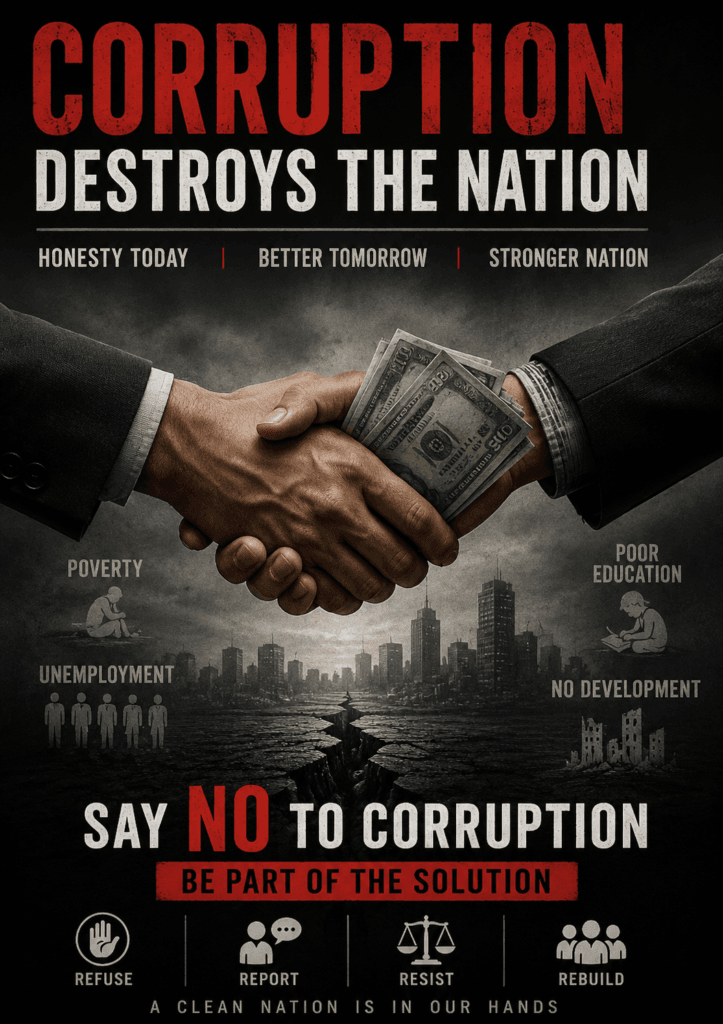
Anti‑corruption watchdogs in Uttar Pradesh face rising case numbers even as police and agencies step up raids and prosecutions on allegedly corrupt officials. |by AI
As per the National Crime Records Bureau (NCRB) ‘Crime in India’ Report 2024 published by New Delhi, the state of Uttar Pradesh has witnessed an alarming trend of corruption cases in the past three years. The state saw only 89 graft cases filed in 2022 but the number increased to 169 in 2023, further rising to 253 cases in 2024, which is about three times the number seen in the first year.
Despite the assertions made by the Uttar Pradesh state government that it is adopting a ‘zero tolerance approach’ toward corruption, reports of bribes, bribe exploitation, and misuse of authority continue to emerge in increasing numbers, as revealed by the NCRB figures. On the other hand, the law enforcement agencies have also been active in filing their own versions of reports. For instance, 221 corruption cases have been investigated successfully in 2024, leading to arrests.
Why and How Corruption Cases Are Rising
Reasons for the rising figures
Some of the interconnected reasons for an increase in NCRB‑registered corruption cases in Uttar Pradesh include:
Increased reporting without increased corruption
With quicker access to the police hotline, the internet-based grievance portal, and the anti-corruption cells, citizens report more incidents that would otherwise be “sorted out” through informal arrangements.
The media hype about “no-corruption” catchphrases and anti-bribe hotlines encourages people to complain rather than silently bribe.
Governance touchpoints
Since the government is rolling out ration card services, affordable housing initiatives, scholarships, driver’s licenses, electricity connections, and land registration, there are more “high-contact” departments that usually demand bribes.
Each scheme offers more opportunities for officials, clerical staff, and intermediaries to extort “service fees” from their clients.
More enforcement drives
Zero-tolerance policies and public statements have prompted authorities to launch more undercover operations, surprise inspections, and anti-corruption raids involving the CID, the Anti-Corruption Bureau, and the Vigilance Departments.
As the police and regulators aggressively tackle corruption, there will inevitably be an increase in cases registered.
How the cases are being recorded
The NCRB takes a uniform view on corruption in terms of the Indian Penal Code and other laws against corruption as listed below:
Demands or accepts a bribe or any improper benefit; misuses his office for private profit; and engages in extortion or harassment associated with public services.
Each state is expected to put up their FIRs and chargesheets on the CCTNS website, and NCRB aggregates them.
The state of Uttar Pradesh, being the most populated state in India with more than 200 million inhabitants, makes one of the biggest case counts in many crimes almost automatically.
To sum it up, the increase in cases is due to corruption and improved monitoring.
NCRB Data Snapshot
As revealed in the NCRB’s Crime in India 2024 report, Uttar Pradesh comprises a significant proportion of total cognizable offenses, although its position in the national list based on the total crime rate is 18th. Hence, the level of criminal activity per lakh population in UP is comparatively lower than other smaller states. Nonetheless, the cases of corruption are alarming, considering UP’s status as a political monster and a significant point of contact between the government and citizens.
Some other states such as Maharashtra, Karnataka, Haryana, Himachal Pradesh, and Odisha have reported several cases of corruption; however, the figures in Uttar Pradesh are among the highest owing to its size.
The report further reveals that even though the level of crime has been reducing in Uttar Pradesh, especially regarding dacoity and communal riots, certain non-violent crimes, under service-corruption offenses, have been increasing, resulting in an increasing graft-file tally.
Background and Timeline
From 2012 to 2017, UP was known for its frequent communal riots, with estimates claiming that more than 25,000 riots took place in that five-year span, averaging around 19 riots per day.
Since 2017, the state government claims that law and order have been established, particularly communal riots, and the statistics from the NCRB clearly show that the statistics on riots and mob violence are way lower than they were in previous years.
However, complaints related to corruption have been slowly rising as people begin to seek redress through official channels rather than using street violence as a means of justice.
2022-2024 represents the first rise in the NCRB graph: 89 -> 169 -> 253, meaning that even with anti-corruption campaigns, the rise in corruption cases is not yet outdone.
This can be compared to the shift from an open gang war culture to a behind-the-counter bribe culture.
How Police and Agencies Are Responding
There were 221 cases related to corruption alone in 2024, involving raids, arrests, and charge sheets against government clerks, revenue officials, police constables, and middlemen from the private sector.
The main enforcement organizations include:
• State Anti-Corruption Bureau (ACB),
• CID’s vigilance wing,
• Special investigation teams (SITs) for bribery and extortion,
• Police sub-units for railway area and transport-related corruption.
A significant number of these cases arise from sting operations or complaints from citizens, where the authorities use cameras to record instances of officials seeking bribes for basic utilities such as electricity connection, ration cards, license renewal, and registration papers.
It is emphasized that arrests and fast trials are undertaken as a warning to the “small-to-mid-level corrupt officers,” who assume that small-time bribes will go unnoticed.
However, the pace of trial and conviction has always been a shortcoming; most cases of graft take many years to reach conviction, causing much frustration among the citizenry.
Why This Matters
To ordinary citizens
With the escalation of corruption cases, ordinary individuals experience it directly. Whether it is paying “bhaich‑side” bribes for obtaining a ration card or admission to schools or extra amounts for road repairs or making complaints to the police.
The statistics from NCRB show that the problem does not seem to be decreasing, despite the loud state claim of “zero tolerance.”
However, the fact that the number of investigations (221 in 2024) is increasing indicates that not all complainants are dismissed, and some officials face justice.
For governance and public trust
Large corruption figures adversely affect the image of the government’s machinery, as its slogans about good governance do not have any relevance for the ordinary man on the street.
The fact that there are many FIRs filed but very little follow-up action taken can make people think of complaining as an exercise in futility.
On the contrary, a public demonstration of cases solved by speedy trials can help rebuild trust that “even here in UP, the system can punish wrongdoers.”
For crime-dynamics in India
With its large population, many government departments, and extensive dependence on face-to-face public services provision, Uttar Pradesh is the epitome of governance.
Also read: Delhi Dehradun Toll Rates Economic Corridor Declared: Here’s What You’ll Pay
India Angle and Local Relevance
The average middle-class citizen of Uttar Pradesh does not see corruption as an abstract “policy issue.” Instead, they have to deal with it whenever they step into any office, whether related to electricity, municipal corporation, school board, police station, etc. The common phrase used is “Kya officially free service hai ya extra paisey lagne wali?”
Contrary to the government’s “zero-tolerance” rhetoric, here are the facts from NCRB data:
In 2022 – 89 corruption cases were recorded.
In 2024–25, 3 corruption cases were recorded.
Whether this reflects an increase in the amount of bribery or increased willingness to report cases remains unclear; however, the fact stands that anti-corruption campaign efforts have yet to ensure that a “corruption-free” environment has been created.
As for businessmen and small-scale traders, paying “speed money” or a “processing bribe” comes with the territory. An increase in case numbers means that more and more such dealings are becoming evident. But as long as only those giving bribes are punished and not those taking them, there remains much work to be done on this issue.
From the perspective of national governance, UP’s case study holds importance because:
UP is the largest Indian state,
UP has all types of offices and services.
Whether it succeeds or fails has wider policy implications.
Analysis
As a person interested in writing about news and SEO, it is important to emphasize that an increase in the number of corruption cases does not necessarily imply either “everything has gone wrong” or “everything is under control.” There are several factors affecting the current situation:
Positive tendencies:
The number of cases increased, which means that the system detects corruption instead of ignoring it.
221 corruption investigations in 2024 show that the anti-corruption mechanism operates actively.
Increasing public awareness and culture of calling a hotline make people combat petty corruption rather than accept it.
Negative or alarming tendencies:
Three-fold increase in just two years demonstrates that the pressure of corruption has not diminished but has rather migrated into other departments.
Delays in the trials make society think that those found guilty still manage to “get away” because of this.
If the authorities are busy only with arresting corrupt officials and neglecting the system change (including digitalization of the process, decrease in human touchpoints, and workflow transparency), the problem will recur constantly.
Ultimately, there are two solutions to solve this issue successfully:
Deterrence through more conviction and prison sentences for corrupt officers.
Decreasing touchpoints where the citizens can access governmental services remotely without
What Happens Next?
Moving forward, a number of possibilities may arise:
More data-driven policing—the government may start monitoring the complaints about corruption on a monthly basis, block by block, in an effort to eradicate “black spot” areas.
Digitization push – the government may speed up efforts towards online facilities for land, taxation, welfare schemes, and police complaints in an effort to do away with the “manual bribe” phase.
Political pressures—if the number of complaints rises further as per the NCRB data, the opposition will use it extensively in election campaigns.
NGO campaigns against corruption—organizations and media may begin sting operations and public interest litigation at hotspots for corruption, such as education, housing, and transportation.
With strict law enforcement and transparent, technology-led governance, the NCRB charts in 2025-26 may actually show a decline in cases of corruption. Otherwise, the term “zero tolerance” shall continue to be nothing more than that: a slogan.
Conclusion
According to the NCRB report of 2024, the sad reality is that despite all the anti-corruption movements and protests, the cases of corruption in Uttar Pradesh have increased three times in two years, from 89 cases in 2022 to 253 cases in 2024. On the other hand, 221 files of corruption have been investigated, and a number of government employees are behind bars too.
The impact on the average citizen is a mixed one; there are higher chances of getting into corruption, yet there are higher chances of being able to prosecute them too. But now comes the challenge for the state, which is that only through speedy, visible, and fair prosecution can it restore people’s trust; also, it should do away with the everyday bribery culture prevalent in some government organizations. | This story also covered by Jagran
Author: M.A. Arif