
Venezuela Earthquake Two powerful quakes that struck within minutes killed at least 164 people, injured hundreds and damaged critical infrastructure, including a major petrochemical complex as Venezuela struggles through one of its deadliest natural disasters in modern history.
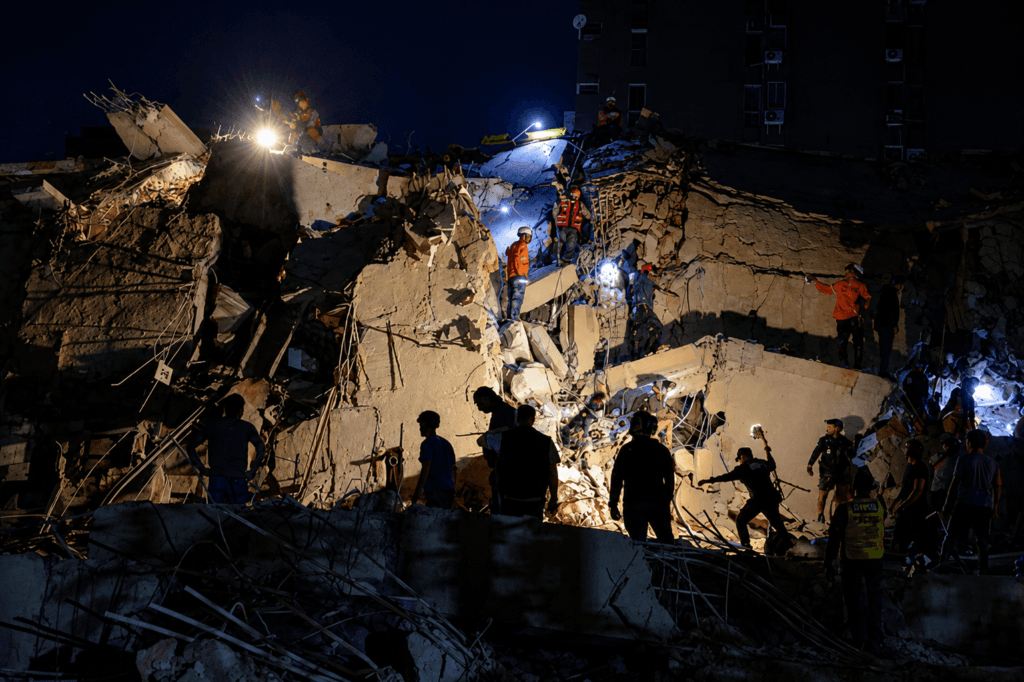
Venezuela has been struck by two deadly earthquakes occurring one after another, leaving the whole nation in mourning. The official statistics indicate that the number of fatalities from two rare earthquakes that occurred on June 24, 2026, is at least 164. The two earthquakes of 7.1 and 7.5 magnitudes have proved to be some of the most powerful earthquakes to ever occur in Venezuela in the past century.
The disaster struck several areas, including the capital Caracas and coastal cities near the epicenters. Buildings crumbled, roads split, communication networks went down and thousands of residents had to abandon their homes. Emergency authorities are trying to determine the full scale of the disaster as rescue teams continue to search the rubble for survivors.
The earthquakes affected the Moron Petrochemical Complex, one of Venezuela’s key industrial facilities, raising concerns. Operations were briefly halted after reports of a leak from a storage tank, sparking fears of industrial safety and environmental risks after the disaster.
How the Disaster Unfolded
A devastating 7.1-magnitude earthquake struck Venezuela and sent shockwaves through a number of densely populated areas, bringing about the disaster. There was no time for residents to fully understand the situation or find safety before a second, much stronger quake measuring 7.5 hit about a minute later.
Seismologists said consecutive earthquakes like this are very rare and especially dangerous because they give little time for people to evacuate or respond to the emergency. Buildings that have been weakened by the first tremor are often even more vulnerable to a second quake that follows right after.
“Buildings were shaking violently, glass was breaking and power went out across the neighborhoods. It was a panicked scene,” the residents said. Many ran into the streets, while others were trapped in damaged buildings.
The emergency response teams were dispatched to the areas affected at once. Firefighters, police officers, military personnel and medical teams worked round the clock to rescue survivors trapped under collapsed buildings. Hundreds of injured people sought treatment for fractures, head injuries and trauma-related conditions, quickly swamping hospitals.
Government officials announced emergency measures and mobilized national resources to support rescue operations.
Impact on Infrastructure and Industry
The tremors caused extensive damage to residential, commercial and industrial infrastructure.
One of the major concerns was the impact on the Morón Petrochemical Complex, Venezuela’s second biggest operating petrochemical plant. The complex, also close to the port town of Puerto Cabello near the affected area, suffered infrastructure damage during the earthquake.
Local fire officials said operations at the facility were temporarily suspended while engineers conducted safety inspections and damage assessments. Reports said workers were told to stay away from the site while structural conditions were assessed by experts.
Sources close to the matter said a leak from a storage tank was detected shortly after the quake and further safety precautions were taken. No major environmental disaster has been reported from the leak by authorities, but the incident drew attention to the dangers posed to industrial facilities by natural disasters.
Officials said they would gradually resume operations at the petrochemical complex after initial inspections. But the safety monitoring continues as engineers continue to evaluate potential risks.
The temporary shutdown of such a strategically important industrial facility has raised concerns about possible economic repercussions, particularly given the country’s reliance on energy-related industries.
The Human Tragedy
The casualty figures tell us the scale of the disaster, but it’s the human stories coming out of affected communities that show the true depth of the tragedy.
Families have been torn apart, homes destroyed, and livelihoods disrupted. Survivors talked about moments of terror as buildings crumbled around them and aftershocks kept hitting already damaged areas.
Hours after the earthquakes, rescue workers said they had found survivors pinned under concrete slabs. Many slept outside worried about further aftershocks and structural collapses.
Emergency camps have been established to house the displaced population. Relief agencies have offered assistance by providing food, drinking water, medical aid, and psychological help to the victims.
The psychological effect caused by the natural calamity is going to remain for a long time even after the rescue operations come to an end. Psychologists opine that massive earthquakes leave behind a long-term psychological impression, particularly among the youth and displaced families.
International Response and Aid
Solidarity and offers of help have come in from around the world as the scale of the disaster has become clear.
Humanitarian aid, emergency medical supplies and specialist search-and-rescue teams have been pledged by many countries. International relief agencies are coordinating to help Venezuelan authorities tackle the crisis.
In addition to that, the United Nations and regional organizations have shown their concern over the issue.
According to experts in disasters, in big emergencies like these, especially when there are insufficient local resources, international collaboration is extremely important.
Now, humanitarian organizations are concentrating on short-term requirements; at the same time, they are planning for long-term recovery and rebuilding.
Background
Although Venezuela is not famous for having major earthquakes regularly like Japan, Chile, and Indonesia, Venezuela can suffer from earthquakes due to its position.
This country lies at the junction of the Caribbean and South American tectonic plates. Major earthquakes are formed through movements within the tectonic plates’ boundaries.
Venezuela has a history of destructive earthquakes, but quakes of this size are still unusual. Experts say rapid urban growth combined with aging infrastructure has made many cities more vulnerable.
Specialists such as urban planners and disaster management experts have reiterated the need to strengthen building codes, improve emergency preparedness and make the public more aware of the risks of earthquakes.
The latest disaster will likely reignite conversations about infrastructure resilience and long-term disaster mitigation strategies.
Timeline of Events
A magnitude 7.1 earthquake jolted Venezuela on June 24, 2026, affecting many areas and causing immediate damage. A second earthquake, of magnitude 7.5, followed about a minute later, adding enormously to the destruction and loss of life.
Emergency services were on the scene within hours, launching a large-scale rescue operation. Medical facilities were flooded with injured victims and hospitals had to go into emergency protocols.
The government declared emergency measures and sent more rescue personnel.
Later reports confirmed damage to the Moron Petrochemical Complex, where a leak was detected in one of the storage tanks, and operations were temporarily suspended.
Officials said at least 164 people were dead and hundreds more injured by the following day.
Engineers then undertook assessments of damage to industrial facilities, homes, transportation systems and public infrastructure.
Why This Matters
Why is this disaster important? It reveals the vulnerability of modern societies to the great forces of nature.
Despite advances in engineering, technology and disaster management, earthquakes continue to bring human suffering and economic disruption. The Venezuelan tragedy is a reminder that preparedness, infrastructure resilience and quick emergency response are still vital elements of public safety.
The industrial damage at the Moron Petrochemical Complex also highlights the interdependence of modern economies. Natural disasters do not only affect people and buildings but also can cause disruption of supply chains, industrial production, energy markets and environmental safety.
This is a very important issue because countries across the world, including India, are facing similar issues of disaster preparedness and infrastructure resilience.
Also read: Earthquake Kills 8 in Afghanistan; Tremors Felt in Delhi-NCR, North India
India Angle
The Venezuelan earthquake holds important lessons for India.
India has certain earthquake-prone zones like the Himalayan belt, Northeast India, parts of Gujarat and the Andaman and Nicobar Islands. If major earthquakes strike those areas, it could pose problems similar to what Venezuela is dealing with now.
The disaster highlights the need for strict enforcement of building codes, emergency preparedness drills and investment in resilient infrastructure.
Indian policymakers, urban planners and disaster management agencies regularly study international disasters to improve domestic preparedness strategies. The Venezuelan experience will probably add valuable lessons on emergency response coordination and industrial risk management.
International energy markets are also vulnerable to the disruption of large industrial complexes. Venezuela’s petrochemical industry has been in a prolonged state of disruption and this could have a knock-on effect on global energy supply chains.This also covered by The Hindu
Analysis
The Venezuelan earthquake disaster is significant in terms of its human toll but also for its wider implications, both news and policy-wise.
Natural disasters can rapidly turn into economic and industrial crises. An example of this is damage to critical infrastructure. The Moron Petrochemical Complex’s reported leak is a reminder that industrial safety is more critical during extreme events.
The thing that makes this disaster so remarkable is that we had two large earthquakes in such a short period of time. The consecutive nature of the tremors increased destruction exponentially and made rescue operations difficult.
As a news writer, I think this event will most likely be a case study of disaster management, urban resilience and industrial emergency preparedness. The response may be closely examined by governments worldwide for lessons learned for future emergencies.
The tragedy also underscores the need to invest in early warning systems, awareness campaigns and stronger infrastructure standards.
What Next?
“The priority for now is rescue and relief operations. Rescue teams are still searching for survivors, while authorities assess structural damage and determine which buildings are unsafe.
Humanitarian agencies are expected to scale up relief efforts, focusing on shelter, health, sanitation and psychological support for the affected populations.
Engineers will continue to assess the Moron Petrochemical Complex and other industrial facilities to ensure their safe operation and prevent secondary incidents.
Venezuela will need to rebuild infrastructure, get the economy back on its feet and help communities affected by the disaster in the future.
Over the next few months, international assistance will likely be important for reconstruction efforts.
Conclusion
The twin earthquakes that struck Venezuela on June 24, 2026 have taken a devastating toll on the country. It is one of the country’s most devastating natural disasters in recent history, with at least 164 people dead and hundreds injured.
The destruction of homes, disruption of infrastructure and damage to the Moron Petrochemical Complex are examples of the far-reaching consequences of major seismic events. As rescue operations continue and recovery efforts begin, the tragedy is a sobering reminder of the importance of disaster preparedness, resilient infrastructure and effective emergency response systems.
The road ahead for Venezuela will be long and hard. But history has demonstrated that communities can be surprisingly resilient in the face of adversity. “In the coming days, as the country begins the process of reconstruction, the support of domestic institutions and the international community will be crucial to assisting affected families to recover and move forward.”