At the 51st Annual Convocation of AIIMS New Delhi, Vice President C.P. Radhakrishnan and Union Health Minister J.P. Nadda highlighted the expansion of India’s healthcare network over the last decade. The ceremony also saw 523 degrees awarded and 18 honors presented to meritorious students across multiple medical disciplines.
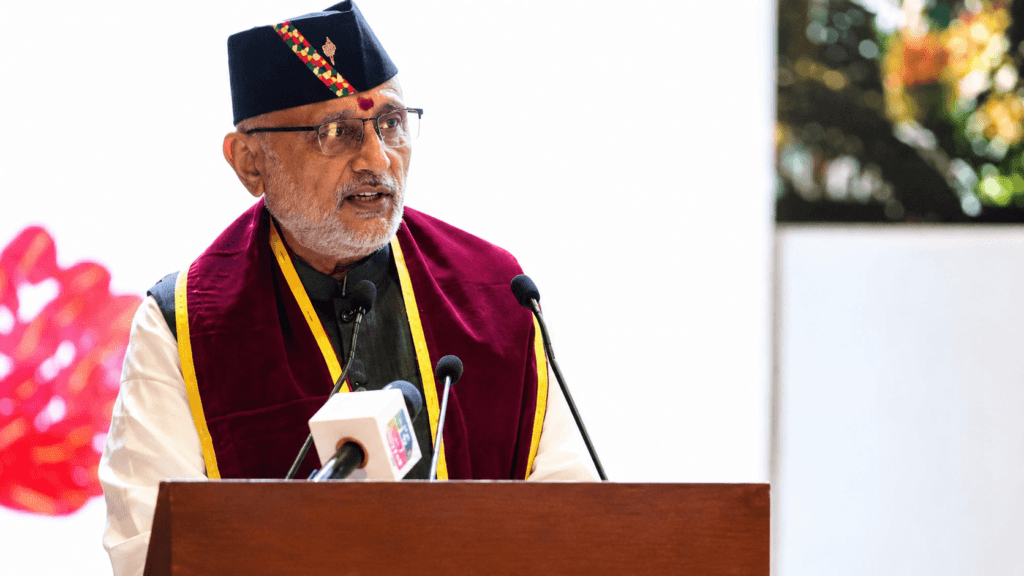
Vice President C.P. Radhakrishnan addresses the 51st Annual Convocation of AIIMS New Delhi as health leaders spotlight the growth of India’s medical infrastructure.
AIIMS Delhi Convocation 2026
The 51st Annual Convocation of AIIMS New Delhi turned into a major statement on India’s health sector growth, with Vice President C.P. Radhakrishnan underlining how healthcare infrastructure has expanded across the country over the last decade. Speaking at the ceremony on Tuesday, he said the spread of AIIMS institutions across India is not only a sign of medical development but also “a symbol of the integration of the country.”
The event was not just ceremonial. It marked a significant academic milestone as 523 degrees were awarded across undergraduate, postgraduate, super-specialty, doctoral, nursing, and allied health science programs. The institute also handed out 18 medals, book prizes, and appreciation certificates to outstanding students.
What Happened
The convocation brought together some of the country’s most important voices in health education and policy. Vice President C.P. Radhakrishnan addressed graduates and urged them to preserve the prestige of AIIMS while also helping shape the future direction of medicine. His message was clear: AIIMS graduates should not only keep pace with global standards but also help define them. NDTV has covered the full story.
Union Health Minister J.P. Nadda also addressed the gathering and said AIIMS New Delhi is much more than a hospital or academic center—it is a brand in itself. He stressed that students from the institution carry a greater responsibility because they are expected to mentor emerging AIIMS institutions across the country.
The ceremony, therefore, had a dual theme: academic achievement and national health policy. It celebrated graduating students, but it also highlighted how the AIIMS ecosystem has become central to India’s broader healthcare ambitions.
Why The Event Matters
This matters because AIIMS New Delhi remains one of the most respected medical institutions in India. When the Vice President and Health Minister speak about it, they are not just praising one institute; they are pointing to the larger health transformation story in the country. The expansion of AIIMS institutions is tied to a bigger national goal: improving access to quality healthcare beyond the metros.
The government says more than Rs 2,800 crore has been spent on creating and improving infrastructure in AIIMS institutions. That figure matters because healthcare development is not just about buildings. It is about people getting better access to diagnosis, treatment, training, and research. Yeh issue kaafi important hai because India’s health infrastructure directly affects both public health outcomes and the future of medical education.
Growth Of AIIMS And Medical Education
One of the most important numbers from the event was the expansion of AIIMS campuses across India. According to J.P. Nadda, the number of AIIMS institutions has grown from 7 to 23. That is a major shift. It means the AIIMS model is no longer limited to a few elite centers; it has become a nationwide healthcare brand.
Nadda also said the number of medical colleges in India has increased from 387 in 2014 to around 825 today. That growth reflects a significant expansion in training capacity. More colleges mean more doctors, more specialists, and more access points for students who want to join the healthcare system.
The government’s next target is also ambitious. Nadda said the Union government will create 10,000 more undergraduate and postgraduate seats between 2025 and 2029. If implemented well, that could help India address the long-running gap between healthcare demand and the supply of trained professionals.
Research And Innovation At AIIMS
AIIMS New Delhi is not only functioning as a teaching hospital; it is also a major research center. Nadda said the institution is currently handling more than 900 extramural research projects with funding of around Rs 300 crore, along with more than 150 intramural research works.
That research strength is important because India’s healthcare challenges are not limited to patient load. The country also needs strong evidence-based medicine, public health data, clinical innovation, and locally relevant research. AIIMS is one of the few institutions positioned to deliver on that scale.
In practical terms, this means the institute is contributing to national knowledge, not just treating patients. For a country as large and diverse as India, that is a big deal. Medical research here can influence everything from treatment protocols to disease prevention strategies and healthcare planning.
Also Read: Six Devotees Killed After Temple Wall Collapses in Maharashtra’s Sangli
Background And Context
AIIMS New Delhi has long occupied a special place in India’s health system. It is seen as one of the highest standards of public medical education and specialist care in the country. Over the years, new AIIMS institutions have been established across states and regions to decentralize access to advanced healthcare.
That decentralization is especially important in a country where many people still travel long distances for treatment. The expansion of AIIMS across India reflects a policy shift toward bringing prestigious public medical infrastructure closer to smaller cities and underserved regions. This makes healthcare more accessible, reduces pressure on older flagship institutions, and strengthens the pipeline of trained professionals.
The convocation therefore sits at the intersection of tradition and expansion. AIIMS New Delhi remains the flagship, but the larger AIIMS network is increasingly becoming a national system rather than a single-center model.
Timeline
2014: India has about 387 medical colleges and 7 AIIMS institutions.
Over the last decade: More than Rs 2,800 crore has been spent on improving and creating AIIMS infrastructure.
2025–2029: The government plans to add 10,000 UG and PG medical seats.
Tuesday: AIIMS New Delhi holds its 51st Annual Convocation.
During the ceremony, 523 degrees and 18 honors are awarded.
At the same event: Health leaders highlight the growth of India’s health infrastructure and research ecosystem.
This timeline shows how the convocation fits into a much larger national health education story.
India Angle
The India angle here is very strong because the speech was not only about AIIMS New Delhi but also about the national healthcare system. The expansion from 7 to 23 AIIMS institutions is a signal that the government is trying to bring advanced healthcare closer to more people across the country.
For Indian families, especially those living outside major metros, this matters because it can mean shorter travel for specialist care and more opportunities for local medical education. For students, it means more seats and more institutions. For the health system, it means a broader base of trained professionals. In simple Hinglish, yeh sirf ek convocation nahi tha—yeh India ke healthcare future ka roadmap bhi tha.
Analysis
My reading is that the government is using the convocation platform to send a clear message: India’s medical infrastructure has expanded and will keep expanding. The numbers support that narrative, but the real test will be quality. More seats and more institutions are valuable only if faculty strength, hospital capacity, clinical training, and research standards keep pace. That is where the next decade will matter most.
Another important point is the symbolic role of AIIMS New Delhi. When leaders describe it as a brand and a model, they are acknowledging that its reputation helps set benchmarks for the whole public health system. That can inspire confidence, but it also raises expectations. Students graduating from AIIMS are not just joining a profession; they are entering a national trust network where excellence is expected.
Why This Matters
This matters because healthcare capacity is one of the most important markers of national development. A country that expands medical education and research is investing in public health, talent development, and long-term resilience. That has direct effects on patients, hospitals, and state health systems across India.
It also matters because medical education is not just about quantity. It is about producing doctors who can work in diverse settings, adapt to regional health needs, and contribute to research. The convocation message at AIIMS highlights exactly that: the need for graduates to lead, mentor, and shape the future of medicine. The broader impact is on every Indian who may one day depend on better-trained doctors or more accessible tertiary care.
What Next
The next phase will likely focus on converting policy announcements into actual capacity. The promised 10,000 additional UG and PG seats between 2025 and 2029 will need planning, faculty hiring, infrastructure support, and accreditation processes. The AIIMS network will also need continued investment so that expansion does not dilute quality.
For students, the immediate future is full of opportunity. More seats and more institutions mean wider access to medical education. For patients, the next few years may bring better access to advanced care in more parts of the country. For the government, the challenge will be ensuring that growth in numbers is matched by growth in standards.
Conclusion
The AIIMS New Delhi convocation became more than an academic event. It turned into a showcase of India’s expanding health infrastructure, rising medical education capacity, and growing research ambitions. With 523 degrees awarded, 18 honors presented, and strong messages from the Vice President and Health Minister, the ceremony reflected both achievement and national intent.
The larger story is clear: India is building a broader, more distributed healthcare system, and AIIMS remains at the center of that effort. The numbers are impressive, but the real measure of success will be whether this expansion translates into better care, stronger research, and more access for ordinary Indians.
Written By A. Jack