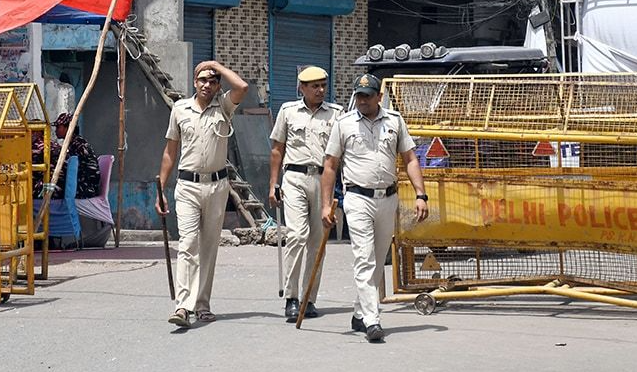
The Air India Airbus A321 operating flight AI479 was asked to hold pending a runway inspection after a bird strike incident, before briefly entering Pakistan airspace during radar vectoring. The flight was diverted and landed safely at Delhi.
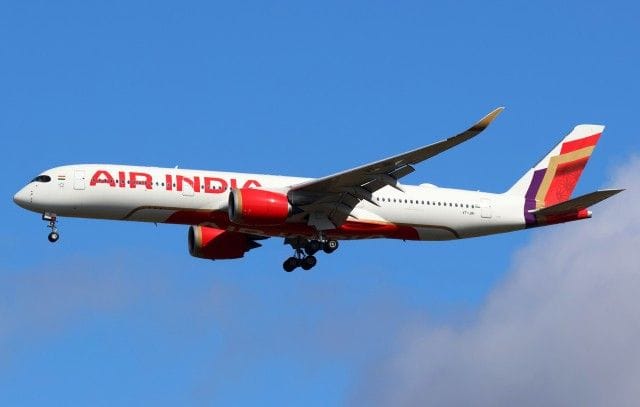
An Air India aircraft briefly entered Pakistani airspace while on a go-around on the Delhi-Amritsar route. This Image is for illustration purposes only.
Air India has confirmed that one of its Delhi-Amritsar flights briefly entered Pakistani airspace on Monday, June 22, 2026, during a go-around maneuver at Amritsar airport. The incident involved flight AI479, operated by an Airbus A321, and was later reported to the relevant regulatory authorities. According to the airline and the Directorate General of Civil Aviation, the aircraft eventually diverted to Delhi and landed safely, but the episode has triggered an internal and official investigation.
How the Incident Happened
The key reason behind this unusual airspace intrusion was a go-around during approach. A go-around is a standard aviation maneuver in which a pilot aborts landing and circles back to try again or move to another course of action. In this case, the aircraft had been asked to hold because the runway at Amritsar was being inspected after a bird strike incident. That runway inspection set off a sequence of events that led to the aircraft entering Pakistan airspace briefly during radar vectoring. NDTV has covered the full story.
The DGCA said the aircraft was operating as flight AI 479 from Delhi to Amritsar and that the crew was instructed to hold during the inspection. During the subsequent approach, the plane crossed into Pakistan airspace briefly. Importantly, the event was coordinated with Pakistan ATC authorities, which suggests the situation was managed through air traffic control channels rather than becoming an uncontrolled breach.
From an aviation-safety perspective, this matters because even minor deviations across international airspace boundaries can attract scrutiny. Airspace discipline is a core part of aviation operations, and any unintended entry, even if momentary and safely handled, is treated seriously. The good news here is that the aircraft was landed safely after diversion, and no injury or emergency was reported.
Official Statements
Air India said the crew “marginally infringed into the Pakistani airspace while maneuvering a go-around at Amritsar airport” and added that the matter has been reported to regulatory authorities and is being investigated internally. The airline also stressed that the safety of passengers and crew remains its top priority.
The DGCA gave a more detailed account, stating that the aircraft was asked to hold due to a runway inspection following a bird strike incident and that after beginning approach during radar vectoring, it briefly entered Pakistani airspace. The regulator added that the event was coordinated with Pakistan ATC authorities and that the aircraft ultimately diverted to Delhi and landed safely.
Those statements are important because they show two things at once: the event was real enough to require official review, but it was also handled without any immediate safety fallout. In aviation, that distinction matters a lot.
Background and Context
This incident sits at the intersection of routine flight operations and international airspace management. Commercial aircraft frequently perform go-arounds when landing conditions are not safe or when the runway is unavailable. These are not rare events, and they are generally considered standard safety procedures. What makes this case notable is the brief entry into foreign airspace during a diversionary maneuver.
The runway inspection was triggered by a bird strike incident, which is itself a familiar aviation risk. Bird strikes can force delays, inspections, and operational changes because even minor damage or debris on a runway can create hazards for the next aircraft. In this case, the inspection appears to have altered the approach sequence enough to require holding and eventual diversion.
For India’s aviation sector, such episodes are reminders of how busy airspace, airport constraints, and operational disruptions can interact in real time. They also show why coordination between airlines, pilots, regulators and air traffic control is so important. Yeh issue kaafi important hai because one small operational change can create a chain reaction that crosses borders, literally and administratively.
Timeline
June 22, 2026: Air India flight AI479 departs Delhi for Amritsar.
Approach phase at Amritsar: The aircraft is asked to hold because of a runway inspection after a bird strike incident.
During radar vectoring: The aircraft briefly enters Pakistani airspace while performing a go-around maneuver.
After the incident: The event is coordinated with Pakistan ATC authorities.
Later: The aircraft is diverted to Delhi and lands safely.
Following the incident: Air India reports the matter to regulatory authorities and begins an internal investigation.
Also Read: Storm at Delhi Airport Blows Ground Equipment Into Three Air India Planes, DGCA Probes Incident
Why This Matters
This matters because aviation safety is built on precision, accountability and quick communication. Even if no one was harmed, a brief incursion into another country’s airspace can raise operational, diplomatic and regulatory questions. Air travel depends on trust, and these investigations help reassure passengers that even unusual incidents are reviewed carefully.
It also matters because the incident shows how quickly normal operations can be affected by external disruptions like bird strikes or runway inspections. Airports handle thousands of moving parts every day, and one small operational hold can alter routing decisions in seconds. For passengers, that often means delays or diversions; for regulators, it means a need to check whether every step was handled correctly.
From a broader industry angle, such events remind airlines to keep training, coordination and contingency planning sharp. Aviation is safest when systems work together well, especially under pressure.
India Angle
For Indian readers, this story is relevant because it involves a major Indian airline, a domestic route, and airspace coordination with a neighboring country. In simple Hinglish, yeh sirf ek flight incident nahi hai—it shows how sensitive and complex flying in this region can be. India’s aviation network is expanding fast, so reliability and safety processes are under constant public attention.
Passengers in India are also becoming more aware of operational issues like bird strikes, runway inspections and diversions. These are not just technical terms anymore; they affect actual travel plans, schedules and confidence. The fact that the aircraft landed safely in Delhi is reassuring, but the incident still highlights how important tight airport management is at busy Indian terminals.
There is also a public policy angle here. India’s aviation growth means more traffic, more pressure on air traffic control, and more room for operational disruption if systems are not fully aligned. A single incident like this makes that visible to a wider audience.
Analysis
My view is that the most important detail is not the airspace crossing itself, but the fact that the aircraft was coordinated through ATC and landed safely. That suggests this was managed as an operational deviation rather than a dangerous emergency. Still, it is not trivial. Aviation authorities will want to know whether the routing, holding instructions or vectoring sequence could have been handled more cleanly.
The bird strike context also matters. Many people focus only on the airspace boundary, but the runway inspection after the bird strike was the trigger. That means the real story is about layered operational stress: one airport issue led to a hold, which led to a go-around, which led to the airspace incursion. This is exactly why aviation investigations often look beyond the final event and study the whole chain.
What Next
The next step is the investigation. Air India has already said the matter is being reviewed internally, and the DGCA will likely examine the sequence of instructions, the vectoring decisions, and the role of ATC coordination. If any procedural gaps are identified, corrective action or revised guidance may follow.
Passengers on future Delhi-Amritsar or similar routes are unlikely to see immediate changes, but airlines often use incidents like this to refresh crew procedures and coordination protocols. That is how aviation improves: not by pretending errors never happen, but by studying them carefully.
There may also be follow-up attention on runway safety and bird strike prevention at Amritsar airport. If the runway inspection was necessary because of a bird strike, airport authorities may review operational handling to reduce delays and avoid similar rerouting complications.
Conclusion
Air India’s Delhi-Amritsar flight incident is a reminder that even routine domestic operations can become complex when runway issues, go-arounds and airspace boundaries intersect. The flight briefly entered Pakistani airspace during a manoeuvre at Amritsar airport, but the aircraft was safely diverted and landed in Delhi after coordination with air traffic authorities. The probe will now determine whether the episode was simply an unavoidable operational deviation or whether additional safeguards are needed.
Written By A. Jack