Flag carrier begins industry-first mass screening of cockpit crew following Phuket–Delhi flight incident; DGCA rules and passenger trust now under sharp focus.
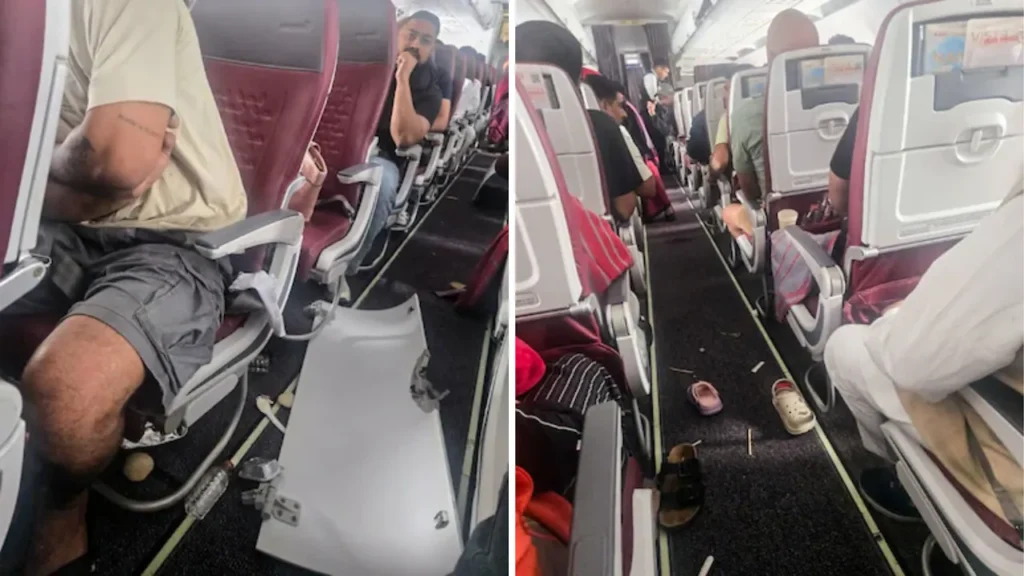
An Air India flight AI2379 from Phuket to Delhi tested positive for marijuana in two confirmatory tests. Image Credit: NDTV
Air India has ordered a fresh, mandatory dope test for all its pilots amid a growing row over the captain of its Phuket–Delhi flight testing positive for marijuana. The testing, which began on Thursday (August 13, 2026), is compulsory for both Air India and Air India Express pilots and will be carried out concurrently with training at the Gurugram Academy, as well as post-flight at briefing centres and offices.
The move comes after the pilot-in-command of Air India flight AI2379, which suddenly lost about 300 feet of altitude over Odisha on August 4, 2026, tested positive for marijuana in two drug tests. At least 20 passengers and four crew members were injured in the incident, which has since triggered a high-level safety review and demands for stricter drug-testing protocols across Indian aviation.
Why and How the Mass Testing Was Ordered
In an internal letter accessed by NDTV, Air India said it already “fully complies with all regulatory requirements prescribed by India’s DGCA,” which are similar to norms in Europe and the United States. However, the airline added, “We nevertheless now feel that it is important to go further. Accordingly, we have decided to undertake a full screening of all Group pilots for any substances or medications that are not permitted under prevailing regulations. This story was also covered by NDTV.
The airline described the initiative as “beyond regulatory requirements” and said it reflects Air India’s determination “to uphold the highest standards of safety and professionalism and to provide reassurance to our passengers, stakeholders and the community at large.”
Air India Express, in a separate statement, urged pilots to voluntarily self-declare any use, misuse, dependence on, or abuse of psychoactive substances that may affect their fitness for duty. It assured that self-declarations would be handled confidentially, with access restricted to top medical, HR, flight safety, and departmental heads on a need-to-know basis.
The Phuket–Delhi Incident
The controversy centres on Air India flight AI2379 from Phuket to Delhi on August 4, 2026, operated by an Airbus A320 (registration VT-EXO). The aircraft, carrying 137 passengers and eight crew members, suddenly lost around 300 feet of altitude over Odisha, causing injuries to at least 24 people on board.
Under standard procedure after any serious occurrence, both pilots underwent mandatory post-flight psychoactive substance screening. While the co-pilot’s result was clear, the captain’s initial test came back “non-negative”, prompting a confirmatory laboratory analysis. Sources told multiple outlets that the confirmatory test returned positive for marijuana, making it the second positive result for the same pilot.
An incident report accessed by NDTV indicates that the pilot-in-command, identified as Sudeep Vashistha, was not in his seat at the time of the altitude loss, with the co-pilot in command of the aircraft. Sources said he later went into the cabin to check on injuries and reportedly told passengers not to film him or the aircraft. Upon landing in Delhi, he was described as unsteady on his feet and had to be physically assisted while submitting his urine sample.
In his statement, Vashistha said he was on medication for “sleep difficulty” and that “sleep did not come easily” during the layover. He claimed he took light activity such as walking to improve sleep quality and said roster duties, though legally within prescribed rest limits, “compressed available daytime rest, which is often below the minimum required for adequate recovery.” He did not mention turbulence in his account, even though the incident was initially described in those terms.
Statements From Air India and Regulators
Air India’s internal letter to pilots:
“As you know, Air India already fully complies with all regulatory requirements prescribed by India’s DGCA, which are similar to those practised in other major aviation jurisdictions, including Europe and the United States. We nevertheless now feel that it is important to go further. Accordingly, we have decided to undertake a full screening of all Group pilots for any substances or medications that are not permitted under prevailing regulations.”
“For decades, Air India has been the flagbearer of Indian aviation… This trust is our most important asset, and it is vital that we do all possible to protect and sustain it.”
Air India Express on self-declaration:
“All employees are encouraged to voluntarily self-declare any use, misuse, dependence on, or abuse of psychoactive substances that may affect their fitness for duty… Self-declarations will be handled in a confidential and sensitive manner, with information shared only on a need-to-know basis.”
Industry context:
Existing DGCA rules require airlines to randomly test at least 10% of their flight crew for psychoactive substances each year. The Civil Aviation Requirement (CAR), Section 5, Series F, Part V—effective from January 2022—covers flight crew, air traffic controllers, and other safety-sensitive staff, and prescribes urine sampling split into two sealed containers (A and B) for testing six classes of substances, including cannabis (THC).
India’s Pilot Drug-Testing Rules and Global Parallels
India’s current framework, introduced in September 2021 and implemented in January 2022, mandates:
Random testing of at least 10% of flight crew and air traffic controllers annually
Post-incident testing after safety events
Testing at hiring and as follow-ups for certain categories
The CAR specifies testing for amphetamines, opiates, cannabis (THC), cocaine, barbiturates, and benzodiazepines. If Sample B also tests positive and it is a first-time offence, the pilot is typically referred for de-addiction or rehabilitation rather than facing automatic licence cancellation, according to experts interpreting the rules.
Globally, regimes in the US (FAA) and Europe (EASA) also rely on random and post-incident testing, but with varying thresholds and consequences. The Air India case has put India’s rulebook under fresh scrutiny, with calls to potentially increase random testing samples and tighten enforcement.
Timeline
August 4, 2026: Air India flight AI2379 (Phuket–Delhi) loses ~300 feet of altitude over Odisha; 24 people injured.
Immediately after landing: Both pilots undergo mandatory psychoactive substance screening; the captain’s initial test is flagged as “non-negative”.
August 11, 2026: Confirmatory test results indicate the captain tested positive for marijuana for the second time; media reports emerge.
August 12, 2026: Top Air India officials, led by CEO Campbell Wilson, meet civil aviation ministry officials; pressure mounts for protocol review.
August 13, 2026: Air India announces mandatory dope testing for all Air India and Air India Express pilots; screening begins at Gurugram Academy and briefing centres.
Also Read: Air India Phuket-Delhi Turbulence: Captain Reportedly Fails Dope Test, Grounded Pending Confirmation
Why This Matters
Yeh issue kaafi important hai kyunki seedha asar pad raha hai passenger safety, airline reputation, aur pure aviation sector ki credibility par.
Passenger safety: Any hint of impairment in the cockpit raises fundamental questions about in-flight safety, especially during critical phases like cruise and descent.
Brand trust: Air India, as India’s flag carrier, has been rebuilding its image under new ownership. A high-profile drug row risks undoing months of trust-building with passengers and investors.
Regulatory pressure: The incident has prompted the Civil Aviation Ministry to demand a review of dope-test protocols, potentially leading to stricter random testing and harsher penalties.
Workforce morale: While aimed at reassurance, mass testing could also create anxiety among honest pilots if not communicated and implemented with sensitivity and clear scientific standards.
India Angle
This is not just an Air India story; it’s an India-wide aviation moment.
Policy spotlight: The case has forced a public conversation about whether India’s 10% random testing norm is sufficient or if a higher percentage and more frequent post-incident checks are needed.
Global benchmarking: With Indian carriers expanding internationally, alignment with best practices in the US and Europe becomes crucial for credibility and code-share partnerships.
Public perception: For Indian travellers, yeh sawal hai ki kya humare pilots par strict enough checks ho rahe hain aur kya rules mein aur sakhti chahiye.
Analysis
But beyond search, the narrative is strategically layered:
Safety vs optics: Mass testing is a strong signal to passengers and regulators, but it also acknowledges that existing random checks may not be enough to prevent such lapses.
Rulebook under stress: The incident exposes gaps between written policy and real-world enforcement, especially around rest, layover habits, and self-medication.
Reputation management: For Air India, this is a reputational stress test. How it handles discipline, transparency, and support for its workforce will define the long-term impact.
For follow-ups, newsrooms can explore the detailed DGCA penalty matrix, international comparisons of random testing rates, and how other Indian carriers are responding.
What Next
Stricter DGCA norms: Expect proposals to increase the percentage of random tests, tighten post-incident protocols, and possibly introduce harsher consequences for first-time psychoactive substance violations.
Disciplinary action: Depending on the final inquiry report, the captain could face suspension, mandatory rehabilitation, or licence action, subject to DGCA rules and internal airline policy.
Industry-wide ripple: Other Indian airlines may voluntarily ramp up testing or review their own rest and layover guidelines to avoid similar controversies.
Passenger communication: Air India will likely continue emphasising its “beyond compliance” stance to reassure travellers and restore confidence in its safety culture.
Conclusion
Air India’s decision to mandate dope tests for all pilots marks a defining moment for Indian aviation safety and governance. Triggered by the captain of flight AI2379 testing positive for marijuana after a frightening altitude drop, the move goes beyond existing DGCA rules and signals a zero-tolerance posture on substance abuse in the cockpit.
For passengers, it is a reassurance; for pilots, a reminder of the high standards expected; and for regulators, a prompt to revisit and possibly tighten the rulebook.
Ab dekhna yeh hai ki kya yeh step sirf ek crisis response ban kar reh jaata hai, ya sach mein ek lasting culture change laata hai—jahan safety, transparency, aur accountability sabse upar ho.
Written By A. Jack