Algae Powered Air Purifier Device
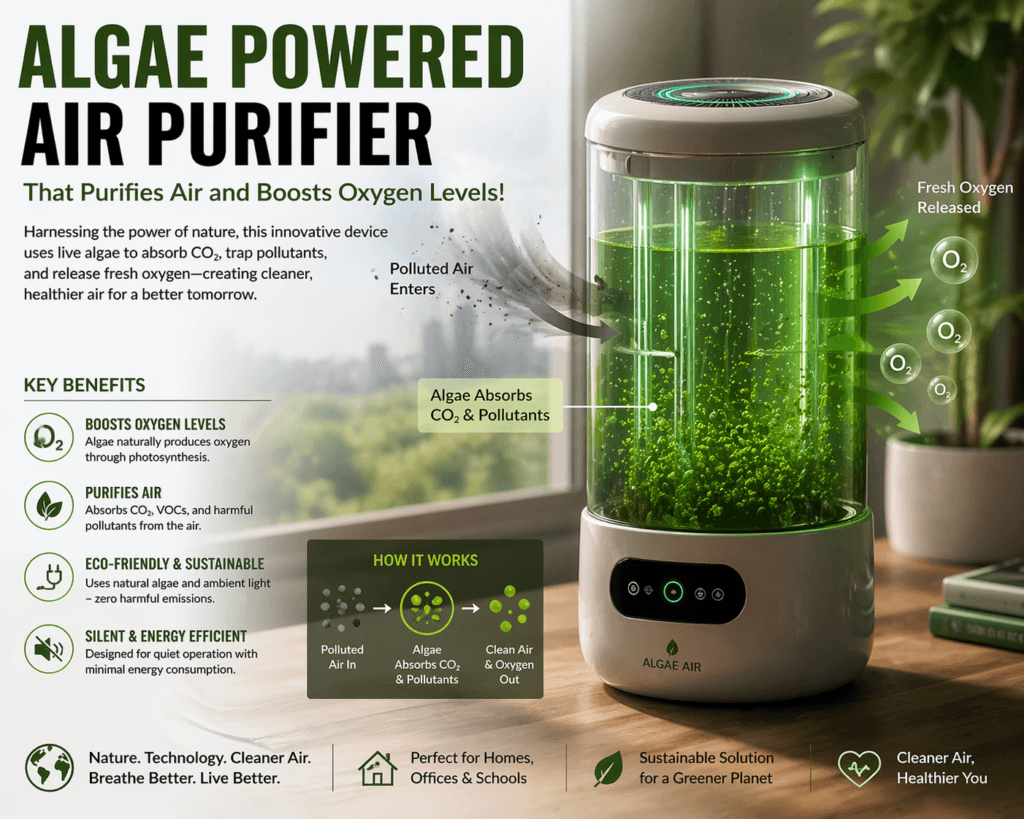
Harcourt Butler Technical University (HBTU) scientists have created a revolutionary biopurifier using algae. This compact device cleans polluted indoor air, removes toxic gases, and converts stuffy rooms into fresh garden-like spaces in just 20-30 minutes.
Green algae bioreactor glowing in a bus shelter design, showing how microalgae naturally purify air while producing oxygen – a real-world example of the tech behind HBTU’s innovation.
The Breakthrough Innovation
Researchers at HBTU in Kanpur, India, led by Biotechnology Head Prof. Lalit Kumar Singh, developed this algae-based biopurifier. Assistant Professors Mohit Nigam and Dr. Saijasi Dubey created it using microalgae (microalgae) – tiny algae that thrive in water. Unlike regular air purifiers that only trap dust (PM2.5/PM10), this device uses natural photosynthesis to absorb carbon dioxide (CO2), pet dander, smoke, and ultrafine pollutants while releasing oxygen.
The device is designed for homes, offices, and poorly ventilated closed rooms. It promises to eliminate CO2 buildup – which causes headaches and fatigue in airtight spaces – and deliver clean, oxygen-rich air equivalent to an open garden.
How It Works: Simple Algae Magic
This isn’t a fan-blowing machine. It’s biology at work:
Size: Half-foot wide (6 inches) x 1.5-2 feet tall – fits anywhere.
Setup: Fill 4-6 liters of water, add microalgae culture.
Process: Algae perform photosynthesis using room light or built-in LED bulb. They suck in CO2 and pollutants, spit out O2.
Maintenance: Change algae/water once or twice monthly – costs just ₹15-20 (~$0.20).
Dr. Saijasi Dubey explains: “It’s like a mini aquarium. The light setup keeps photosynthesis running 24/7.” No expensive HEPA filters, minimal electricity.
Official Statements and Recognition
“This innovation brings new hope against urban pollution,” says Mohit Nigam. The team won Best Innovation at Chandrashekhar Azad Agricultural University’s March 2026 startup fair. They also secured ₹15 lakh (~$18,000) from MSME Ministry’s Idea Hackathon 5.0 this month.
Market launch planned in 2 months at ₹15,000 (~$180) per unit for standard rooms. Companies in talks for mass production.
Background and Timeline
Algae air purification isn’t new globally – NASA researched it decades ago, Serbia has public algae bioreactors. But HBTU’s is India’s first affordable home version.
Timeline:
Development: Under Prof. Singh’s guidance at HBTU Biotech Dept.
March 2026: Top award at agricultural startup expo.
April 2026: MSME funding secured.
June 2026: Commercial launch targeted.
Why This Matters
India battles severe air pollution – Delhi AQI often exceeds 400. Indoor air can be 2-5x worse than outside due to CO2 buildup. Traditional purifiers cost ₹5,000-10,000 yearly in filters/electricity. This is eco-friendly, carbon-negative, and adds oxygen – perfect for bedrooms, offices, hospitals.
Comparison Table:
| Feature | Algae Biopurifier | Traditional HEPA |
|---|---|---|
| Pollutant Removal | Dust + CO2 + VOCs + Smoke | Dust only |
| Oxygen Production | Yes (150-200ml/hr) | No |
| Initial Cost | ₹15,000 | ₹10,000-25,000 |
| Monthly Running | ₹15-20 | ₹1,000-2,000 |
| Electricity | 15-25W | 50-150W |
| Environment | Zero waste | Filter landfill |
Local Angle
UP cities like Kanpur suffer leather factory fumes; rural Chandpur faces crop burning smog. This Made-in-Kanpur device offers affordable clean air for middle-class homes. Schools/offices could install fleets – boosting student health amid rising asthma cases. “Yeh device pollution se bachayegi,” locals will say.
Real-world algae purifier in action, proving the tech scales from bus stops to bedrooms.
Also Read :Shocking Revelation: Pakistan Hospital Reuses Syringes, 331 Children Hit by HIV Outbreak
Expert Analysis
Algae tech (like spirulina bioreactors) is proven, but HBTU made it consumer-ready. Keywords like “algae air purifier India” will trend. Logical insight: With GRAP restrictions looming, demand will explode. Govt subsidies could drop price to ₹10,000, capturing 20% market share vs. imported HEPA units.
What Next?
Launch: June 2026 via partners.
Scaling: Larger models for offices; school mandates possible.
Global: Export potential to polluted Asia.
Funding: More grants; AtmoHive-like startups emerging. Story also cover by carbelim
Conclusion
HBTU’s algae biopurifier turns science fiction into everyday reality – clean, oxygenated air for ₹15-20/month. Perfect for India’s pollution crisis. Get ready to ditch expensive filters.
Written by M.A. Arif