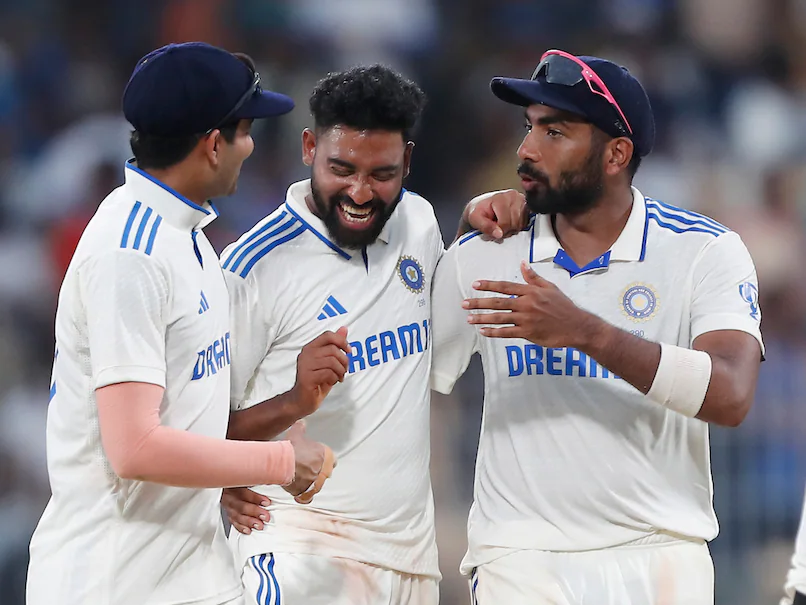
Kolkata Knight Riders continued their winning momentum with a seven-wicket victory over Sunrisers Hyderabad in IPL 2026, driven by Angkrish Raghuvanshi’s composed fifty and Varun Chakravarthy’s match-turning spell. KKR chased down SRH’s 165/10 with ease, extending their winning run to three matches in a row.
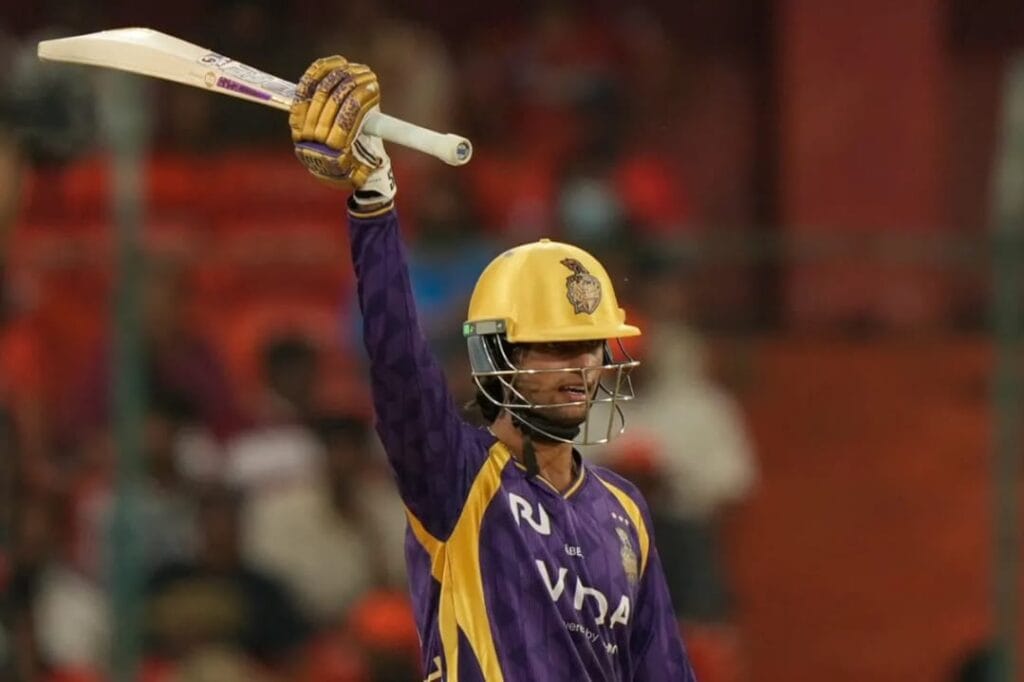
Kolkata Knight Riders produced another confident all-round performance on Sunday as they defeated Sunrisers Hyderabad by seven wickets in their IPL 2026 clash. The chase was built around a mature 59 from young batter Angkrish Raghuvanshi, while skipper Ajinkya Rahane added stability with 43 to take KKR past the target comfortably.
Earlier in the evening, Sunrisers Hyderabad had posted 165 all out after a promising start from Travis Head, who smashed 61 off 28 balls. But KKR’s spin-heavy attack, led by Varun Chakravarthy and Sunil Narine, pulled the innings back sharply and ensured SRH could not convert their attacking start into a bigger total.
How KKR Took Control
The turning point of the match came in the middle overs, where KKR’s spinners tightened the grip. SRH looked dangerous when Travis Head was batting freely, but once the Australian opener was dismissed, the innings lost rhythm. Varun Chakravarthy finished with 3 for 36, while Sunil Narine chipped in with 2 for 31, and both bowlers forced SRH into riskier shots as the pressure built. NDTV Sports has covered this story before.
That middle-overs control was crucial because SRH depends heavily on quick scoring at the top. When KKR denied them that freedom, the rest of the innings felt compressed. In T20 cricket, that is often the difference between 185-plus and a total that feels slightly under par, and that is exactly what happened here.
Raghuvanshi’s Mature Knock
Angkrish Raghuvanshi’s 59 stood out because it was not a reckless innings. It was well-paced, controlled, and built to absorb the chase rather than rush it. That is a sign of confidence and maturity, especially for a young batter playing an important role in a competitive IPL side.
His partnership of 84 runs with Ajinkya Rahane for the second wicket gave KKR complete control of the chase. Once that stand was in place, SRH had very little room to force a comeback. Finn Allen’s quick 29 off 13 balls at the top also helped KKR get ahead of the required rate early, which reduced pressure on the middle order.
Rahane’s Experience Matters
Ajinkya Rahane’s 43 may not have been the flashiest score of the match, but it was exactly the kind of innings KKR needed. He allowed Raghuvanshi to play freely while ensuring the chase never drifted into uncertainty. That kind of senior presence often looks simple from outside, but in the IPL it is valuable because it stabilizes an innings when early wickets are not falling but the target still demands calm decision-making.
Together, Rahane and Raghuvanshi made the chase look professional rather than dramatic. That is usually a good sign for a team trying to build title momentum.
Why SRH Fell Short
Sunrisers Hyderabad’s total of 165 looked defendable only if their bowlers struck early and often. But once KKR got off to a strong start, SRH were forced to defend a total that was already below what the pitch and conditions probably demanded.
The biggest issue for SRH was that Travis Head’s innings did not get enough support from the rest of the batting unit. A lone top-order blitz is useful, but in a long tournament, teams need at least one more major contributor to turn 165 into something more threatening. KKR’s bowlers also deserve credit for not panicking after Head’s start. They stayed disciplined, and that discipline changed the game.
Also Read: KL Rahul and Mitchell Starc Power Delhi Capitals to Record 7-Wicket Win Over Rajasthan Royals
Background And Context
This win marked KKR’s third straight victory, which is important because IPL seasons are often about timing as much as talent. A team that starts building momentum midway through the tournament can suddenly look far more dangerous than one that wins sporadically. For KKR, the balance of youth and experience appears to be clicking at the right time.
For SRH, the result will raise familiar questions about batting depth and innings management. They have explosive players, but cricket at this level often rewards the side that can combine explosiveness with control. That contrast was visible in this match.
Timeline
SRH opened strongly through Travis Head’s fast half-century.
KKR spinners brought the scoring rate under control in the middle overs.
SRH were restricted to 165 all out.
Finn Allen gave KKR a brisk start with 29 off 13 balls.
Angkrish Raghuvanshi and Ajinkya Rahane added 84 runs for the second wicket.
KKR chased the target comfortably and won by seven wickets.
KKR secured their third consecutive win.
Why This Matters
This matters because momentum is everything in the IPL. Three wins in a row can completely change how a team is viewed by opponents, fans, and analysts. KKR is beginning to look like a unit that can win in multiple ways—through spin, through young batters, and through senior calm.
It also matters because Angkrish Raghuvanshi’s innings suggests KKR may have found another dependable batting option for the long run. In a tournament where injuries, dips in form, and matchups matter so much, finding a young player who can handle pressure is a major advantage. Yeh issue kaafi important hai because teams that develop internal depth usually go deeper into the competition.
India Angle
For Indian cricket fans, this match offers a strong local storyline: an Indian youngster stepping up in a high-pressure IPL chase. Raghuvanshi’s knock will be especially encouraging for viewers who like seeing domestic players grow into match-winners.
There is also a clear Indian tactical angle here. KKR showed how spin can still be a powerful weapon in modern T20 cricket, especially in the middle overs. With Varun Chakravarthy and Sunil Narine doing the damage, the team reminded everyone that Indian pitches and Indian conditions still reward smart spin bowling.
Analysis
My analysis is that KKR is currently looking like a team with a defined identity: start positively, squeeze in the middle overs, and finish calmly. That formula is simple, but in the IPL it is often the hardest thing to maintain consistently. SRH, on the other hand, may need to rethink how they convert explosive starts into totals that can survive pressure from quality spin attacks.
What Next
The next step for KKR is to keep this rhythm going and ensure that the three-win streak turns into a sustained playoff push. If Raghuvanshi continues to bat with this level of control, KKR will have one more reliable piece in their batting puzzle.
For SRH, the priority will be to strengthen the middle-order response and avoid depending too much on one top-order batter. If they can support Head better and find ways to counter spin more effectively, they will still remain dangerous.
Conclusion
KKR’s seven-wicket win over Sunrisers Hyderabad was not just another league-stage result. It was a statement of control, balance, and confidence. Angkrish Raghuvanshi’s composed fifty, Ajinkya Rahane’s steady support, and Varun Chakravarthy’s crucial spell all combined to make this a convincing victory.
For KKR, three straight wins mean momentum, belief, and growing consistency. For SRH, it is a reminder that strong starts need stronger middle-order resistance and smarter bowling plans. In a long IPL season, that difference can matter a lot.
Written By A. Jack