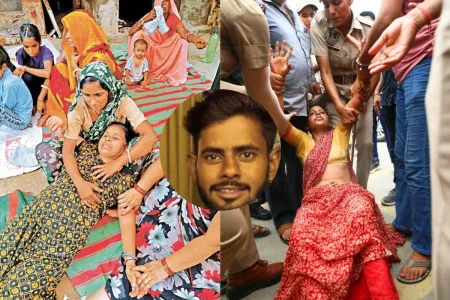
A major confrontation unfolded in Barmer after Shiv MLA Ravindra Singh Bhati joined the ongoing labour agitation linked to the Giral Lignite Mines. The situation escalated sharply when he allegedly attempted self-immolation outside the district collectorate.
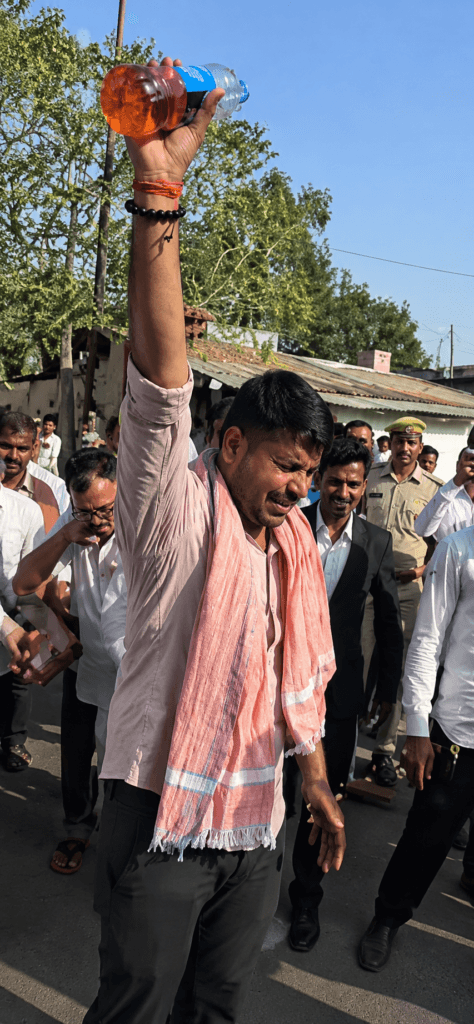
Heavy police deployment and a large crowd gather outside the Barmer district collectorate as labourers continue their protest over long-pending demands linked to the Giral Lignite Mines.
The ongoing labor protest at Giral Lignite Mines in Rajasthan took a dramatic turn on Tuesday as tense scenes were witnessed outside the district collectorate in the Barmer district. As per information, Shiv MLA Ravindra Singh Bhati allegedly poured petrol on himself and tried to set himself ablaze during a protest over the demands of the workers who have been on strike for the last 39 days. Police and administration officials reached the spot and managed to stop him before it turned into a major tragedy.
What Happened
The incident took place in a big public meeting organized at Barmer district headquarters in support of the laborers protesting outside the Giral Lignite Mines. After meeting thousands of people, it is reported they moved towards the collectorate to lay siege to it and press their six-point demands.
The atmosphere outside the office was highly charged as the crowd gathered. Bhati, the reports said, was very angry at the situation and had allegedly tried to set himself on fire by pouring petrol on himself and trying to strike a match. Senior police officials, including ASP Nitesh Arya, swung into action immediately and took him inside the collectorate. After this all the gates of the district collectorate were closed.
Why the Protest Began
The difficulty is related to a labor dispute that has been ongoing for 39 days outside the Giral Lignite Mines. The workers say their protest is on long-pending demands on employment, job security, and treatment of local laborers after land acquisition in the Thumbli-Giral area and nearby villages.
The workers alleged that Rajasthan State Mines and Minerals Limited had given assurance to provide jobs to the local people after taking over the land in the area, but these assurances were not honored properly. They say many local youth are now being taken out of work instead of being supported with stable jobs. That has caused a lot of frustration in the local community.
Bhati’s Role in the Movement
Ravindra Singh Bhati was already a staunch supporter of the protesting workers. A day before the incident, he had addressed a press conference and warned that if the demands were not accepted, he would take the fight forward along with the labor union. His comments made clear the matter was becoming a highly charged political and emotional issue.
On Tuesday, Bhati’s leadership helped to mobilize a large crowd for the labor movement’s public meeting. The gathering then transformed into a collective gherao and made the protest a lot more visible and confrontational. This indicates that the issue is no longer just about wages or jobs but has turned into a political and public pressure campaign.
Background and Context
The labor protest commenced on April 9 and has now lasted for more than five weeks. During this period workers have made repeated appeals for intervention by the authorities, and local anger has continued to mount. In places like Barmer, where land acquisition is closely linked to industrial and mining activity, the promise of jobs becomes a fraught issue.
This isn’t a local labor issue. This trend is part of a larger phenomenon in India where communities affected by mining and infrastructure projects demand direct benefits like employment, rehabilitation, and long-term economic support. But when those expectations are not met, trust is lost quickly. Click here for more latest news from rajasthan.
Timeline
April 9: A labor protest begins outside the Giral Lignite Mines.
The next 39 days: Workers continue their sit-in over unresolved demands.
One day before the incident: Ravindra Singh Bhati holds a press conference and warns of stricter action.
Tuesday: A large Labour Public Meeting is held in Barmar.
After meeting, protests: Thousands march to district collectorate
Collectorate in panic as Bhati allegedly tries to self-immolate.
Police and officials step in immediately, and the collectorate gates are closed.
Why This Matters
This incident is important because it involves labor rights, local employment, political pressure, and administrative responsibility in one very sensitive case. “When a sitting MLA takes such a dramatic stand, it sends out a strong message that the issue has reached boiling point.”
The question is also important for ordinary people, as it raises a fundamental question: when industrial development occurs on local land, do the local communities really get the promised benefits? Here, the answer appears to be the root of the anger and the long protest.
India Angle
This protest is a reminder in India of an age-old problem that has not been resolved. There are many examples throughout the country of land being acquired for industrial or mining projects with local people feeling left out. That breeds mistrust and leads to protests like this one.
The problem is simply one of fairness. The land was local, the people were local, and they were expecting jobs, and now they want those promises kept. So the Barmer agitation is not just a Rajasthan story. It is part of a larger national debate on development, jobs, and social justice.
Analysis
This is a high-impact story from a news perspective because it combines a dramatic political moment with a long-running local agitation. The self-immolation attempt, the Collectorate siege, and the large crowd make it a strong headline-driven report.
I’m reading this editorially as something more than a temporary flare-up of protest. This seems like a deeper confrontation about trust, jobs, and local rights. If the administration does not move quickly, the matter could balloon into a larger law-and-order and political problem. This is a reminder, in other words, that ground-level grievances that are left unresolved can escalate quickly when ignored for too long.
What’s Next?
The administration is likely to next talk to company representatives and worker leaders. The district administration will now come under pressure to respond to the six-point charter of demands and find a way of calming the situation.
If no deal is reached, the protest could continue or even escalate. But if the government or the company set out a clear roadmap for jobs, rehabilitation, and worker protection, the situation could be brought under control.
Conclusion
The Giral Lignite Mines protest in Barmer has become a major flashpoint, and the dramatic protest by Ravindra Singh Bhati has brought the issue to the forefront. What began as a labor sit-in has metamorphosed into a full-fledged political and public confrontation outside the district collectorate. | This story was also covered by NDTV
Written by Arif