A viral prank involving a Chinese battery app has highlighted a worrying vulnerability in some Delhi e-rickshaws, with drivers claiming their vehicles can be switched off remotely via Bluetooth-connected battery systems. Delhi’s Transport Minister has now asked officials to verify the claims. Dealers, drivers and cybersecurity experts warn the issue could be much bigger than just one app.
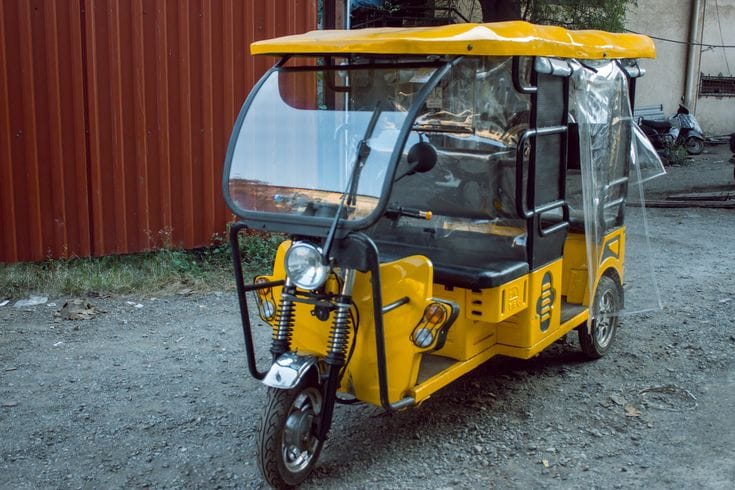
This image is for illustrations purpose only.
A bizarre and worrying prank is making waves in Delhi, where viral videos show people using a Chinese smartphone application called BAT-BMS to remotely shut down e-rickshaws through Bluetooth-connected battery systems. The clips, widely shared across Instagram, YouTube and X, have left drivers, dealers and EV users asking how a battery app can be turned into a tool for mischief. Delhi Transport Minister Pankaj Singh has now asked officials to verify the claims and examine the app’s functionality.
The issue is not just about social-media virality; it is about a real operational vulnerability in part of the city’s electric transport ecosystem. In the viral clips, content creators are seen approaching e-rickshaws and electric scooters, opening the battery management system, connecting to the battery and activating the discharge switch, causing the vehicle to stop suddenly. For drivers who depend on these vehicles for daily income, the threat is immediate and practical. Yeh issue kaafi important hai because it sits at the intersection of technology, safety and livelihood.
How the Prank Works
The controversy began when videos circulated showing users connecting to compatible e-rickshaw batteries via Bluetooth and remotely switching off the battery’s discharge function. The app in question, BAT-BMS, is primarily designed to monitor battery health, voltage, current and temperature. But depending on how the system is configured, certain control functions can also be accessed remotely. NDTV has covered the full story.
According to a senior Delhi government official, the preliminary assessment suggests the app can wirelessly connect to compatible Bluetooth-enabled lithium batteries within a limited range. That is important because it means the prank is not happening through some magical hack; it is using a feature that appears to exist in the system, but one that may not be properly restricted. The official also said that systems lacking adequate authentication could be vulnerable to misuse.
But the concern did not end there. Another battery management application, Epoch Li-ion, was tested on the same compatible battery and was able to shut down the e-rickshaw with a single tap. Within seconds, the vehicle powered down, its display went blank, and it would not restart until it was switched on again through the app. This is a key detail because it shows the issue is not limited to one app. The broader problem may lie in the design and security of compatible battery systems.
Why Authorities Are Worried
Delhi Transport Minister Pankaj Singh said he had not yet received a written complaint, but people had raised the issue with him. He added that the Transport Department had been asked to get the correct information and verify the authenticity of the claims surrounding the BAT-BMS application. That response is cautious, but it also shows the matter has reached official attention.
The concern is clear: if an app can be used to remotely stop a vehicle in traffic, that creates a safety risk, an operational risk and a public confidence problem. E-rickshaws are widely used for short-distance travel in Delhi, and many drivers rely on them as their only source of income. A sudden shutdown with passengers onboard could create confusion, delay and even conflict over fares or liability.
The issue has also alarmed dealers. Insaaf Khan, an e-rickshaw dealer, said around 40 to 50 vehicles had already come to his workshop with similar complaints. He said that when one company’s app was secured with a password, another app began causing similar trouble. His comment captures the real fear in the market: once one weakness is patched, another may emerge. In other words, the problem may be systemic rather than isolated.
Drivers Feel the Impact First
For e-rickshaw drivers, the issue is not theoretical. It affects earnings, daily movement and trust in the vehicle itself. One driver, Raushan Lal, said he had to push the e-rickshaw to the workshop after it suddenly stopped working. He said that for poor workers, the e-rickshaw is their only source of livelihood, and if it stops functioning unexpectedly, the family’s income can stop too.
That is the part of the story that gives it emotional weight. Technology problems are often discussed in abstract terms, but here the consequences are human and immediate. A driver who cannot trust his vehicle to remain on may lose trips, lose time and lose money. If a passenger is inside when a shutdown happens, the driver may also face embarrassment or disputes, especially if the vehicle fails in the middle of a route.
The uncertainty is what bothers drivers most. They do not know when the vehicle may shut down again, and that unpredictability can make every trip stressful. In a low-margin, high-dependence job, even a small technical weakness can become a major livelihood threat.
What Experts Are Saying
Cybersecurity expert Advocate Saakshar Duggal said the incident shows why India’s EV ecosystem needs stronger safeguards. He argued that if not full regulation, then at least strict guidelines for manufacturers and dealers are necessary so loopholes can be closed. That view is practical and timely.
His point matters because battery systems are becoming increasingly smart, connected and software-driven. That is good for monitoring and efficiency, but it also expands the attack surface. When a battery can be managed remotely, the system must ensure that only authorised users can control sensitive functions. If not, a feature designed for convenience can turn into a vulnerability.
This is where EV security is different from traditional vehicle safety. In older vehicles, the engine or electrical system is less dependent on software-controlled remote access. In connected EVs, though, the battery management system becomes part of the vehicle’s nervous system. That means security needs to be built in from the start, not added later as a patch.
Background and Context
Battery management apps are widely used in the EV sector to track charging status, battery health, temperature, voltage and current. Some also offer remote control functions for maintenance or monitoring. The appeal is obvious: they allow dealers and technicians to diagnose problems quickly and help users manage battery performance.
But convenience comes with risk. If apps are not properly authenticated or if multiple apps can connect to the same battery system, then misuse becomes possible. That is the broader issue exposed by this Delhi case. It is not just about a prank video going viral. It is about whether the industry has moved fast enough on safety, access control and software discipline.
India’s EV market is expanding quickly, especially in cities like Delhi where e-rickshaws fill an essential transport gap. But rapid adoption often creates uneven standards. Some manufacturers invest in robust systems, while others may leave security weak or inconsistent. That is why incidents like this become a wake-up call for regulators.
Timeline
Viral clips appear: Influencers and content creators post videos showing e-rickshaws being switched off remotely.
Public concern rises: Drivers, dealers and EV users begin reporting similar experiences.
Delhi government alerted: Transport Minister Pankaj Singh says the issue has been flagged to him.
Preliminary assessment: Officials say the app may connect to compatible Bluetooth-enabled lithium batteries within range.
Reality check: BAT-BMS now prompts for a password in one test, while another app, Epoch Li-ion, still shuts down a vehicle.
Dealer complaints: Workshops report multiple e-rickshaws arriving with similar shutdown problems.
Next steps: The department is asked to verify the app’s authenticity and identify who is responsible.
Also Read: Indians Are Using Chinese BAT-BMS App to Remotely Shut Down E-Rickshaws
Why This Matters
This matters because it shows how digital convenience can become a public safety issue if not properly controlled. A remote shutdown feature might be useful for technicians, but in the wrong hands it can create chaos. For e-rickshaw drivers, that means lost income and fear. For passengers, it means a sudden stoppage on the road. For regulators, it means a new category of transport safety risk. Yeh matter isliye important hai because it affects both daily life and trust in EV technology.
It also matters because India is pushing electric mobility hard, and public confidence is essential for that transition. If people begin to feel that electric vehicles can be tampered with easily, it can slow adoption and create resistance. That would be a problem for the whole ecosystem, not just one city.
The other big issue is accountability. If a battery system or app is vulnerable, someone has to own the fix — manufacturers, dealers, software providers or regulators. Public-facing technology needs clear responsibility. Without it, small glitches become systemic problems.
India Angle
For Indian readers, this is not just a Delhi oddity. E-rickshaws are a huge part of urban mobility across India, especially in North Indian cities where they serve as affordable last-mile transport. In Hinglish, seedhi baat yeh hai: agar app se rickshaw bandh ho sakta hai, toh driver ka din bhi bandh ho sakta hai.
The story also connects to India’s bigger EV push. The government wants more green mobility, but safety and cybersecurity must grow with it. If battery apps can be misused, then standards need to catch up quickly. Indian commuters and drivers deserve systems that are smart but secure.
This will likely resonate with small operators and fleet owners across the country because they understand how much damage one unpredictable shutdown can cause. A working vehicle is not just transport; it is daily roti-radi. That is why this issue feels so local and so urgent.
Analysis
My opinion is that the real lesson here is not “a prank went viral” but “connected vehicle systems need better security design.” If one app can be locked down while another still works, then the ecosystem has a deeper design problem. That is the kind of issue regulators should treat urgently, not casually.
There is also a social media angle worth noting. Viral content can expose vulnerabilities, but it can also normalise harmful misuse. Once people see a prank repeated online, they may copy it without understanding the consequences. That is why the response must address both the technical flaw and the online behaviour around it.
The good news is that officials are at least checking the matter. But a review is not enough unless it leads to concrete standards for authentication, control access and dealer oversight. The EV sector is growing too fast for security to remain optional.
What Next
The next step is for the Delhi Transport Department to verify the application’s claims and determine whether the issue is limited to certain battery models or broader across compatible systems. If the app or similar systems are found to be unsafe, officials may need to issue advisories or recommend technical fixes.
Manufacturers and dealers may also face pressure to improve authentication, add passwords and restrict remote control functions. If the problem extends beyond one app, the industry may need wider guidelines for battery software security.
For drivers, the immediate hope is practical: that their vehicles stop being easy targets for remote shutdowns. If not, the anxiety and income loss will continue. That would be bad for both livelihoods and the public trust in e-rickshaws.
Conclusion
The Delhi BAT-BMS prank is funny only at first glance; beneath the viral videos is a real safety and livelihood concern. The fact that a battery app can remotely shut down some compatible e-rickshaws has exposed a gap in EV security, and the issue appears to extend beyond one application. With the Delhi government now seeking answers and drivers demanding protection, the story has moved from internet curiosity to policy concern. If India wants a safe and trusted electric future, such loopholes cannot be left to chance.
Written By A. Jack