Cervical cancer is one of the most preventable cancers but still kills hundreds of thousands of women every year, particularly in low- and middle-income countries. Health experts say the disease is strongly linked to persistent HPV infection, and that early vaccination, screening and treatment can save millions of lives.
Cervical cancer is a major global health challenge, but it is also one of the best examples of a disease that can be prevented and cured if detected early. The information states that it was the fourth most common cancer in women globally in 2022, with approximately 660,000 new cases and around 350,000 deaths.
The burden of Cervical Cancer Prevention is not evenly distributed. Most deaths are in low- and middle-income countries, where access to HPV vaccination, screening, and treatment is still low. This is a major issue because it shows how health inequalities continue to affect survival rates across the globe.
What Causes Cervical Cancer
Almost all cases of cervical cancer are caused by persistent infection with oncogenic types of human papillomavirus or HPV. HPV is a common sexually transmitted infection that can affect the skin and the genital, anal, and throat areas, and most sexually active people will be infected at some point in life.
For the most part, the immune system clears the virus on its own. This risk occurs when certain high-risk HPV types remain in the body for an extended period of time and start to cause abnormal cell changes in the cervix. If left untreated, these changes may slowly develop into cancer.
In women with a healthy immune system, it usually takes 15 to 20 years, but it can go faster in women with weakened immunity, including women with untreated HIV. This is one reason why prevention of cervical cancer has become a major global health priority.
Why is this disease so serious?
Cervical cancer is dangerous because it may develop without symptoms at first. Precancerous changes generally do not cause symptoms, so women may not know anything is wrong until the disease has progressed.
The impact is especially severe in places where screening is not routine and treatment is delayed. The data provided shows that about 94% of cervical cancer deaths in 2022 occurred in low- and middle-income countries. That is not just a medical fact; it is a public health warning.
Women living with HIV are six times more likely to develop cervical cancer compared with women without HIV. This makes prevention and regular screening even more critical for vulnerable groups.
Symptoms To Watch For
Cervical cancer can be cured if detected and treated early, but the warning signs should not be ignored. Typical symptoms include abnormal bleeding between periods, bleeding after menopause, and bleeding after sexual intercourse.
Other symptoms may include increased or foul-smelling vaginal discharge, persistent pain in the back, legs, or pelvis, fatigue, weight loss, loss of appetite, vaginal discomfort, and swelling in the legs. These symptoms do not always mean cancer, but they do require medical attention.
The point is that you don’t wait. If symptoms develop, women should see a health-care professional quickly so that testing can start right away.
Screening And Early Detection
One of the most effective weapons against cervical cancer is regular cervical screening. The guidance recommends that screening begin at age 30, or at age 25 for women living with HIV, with a high-performance test every 5 to 10 years.
The global strategy recommends at least two lifetime screens, one by age 35 and one by age 45. That’s because screening can find precancer before it’s cancer, and early treatment can prevent the disease altogether.
Self-collection for HPV testing is also becoming a more practical option in some settings. It has been shown to be as reliable as samples collected by health-care providers, which could improve access for women who face barriers to clinical testing.
Prevention Through Vaccination
The HPV vaccine is a huge step forward in the prevention of cervical cancer. Vaccination of 9-14 year old girls is highly effective at preventing HPV infection and cervical cancer and other HPV-related cancers.
There are eight licensed HPV vaccines as of 2025, five of which are WHO pre-qualified. All protect against the high-risk HPV types 16 and 18, which cause about 76% of cervical cancers.
Also, many countries vaccinate boys, not just to reduce the spread of HPV, but also to prevent HPV-related cancers in men. This isn’t just a women’s health issue; this is a broader public health issue.
Treatment Of Precancer And Cancer
Treatment is usually simple and effective if screening finds precancerous lesions. Depending on the lesion and the clinical setting, healthcare providers may use thermal ablation, cryotherapy, LEEP or LEETZ, or a cone biopsy.
These procedures are designed to remove or destroy abnormal cells before they become invasive cancer. The treatment is often short, structured, and much easier than treating advanced cancer later on.
If cervical cancer has developed, patients may require surgery, radiotherapy, chemotherapy, and palliative care. A multidisciplinary team is important so that diagnosis, staging, and treatment decisions follow national guidelines and are supported by physical, emotional, and spiritual care where needed.
Global Burden And Inequality
Cervical cancer is the world’s fourth most common cancer in women, but the situation is much worse in poorer health systems. Sub-Saharan Africa, Central America, and Southeast Asia have the highest rates of incidence and death.
These regional disparities are a reflection of major inequities in terms of access to vaccination, screening, and treatment. Social and economic factors such as gender inequality and poverty are also important.
The hard truth is, many cervical cancer deaths are preventable. The disease is fatal, not for want of prevention, but because prevention does not reach all equally. That’s where health systems have to do better.
Why This Matters
This is important because cervical cancer is one of the few cancers that public health can realistically eliminate over time.” Unlike many other cancers, it has a clear pathway to prevention through vaccination, screening, and early treatment.
It also matters, because women in low-resource settings still bear the greatest burden. When basic screening is unavailable, a treatable problem becomes a fatal one. That inequality ought to scare us all.
For families, the disease has a ripple effect too. The provided information says 20% of children who lose their mother to cancer do so because of cervical cancer. That statistic is deeply important and shows why early prevention is not only a health issue but also a social one.
India’s Cervical Cancer Burden and Prevention Efforts
The burden of cervical cancer is particularly relevant for Indian readers, as Southeast Asia is one of the regions with the highest burden. India’s progress on women’s health, but it needs to strengthen awareness, screening coverage, and access to vaccines. For more latest news, read here.
In many parts of India women are not routinely screened until they have symptoms. This delays diagnosis and diminishes chances of survival. Simple awareness in the local language, better access in the district hospitals, and routine screening camps can make a big difference.”
Public health campaigns in India can also help normalize HPV vaccination and break stigma around gynecological screening. Yeh kaafi important hai because many women still avoid testing due to fear, embarrassment, or lack of information.
Prevention and Treatment Analysis
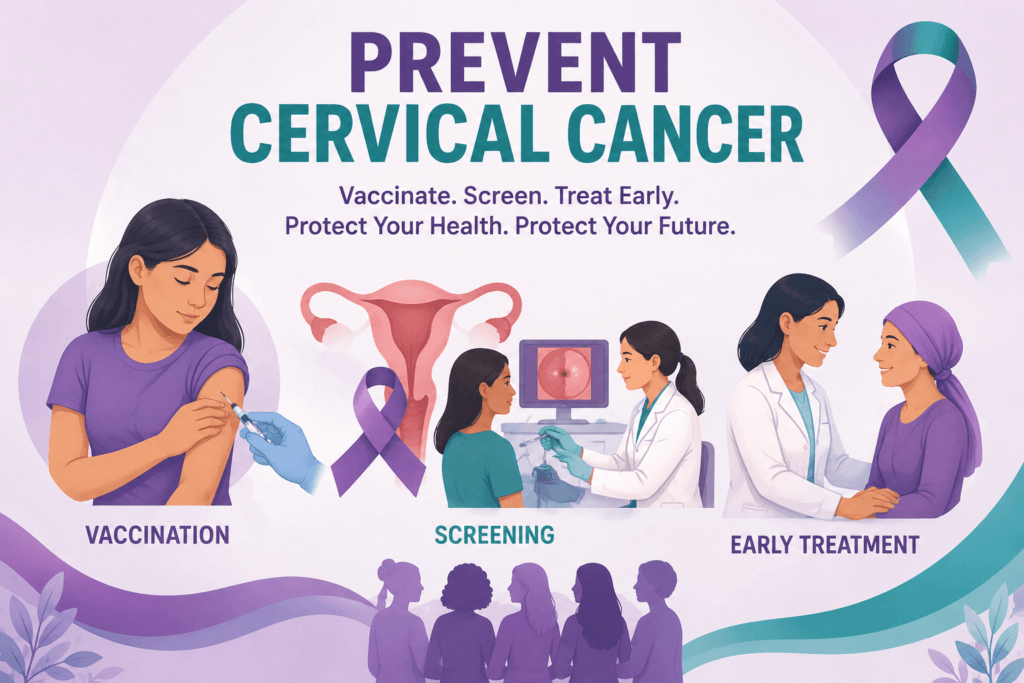
The WHO strategy for cervical cancer elimination is ambitious but attainable if countries commit to sustained investment. The targets are straightforward: vaccinate 90% of girls by age 15, screen 70% of women by ages 35 and 45 and treat 90% of women with pre-cancer or invasive cancer.
This model works because it hits the entire disease pathway. Vaccination prevents most infections before they occur, screening detects problems early, and treatment halts progression or death. A chain is only as strong as its weakest link.
The question is how to do it. Many countries know what needs to be done but struggle to fund programs, reach rural areas, and sustain high coverage. That is why elimination is a governance goal and an equity goal as well as a medical goal.
Key Timeline of Cervical Cancer
1976: Human papillomavirus-linked cancer research begins to gain global attention.
2022: Cervical cancer is estimated to cause about 660,000 new cases and 350,000 deaths worldwide.
2025: Eight licensed HPV vaccines are available, with five WHO pre-qualified.
2030: WHO elimination targets are set for vaccination, screening, and treatment coverage.
17 November each year: World Cervical Cancer Elimination Day is observed to strengthen global action.
This timeline reflects the progressive response from awareness to a systematic global elimination strategy.
What’s Next in Cervical Cancer Prevention Efforts
The next step is to expand vaccination, screening, and treatment to reach women before they become ill. Countries are likely to continue to expand access to the HPV vaccine and improve screening systems, particularly in underserved communities.
More women may also use self-collection methods to test for HPV, which could help improve screening participation. As screening expands, early detection will bring previously hidden cancers into view, and health systems will need to prepare for more cases to be identified.
If the 2030 targets are met, the long-term impact could be enormous. The modeling in the provided information suggests that elimination efforts could avert 74 million new cases and prevent 62 million deaths by 2120. That is a huge public health gain.
Conclusion
Cervical cancer is a major global health problem but also one of the most preventable. Many of these deaths can be prevented altogether with HPV vaccination, regular screening, and prompt treatment.
The disease continues to claim the greatest number of lives in low- and middle-income countries, meaning the real fight is not only against cancer but also against inequality in access to care. If countries remain committed to prevention and early treatment, cervical cancer elimination can move from a distant goal to a real public health success.”
–Written by A. Aisha–