In Chandanki village of the Mehsana district in Gujarat state, people do not cook at home anymore but have one community kitchen that provides them with two meals a day in the solar-powered community hall.
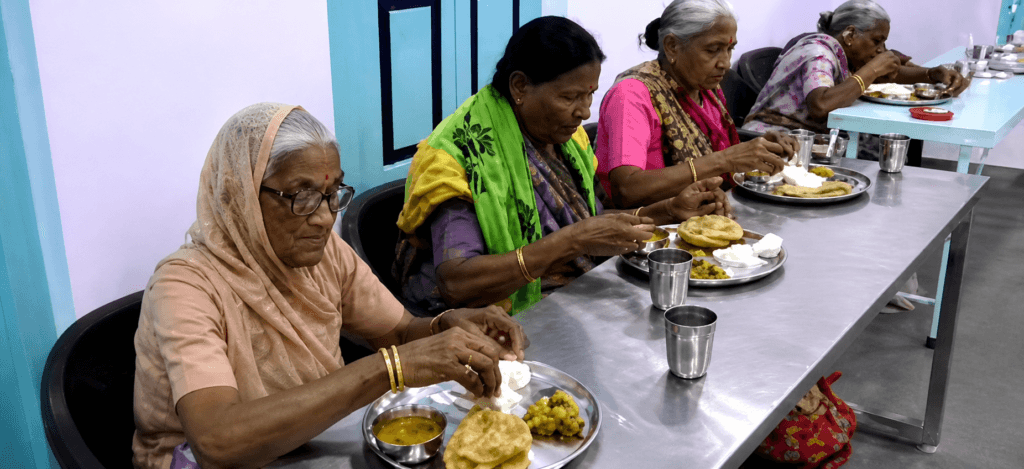
A glimpse of Chandanki village’s community kitchen model, where traditional Gujarati meals are prepared in one place and served to villagers in a shared hall.
There is a small village in Gujarat which has gained widespread popularity on account of a very unique tradition that does not involve any cooking at home. At Chandanki village, all food is cooked in a single kitchen and distributed to the villagers through a community hall. This makes it a very communal lifestyle centered around food and living.
The concept has attracted a lot of attention not only because of the novelty of the concept but also because it is a social reaction to feelings of loneliness and migration among other factors that have resulted from changes in rural life in India. Yeh story kaafi inspiring hai!
How Shared Kitchen System Works
According to reports, the village runs a central kitchen where hired cooks prepare traditional Gujarati meals every day. Residents contribute around Rs 2,000 per month and, in return, receive two nutritious meals daily.
The dining area is a community hall that doubles up as a place of social meetings. The hall is air-conditioned and solar powered. This implies that it has been set up in such a way that apart from serving food, it encourages interaction among the villagers. The Economics Times has covered this story.
The kitchen arrangement seems to have eased the chores of the elderly members of the village because they no longer have to prepare their own meals. In a situation where a large number of young members migrate to cities in search of jobs, this arrangement brings about a more social environment.
Why Chandanki Village Resorted to the Kitchen Sharing Model
According to sources, the project was born due to the changing demographics of the village caused by the migration. Young people migrated to cities for employment opportunities and left behind old people who suffered greatly from loneliness. Read more latest news from all over india on “India Section“.
Village headman Poonambhai Patel is claimed to be the originator of the concept of a community kitchen who introduced this idea when he returned to his native village after spending close to two decades in New York City. Apparently, the experiences gained there led him to develop such an approach, as it helped villagers adopt communal way of cooking that benefits all.
Patel’s idea was met with opposition at first, which would be natural for any innovation aimed at altering people’s established way of life, particularly something related to eating customs and family traditions.
How Chandanki’s Shared Kitchen Is Changing Village Life
One of the fascinating elements in the story comes from the description by villagers of what this arrangement has meant for them. According to the reports, the joint meals have helped seniors find more time to rest, unwind, and socialize with neighbors rather than spending all their efforts on cooking.
As one of the reports explains, the dining hall has turned into a center for exchanging various emotions, including happiness, problems, and even frustrations. This aspect is essential since the story does not revolve around the consumption of food alone but touches on the questions of dignity and companionship.
The local adaptation of the concept should be to turn “ek saath khana” into “ek saath rehna,” meaning that “a joint meal can transform into joint living.”
How Chandanki’s Shared Kitchen Tradition Began
Chandanki is located in Gujarat’s Mehsana district and has reportedly been following this community kitchen tradition for years. Earlier coverage suggests the system has been in place for around 14 to 15 years, making it more than just a recent experiment.
The menu at the community center serves regular and known dishes rather than experimental or luxury items. Foods like bhakri, dal, sabzi, and chaas are common in their day-to-day life. This helps in maintaining their culture and changes the way meals are cooked.
Chandanki is a village that also becomes a part of a larger national discussion on aging, migration, and rural social security. With the departure of young members from the villages, there is always a loss of the informal social security system that keeps the older population engaged and happy.
Village’s Community Kitchen Timeline
Around 2011-2012: Reports suggest the community kitchen model begins in Chandanki.
Over the years: The village gradually accepts the shared kitchen after early resistance.
January 2026: The model gains wider national attention after being mentioned publicly.
April-May 2026: New reports and social media posts renew interest in the village’s food tradition.
Why Chandanki’s Shared Kitchen Is Important
The importance of the idea is that it presents a realistic way out for villages to cope with demographic changes while maintaining social bonding. Loneliness due to ageing of population and departure of youth members is a problem in several regions in India.
Secondly, the idea is also important from an economic point of view since it is cost-effective and sustainable. The use of cooking services on a monthly payment basis, hiring of cooks and a hall powered by the sun makes this scheme self-sufficient, not charity-based. It is significant that scalable concepts should be easy, local and economically feasible.
The human significance of the idea is mainly connected with emotional aspect. Eating together will help senior villagers to feel less lonely and integrated into the community. Yeh issue kaafi important hai because loneliness becomes more serious nowadays in fast developing societies.
Why Chandanki’s Model Matters for India
The movie becomes more relevant for the Indian audience because of similar family dynamics within our society; the kids leave home to earn a living, elderly parents remain at home, and efforts are made by people to maintain contact with their loved ones even if their lifestyle changes.
The village also highlights the power of collective thinking in Indian communities. Instead of waiting for a formal welfare program, residents and local leadership created a solution from within the village itself. That makes the story especially powerful for local audiences who value jugaad, unity and practicality.
This Shared Kitchen Shows How Community Living Can Work
My theory behind this success is that the system is successful due to its multifunctionality; it helps in cutting down on cooking, helps elderly citizens, provides social engagement, and even harnesses renewable energy, all at once. This is a rare achievement by any local solution.
However, there is another lesson in all of this. The common discussion of rural India in society revolves around the issues present in it, but through Chandanki, we have seen that rural societies can serve as laboratories for social innovations as well. Sometimes the most innovative answers lie within ourselves.
Can Chandanki’s Shared Kitchen Become a Model for Other Villages?
The next step is likely continued attention from media and visitors who want to understand how the model works in practice. If interest grows, Chandanki could become an example for other ageing rural communities in India looking for ways to support seniors.
There is also room for the idea to inspire similar setups in other places, especially where migration has left behind elderly parents and fewer working-age residents. If the model continues to run smoothly, it may become a reference point for community kitchens, rural planning and social care.
Conclusion
The community kitchen of Chandanki village goes beyond being a story of cooking because it is, at its core, a story of compassion, flexibility, and spirit of unity. By communalizing mealtime in the community, the village of Chandanki found a practical solution for combating loneliness.
Indeed, in an era where communities become increasingly isolated from each other, Chandanki village provides a good example of how to build social closeness even in small actions. Social change begins with the simplest things.
Written by A. Aisha.