Chennai Super Kings produced a commanding performance against Delhi Capitals in IPL 2026, with Sanju Samson leading the chase and Kartik Sharma adding crucial support in a comfortable win. Delhi Capitals had earlier been restricted to 155/7, but CSK made light work of the target and finished the job with eight wickets in hand.
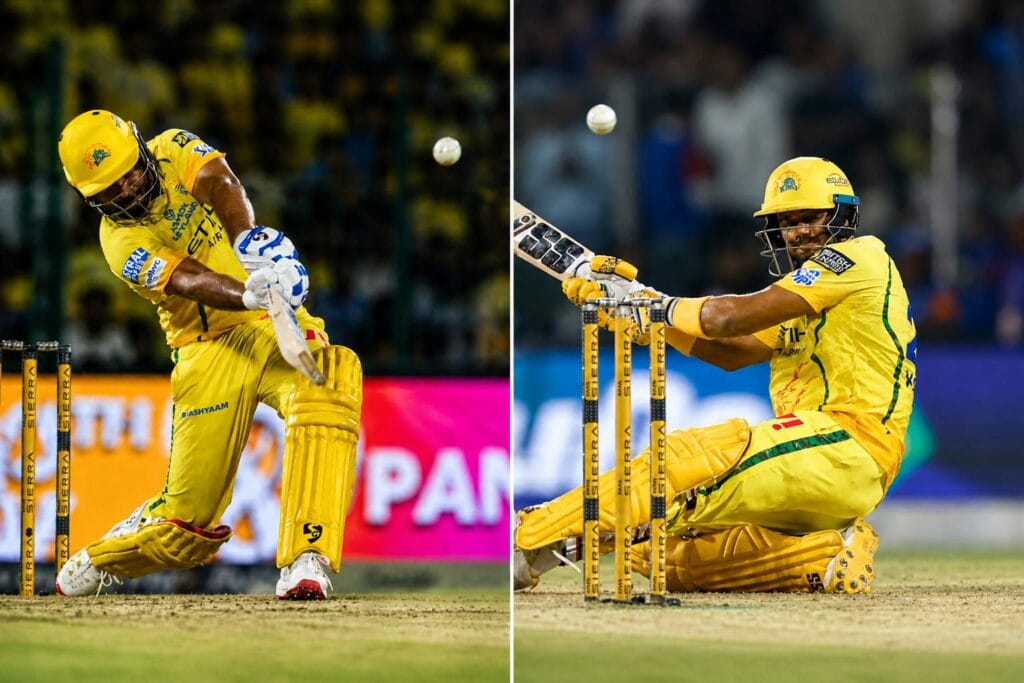
Sanju Samson and Kartik Sharma anchor Chennai Super Kings’ chase as CSK cruise past Delhi Capitals in IPL 2026.
Chennai Super Kings (CSK) defeated Delhi Capitals (DC) in their IPL 2026 clash with a strong all-round display that highlighted CSK’s batting depth and game awareness. Delhi, after opting to bat on a tricky surface, managed only 155/7, while CSK chased the target down with authority, finishing the game in just 17.3 overs.
The story of the match was Sanju Samson’s fluent, pressure-free batting. He controlled the chase from the start and remained unbeaten on 87, while Kartik Sharma contributed an important 41 to keep the innings smooth and aggressive at the same time.
How The Match Unfolded
Delhi Capitals never fully recovered after losing rhythm early in the innings. The pitch offered enough help for disciplined bowling, and CSK used it well, especially through left-arm spinner Akeal Hosein, who delivered tidy figures of 1/19 and bowled 14 dot balls to build pressure. NDTV Sports has covered the full story.
DC were reduced to 69/5 inside 11 overs, which put them in a difficult position despite late resistance. Tristan Stubbs scored 38 off 31 balls and Sameer Rizvi added 40 not out off 24 balls, and their 65-run stand helped DC crawl to a respectable total, but it still looked below par.
CSK’s chase never lost control because Samson batted with both calmness and intent. The innings was shaped by timing, placement and smart running, and Kartik Sharma’s contribution ensured that Delhi never got a chance to squeeze the game back.
Key Performances
Sanju Samson was the clear match-winner for CSK. His unbeaten 87 was built on authority, and the way he paced the innings made the chase look far easier than it actually was.
Kartik Sharma gave the innings the extra stability it needed. His 41 helped CSK avoid any middle-overs wobble and kept the scoring rate healthy enough to finish the match comfortably.
For Delhi, the biggest positive was the lower-order fightback from Stubbs and Rizvi. But once the top and middle order had collapsed, their rescue act was more about damage control than match control.
Why Delhi Fell Short
Delhi Capitals were hurt by a combination of a tricky surface, early wickets and lack of partnerships. The team did not build enough momentum in the first half of the innings, and once they slipped to 69/5, they were always chasing the match rather than controlling it.
Akeal Hosein’s new-ball spell was important because it set the tone for CSK’s discipline. In T20 cricket, early dot balls often matter as much as wickets, and Hosein’s 14 dot balls kept DC under pressure from the start.
The late partnership between Stubbs and Rizvi was useful, but it came too late to push the total into a truly competitive range. On a surface that required 165-plus to feel safe, 155/7 was simply not enough.
Statement And Momentum
The best summary of the game is that CSK looked like the more settled side throughout the contest. Delhi had moments of resistance, but Chennai were sharper with both bat and ball, and that balance decided the match.
A cricket analyst would likely describe it as a “professional chase” rather than a dramatic one, because CSK never allowed the asking rate to become uncomfortable. That kind of control is exactly what separates a dominant side from a side that merely survives the innings.
Also Read: Rohit Sharma and Ryan Rickelton Lead Mumbai Indians to Record Chase
Background And Context
This match was part of the wider IPL 2026 story, where CSK and DC had already faced each other in high-pressure contests earlier in the season. In a previous meeting, CSK had also defeated DC after a strong Sanju Samson innings, showing that Chennai’s batting unit has found a reliable match-winner in him this year.
For Delhi, this loss highlights a familiar issue: when the top order fails, the middle and lower order end up carrying too much burden. That can work once or twice, but in a long tournament it usually becomes a pattern teams can exploit.
Timeline
First innings: Delhi Capitals are restricted to 155/7 on a tricky pitch.
Middle overs: DC slip to 69/5, losing key momentum.
Late recovery: Stubbs and Rizvi add a useful 65-run stand.
Chase: Sanju Samson anchors the response and CSK complete the chase in 17.3 overs.
Why This Matters
This matters because playoff races in the IPL often hinge on net run rate, momentum and head-to-head confidence. A chase completed in 17.3 overs gives CSK a major boost not just in the points column but also in their overall tournament rhythm.
It also matters for Delhi, because repeated batting collapses can damage both standings and dressing-room confidence. In a league as tight as the IPL, one poor batting night can snowball into pressure in the next game. Yeh issue kaafi important hai because tournament teams do not just lose points — they lose control of their own narrative.
India Angle
For Indian cricket fans, this kind of match is exactly why the IPL stays so popular. The tournament blends star power, pressure moments and local fan emotion, and CSK’s win will matter to supporters across India, especially those tracking Chennai’s playoff chances.
There is also a broader Indian cricket angle here: Sanju Samson continues to strengthen his case as a reliable top-order performer in pressure matches. That is good news for fans who want more consistent Indian batting options in franchise cricket and beyond. In simple Hinglish, Samson ne phir se dikhaya ki woh pressure ko handle kar sakte hain.
Analysis
My analysis is that CSK’s real strength here was control. They did not need a reckless chase because the target was manageable, but they still executed with professionalism. Delhi, meanwhile, must look at whether their batting plans are too dependent on recovery after early damage; that approach is risky in T20 cricket, especially against a disciplined side like CSK.
What Next
The next step for CSK is to carry this batting confidence into their upcoming fixtures, because momentum in the IPL can become a major tactical weapon. If Samson continues to bat with this level of fluency, CSK will become even more dangerous in chase situations.
For Delhi Capitals, the priority will be to fix the early-overs collapse problem and find a more stable top-order approach. If they continue to fall behind the game inside the first 10 overs, even strong late cameos may not be enough to rescue results.
Conclusion
CSK’s win over Delhi Capitals was a clear example of efficient T20 cricket: disciplined bowling, controlled batting and a chase led with authority by Sanju Samson. Kartik Sharma’s support ensured that the result never felt in doubt once the chase got going.
For Delhi, the takeaway is simple and slightly harsh — good lower-order fights are not enough if the top and middle order keep losing too many wickets early. For CSK, this was the kind of performance that builds belief, and in a long IPL season, belief matters just as much as points.
Written By A. Jack