Passengers travelled Amritsar–Delhi on Air India before boarding Lufthansa’s Munich flight; MoCA calls lapse “serious” and seeks explanation within seven days
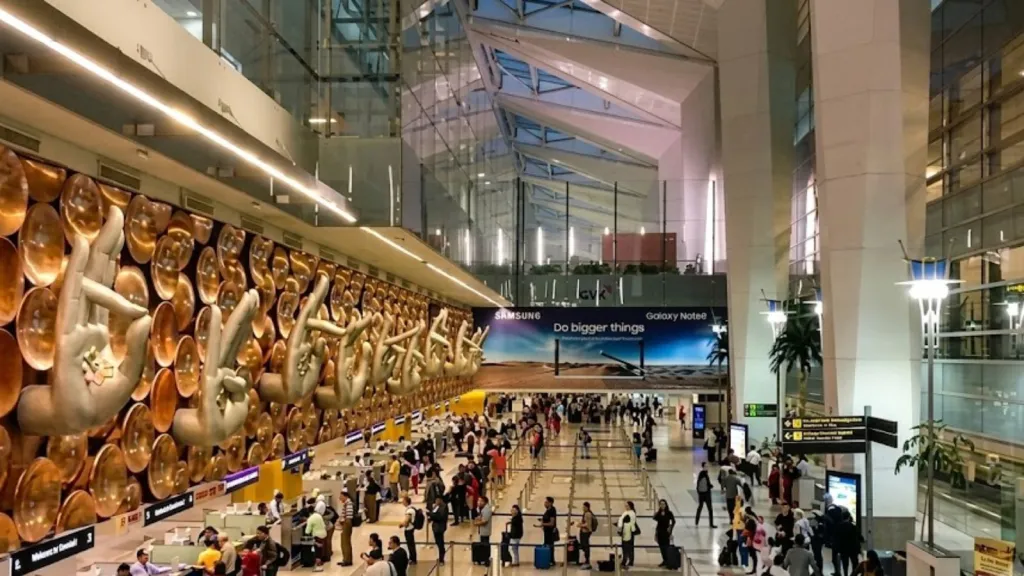
The Indira Gandhi International Airport in New Delhi. Image Credit: IndianExpress
The Ministry of Civil Aviation (MoCA) has issued a show-cause notice to Air India after three Italian nationals allegedly departed from Delhi for Munich without undergoing mandatory immigration clearance.
The passengers travelled from Amritsar to Delhi on Air India flight AI-1115 during the intervening night of September 3 and 4. They later boarded Lufthansa flight LH-763 to Munich at around 1:45 AM on September 4 without completing the required departure immigration process at Indira Gandhi International Airport, according to sources.
The ministry has described the incident as a “serious security and immigration-related lapse” and has given Air India seven days to submit its explanation, along with relevant documents and information. Air India has not publicly commented on the notice so far.
The incident has also prompted the Union Home Ministry to call a meeting with senior officials from the Ministry of Civil Aviation, Bureau of Immigration, Air India and Delhi International Airport Limited (DIAL).
What Happened at Delhi Airport
The three passengers were travelling under Air India’s hub-and-spoke or “Easy Connect” arrangement, which allows eligible passengers from selected domestic airports to complete immigration at the originating airport and transfer directly to an Air India international flight through Delhi. This story was also covered by The IndianExpress.
However, sources said these three Italian passengers were not eligible for the Easy Connect process for their Lufthansa connection to Munich. They were supposed to exit through the domestic arrivals area at Delhi, complete the mandatory immigration process, and then proceed to the international departure area for their Lufthansa flight.
Instead, the passengers were allegedly taken towards the international transfer area along with passengers eligible for the hub-and-spoke service. This meant they did not reach the immigration counters before boarding the Munich-bound flight.
Their boarding passes for both the Amritsar–Delhi and Delhi–Munich sectors were reportedly issued at Amritsar airport. The situation came to light later after a manual reconciliation of passenger data, which revealed that their travel movement did not match the required immigration records.
How the Easy Connect System Works
Air India’s hub-and-spoke model is designed to make international travel easier for passengers travelling from smaller airports through Delhi. Under this system, eligible passengers complete immigration and customs procedures at the originating domestic airport before boarding their international connection at Delhi.
The process depends heavily on accurate passenger classification and coordination between the airline, airport operator, immigration authorities and security personnel.
Boarding passes carry special designator codes:
“I” designator: Indicates an eligible Easy Connect passenger who can proceed directly to the international departure gate after landing in Delhi.
“D” designator: Indicates a regular domestic passenger who must exit the arrivals area at Delhi and complete immigration before boarding a separate international flight.
The distinction is crucial. A passenger with an “I” code may follow the international transfer route, while a passenger with a “D” code must technically leave the domestic arrival area and undergo immigration again.
In the present case, the three passengers allegedly received the wrong route or were incorrectly handled as eligible Easy Connect travellers, despite their Lufthansa connection not falling under the relevant Air India hub-and-spoke arrangement.
Why Lufthansa’s Flight Was Important
The passengers did not board an Air India international flight. They travelled on Lufthansa flight LH-763, which departed Delhi for Munich at approximately 1:45 AM on September 4.
Air India and Lufthansa have a codeshare partnership, meaning flights operated by one airline can be marketed or ticketed through the other. While codeshare arrangements are common in international aviation, they require precise coordination because the operating airline, ticketing airline and airport systems may each have separate responsibilities.
The alleged error appears to have occurred at the point where the domestic Air India journey connected with the Lufthansa international departure. Investigators will need to establish whether the mistake was caused by incorrect boarding-pass issuance, a failure to verify the designator code, inadequate transfer guidance, or a communication gap between Air India, Lufthansa and airport authorities.
Official Response and Show-Cause Notice
The show-cause notice issued by MoCA is titled “Violation of SOP for hub and spoke operations resulting in three foreign nationals departing India without mandatory immigration clearance.”
The ministry has sought an explanation from Air India’s chief executive, Campbell Wilson, and asked the airline to provide supporting documents within seven days.
The notice reportedly states that the passengers arrived at Delhi airport on AI-1115 at around 12:50 AM on September 4 before departing for Munich on LH-763 approximately one hour later.
The airline is expected to explain:
Why the passengers were allowed to enter the international transfer route.
Whether they were issued the correct domestic or international designator codes.
Why their eligibility for Easy Connect was not verified.
Which airline and airport staff handled the transfer.
Whether standard operating procedures were followed.
What corrective steps have been taken to prevent a repeat.
Air India has not issued a detailed public response to the reported notice. DIAL has separately clarified that it has not received a show-cause notice in the matter.
Timeline of the Immigration Lapse
September 3, 2026, night: Three Italian nationals board Air India flight AI-1115 from Amritsar to Delhi.
September 4, around 12:50 AM: The aircraft lands at Indira Gandhi International Airport.
Early September 4: The passengers are allegedly directed towards the international transfer area instead of exiting through domestic arrivals.
September 4, around 1:45 AM: They board Lufthansa flight LH-763 from Delhi to Munich without completing mandatory immigration clearance.
Following days: Manual reconciliation of passenger data brings the discrepancy to the attention of authorities.
September 12: MoCA issues a show-cause notice to Air India, giving the airline seven days to respond.
September 15: The Union Home Ministry is expected to hold a stakeholder meeting with MoCA, Bureau of Immigration, Air India and DIAL officials.
Why This Matters
Yeh issue kaafi important hai because immigration clearance is a core national-security procedure, not just an airport formality. Every passenger departing India on an international flight is required to be recorded and cleared through the appropriate immigration channel.
The incident raises concerns about:
Passenger tracking: Authorities must know who has entered and exited the country.
Border security: Immigration checks help identify prohibited travellers, visa violations and security risks.
Airline accountability: Airlines are responsible for correctly processing passengers and following approved procedures.
Airport coordination: Domestic, international, transfer and immigration systems must work together without ambiguity.
Codeshare oversight: Partnerships between airlines require reliable data-sharing and accurate passenger classification.
The lapse may have been caused by oversight or confusion rather than deliberate wrongdoing. However, its seriousness lies in the fact that three foreign nationals were able to board an international flight without the mandatory departure record being completed.
For an airport as busy as Delhi’s IGI, such a failure can damage confidence in the country’s aviation-security system. It also creates operational and legal complications for the airline, airport authorities and immigration agencies.
India Angle
For Indian travellers, this case highlights the complexity of modern air travel. India has rapidly expanded its regional connectivity, connecting cities such as Amritsar, Ahmedabad, Jaipur, Lucknow and Bengaluru to major international hubs through Delhi and Mumbai.
The hub-and-spoke model makes travel more convenient, but it also creates additional points where errors can occur. A passenger moving from a domestic terminal to an international connection may pass through multiple systems—airline check-in, baggage handling, security, airport transfer, immigration and boarding.
Agar ek bhi stage par passenger classification galat ho, toh serious security gap create ho sakta hai. This is why codes such as “I” and “D” must be understood and correctly processed by every staff member involved.
The incident also matters for India’s aviation reputation. International passengers expect airports to follow strict and predictable procedures. A lapse involving foreign nationals travelling from Amritsar through Delhi to Munich could prompt questions from foreign authorities and aviation partners.
India’s airlines and airport operators should treat this episode as a warning to strengthen:
Automated immigration verification.
Real-time passenger reconciliation.
Clear separation between domestic and international transfer routes.
Staff training for codeshare and hub-and-spoke passengers.
Immediate alerts when boarding records do not match immigration data.
Analysis
The first likely failure was passenger eligibility. The three travellers were reportedly not covered by Air India’s Easy Connect arrangement, yet they were handled as if they were.
The second possible failure was the issuance or interpretation of boarding passes. If the passengers carried a code meant for international transfer, the error may have begun at Amritsar. If the passes were correctly marked, staff at Delhi may have failed to route them appropriately.
The third failure was the absence of immediate reconciliation. The problem reportedly came to light only after manual comparison of passenger data. A stronger automated system should flag a passenger who boards an international flight without a corresponding immigration record before departure or immediately afterwards.
The investigation should therefore avoid focusing on one employee alone. Authorities should examine the entire chain—booking, check-in, boarding-pass issuance, transfer routing, immigration records, airline communication and Lufthansa coordination.
The show-cause notice is an important first step, but the final response should include corrective action rather than only disciplinary measures. Air India may need to revise its hub-and-spoke SOPs, train staff and improve system integration.
What Next
In the coming days:
Air India must submit its written explanation to MoCA within seven days of receiving the notice.
The Union Home Secretary is expected to chair or participate in a stakeholder meeting involving MoCA, the Bureau of Immigration, Air India and DIAL.
Authorities will review CCTV footage, boarding records, immigration logs and passenger data.
Officials will determine whether the error originated at Amritsar, Delhi or during coordination with Lufthansa.
The ministry may impose penalties or direct Air India to take corrective action if violations are established.
Air India may conduct an internal review of its Easy Connect process and codeshare handling.
Longer term, the aviation sector may see:
Stricter eligibility checks for hub-and-spoke passengers.
Automated alerts for missing immigration records.
Mandatory reconciliation before international departure.
Additional training for airline and airport staff.
Review of codeshare procedures involving domestic-to-international connections.
Conclusion
The case of three Italian nationals flying from Delhi to Munich without completing immigration clearance has exposed a significant gap in India’s airport-handling process. The passengers arrived from Amritsar on Air India, were allegedly routed through the international transfer area despite not being eligible for Easy Connect, and boarded a Lufthansa flight without the required immigration check.
The Ministry of Civil Aviation has rightly sought an explanation from Air India, while the Home Ministry’s stakeholder meeting indicates that authorities view the issue as more than a routine airline error.
The incident may have resulted from confusion, but security systems cannot depend on assumptions. They require clear codes, trained staff, automated checks and complete coordination between airlines, airports and immigration authorities.
For Air India, this is a serious test of operational discipline. For India’s aviation system, it is an opportunity to close a potentially dangerous gap before it becomes a larger security failure.
Written by A. Jack