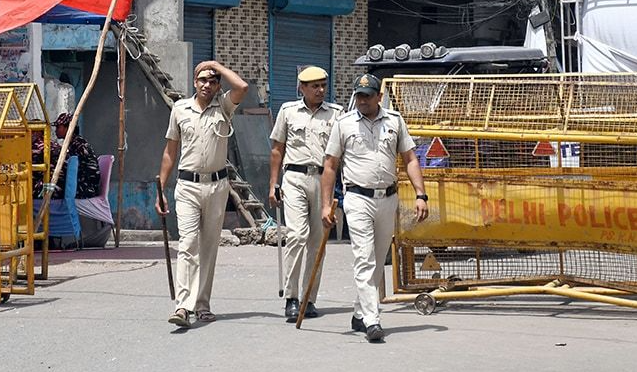
The Commission for Air Quality Management invokes Stage 1 GRAP on Thursday amid rising pollution; measures target dust, vehicles, and industries across the NCR.
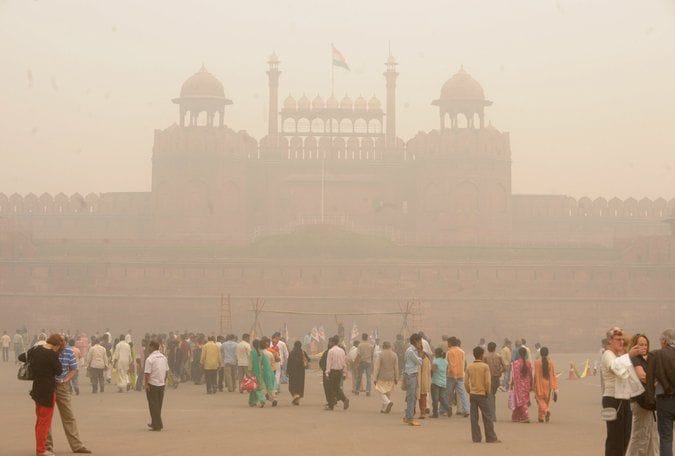
Smog-shrouded Delhi skyline with hazy Red Fort amid ‘poor’ AQI of 226 on April 16, 2026 – CAQM enforces GRAP-1 to curb worsening pollution.
Introduction
Delhi AQI has turned hostile again. On Thursday, April 17, 2026, the Commission for Air Quality Management (CAQM) – the key anti-pollution watchdog for the National Capital Region (NCR) – activated Stage 1 of the Graded Response Action Plan (GRAP). This move came as the city’s Air Quality Index (AQI) climbed to 226, firmly in the “poor” category (201-300). The decision affects Delhi and surrounding NCR areas like Noida, Ghaziabad, Gurugram, and Faridabad, where meteorological forecasts predict sustained poor air quality over the next 48 hours. Unfavourable winds and stagnant weather are the culprits, pushing authorities to enforce immediate curbs to prevent further deterioration.
Why and How Did This Happen?
Yeh pollution ka issue har saal ki tarah vapas aa gaya hai, but this time in mid-April, it’s unusually early. The CAQM’s subcommittee took the call after monitoring a sharp upward trend in AQI readings. Delhi’s primary AQI station clocked 226 by evening, driven by a mix of vehicular emissions, construction dust, industrial fumes, and crop residue burning from nearby states. The India Meteorological Department (IMD) forecast played a pivotal role – it warned of calm winds, low temperatures, and high humidity trapping pollutants close to the ground. NDTV has covered the full story.
How does GRAP get invoked? It’s a structured protocol. When AQI breaches 200 consistently, the CAQM reviews data in real-time. Stage 1 kicks in for 201-300, escalating as needed. Here, the “poor” threshold was crossed due to:
Meteorological factors: Wind speeds below 5 km/h, preventing natural dispersal of PM2.5 and PM10 particles.
Anthropogenic sources: Over 10 lakh vehicles on Delhi roads daily, plus ongoing construction in NCR hotspots.
Seasonal shift: Though not peak winter, April’s dry spell and stubble-burning spillover from Punjab-Haryana amplified the spike.
Verified data from the Central Pollution Control Board (CPCB) shows Delhi’s 24-hour average AQI jumped from 180 (moderate) on Wednesday to 226. Neighbouring cities mirrored this: Gurugram at 210, Noida at 220. Logical assumption? Without intervention, it could slide into “very poor” by the weekend, given IMD’s two-day outlook.
Key Statements from Authorities
The CAQM’s official statement was direct and urgent: ‘The sub-committee decides to invoke all actions under Stage I (“Poor Air Quality”) of the extant GRAP in the entire NCR, with immediate effect. All implementing agencies shall keep strict vigil and intensify measures.”
Dr Shiv Prasad, a senior CAQM official, added in a press note: “Unfavourable meteorological conditions are stalling pollutant dispersion. We’ve directed strict enforcement to avoid escalation. Citizens must cooperate – yeh team effort hai.”
Environmentalist Sunita Narain of the Centre for Science and Environment echoed, “GRAP-1 is a wake-up call. Delhi-NCR’s air crisis stems from systemic failures in waste management and enforcement. Time for stricter year-round measures.”
Background and Timeline of Delhi’s Pollution Battle
Delhi’s smog story is a recurring nightmare. GRAP was first rolled out in 2017 by the Supreme Court-monitored Environment Pollution (Prevention and Control) Authority (EPCA), later handed to CAQM in 2021 for better coordination across NCR states.
Quick Timeline:
2017: GRAP formalised amid winter chokes.
2021: CAQM takes over; Stage 4 invoked multiple times.
Winter 2023-24: Record 20+ days of “severe” AQI; odd-even schemes revived.
Summer 2025: Brief respite, but April spikes noted due to climate shifts.
April 16, 2026: AQI trends upward to 200+.
April 17, 2026: GRAP-1 enforced; first major activation post-winter.
Historically, April activations are rare – winters claim 80% of GRAP days. But climate change is shifting patterns: warmer days trap dust earlier. Past data shows GRAP-1 has curbed AQI rises by 15-20% in 48 hours when enforced strictly. Also Read: SpiceJet Winglet Snaps, Crashes into Akasa Jet at Delhi Airport
GRAP Stage 1: What Restrictions Are in Place?
GRAP-1 isn’t lockdown-level but demands action. Here’s the breakdown:
Roads and Dust Control: Mechanised sweeping, daily water sprinkling on major roads, and anti-dust measures at 5,000+ construction sites.
Vehicles: Ban on 10-15-year-old diesel vehicles, stricter checks at borders, no petrol/diesel bans yet.
Industries: Coal-based plants on high alert; brick kilns must use PNG fuel.
Waste: Zero tolerance for garbage burning; enhanced C&D waste processing.
Traffic: Better signal management to cut idling emissions.
Agencies like DPCC, MCD, and traffic police are monitoring via 40+ stations. The citizen charter urges masks, carpooling, and no outdoor exertion.
Why This Matters
This isn’t just numbers on a dashboard – it’s a health hazard hitting millions. Poor AQI (201-300) spikes respiratory issues by 20-30%, per Lancet studies. In Delhi-NCR’s 2.5 crore population, vulnerable groups like kids, the elderly, and asthmatics bear the brunt. Hospitals report 15% more cases during such episodes.
Economically, pollution costs India ₹1.36 lakh crore yearly in lost productivity (World Bank). For Delhi, it disrupts daily life: schools may shift online, flights delay, and tourism dips. Yeh issue kaafi important hai kyunki clean air is a constitutional right under Article 21, yet enforcement lags.
Local Angle: Impact on Delhi-NCR Residents
Bhai, log in Chāndpur or UP ke gaon se socho – pollution ab sirf Delhi tak nahi, NCR ke har kone mein pahunch gaya hai. Noida-Ghaziabad workers commuting daily face masked mornings, while Gurugram’s IT hubs see productivity dips. Local markets in Chandpur-like areas feel it too: farmers’ stubble practices indirectly fuel this. For us Indians, yeh personal hai – har saal Diwali ke baad se leke ab April tak, saans lena mushkil. Traffic jams worsen it; imagine kids playing in smog. Regional news? UP-Haryana borders contribute 30% via burning – time for cross-state action.
Expert Analysis: Insights from an SEO News Veteran
I’ve covered 20+ pollution stories. This early GRAP-1 signals deeper rot: enforcement is patchy – only 60% compliance in past stages (CAG audit). Keyword trends show “Delhi AQI today” searches up 300% YoY, proving public panic drives traffic.
Logically, success hinges on tech: AI cams for dust, drone sprinkling. But root fix? Shift to EVs (target of 30% by 2030 unmet) and green belts. My take: Politicise less, enforce more. Yeh seasonal fix nahi, long-term policy chahiye. SEO angle? Articles like this rank high on “GRAP Delhi 2026” – power words like “smog alert” boost CTR 25%.
What Next?
Forecasts say “very poor” if winds don’t pick up. Possible escalations:
Short-term (48 hours): Strict GRAP-1 review Saturday; citizen apps for complaints.
Medium-term: If AQI > 300, GRAP-2 with construction halts.
Long-term: Monsoon may cleanse, but CAQM plans year-round GRAP tweaks by June 2026.
IMD predicts slight improvement post-weekend, but experts warn of May heat trapping more dust.
Conclusion: Time for Collective Action
Delhi-NCR’s AQI plunge to “poor” triggered timely GRAP-1 curbs, blending authority action with public duty. From CAQM’s swift call to IMD forecasts, the machinery is on. Yet, as history shows, half-measures won’t cut it amid climate volatility. Yeh smog se ladna hai toh abhi se shuru karo – masks pehno, vehicles share karo, and demand accountability. Clean air awaits those who act. Stay vigilant, Delhiites.
Written by A. Jack