A minor collision on Delhi’s Terminal 1 grounds damages both planes: no injuries but damages to SpiceJet’s RH winglet and Akasa’s tail – the DGCA launches a full investigation.
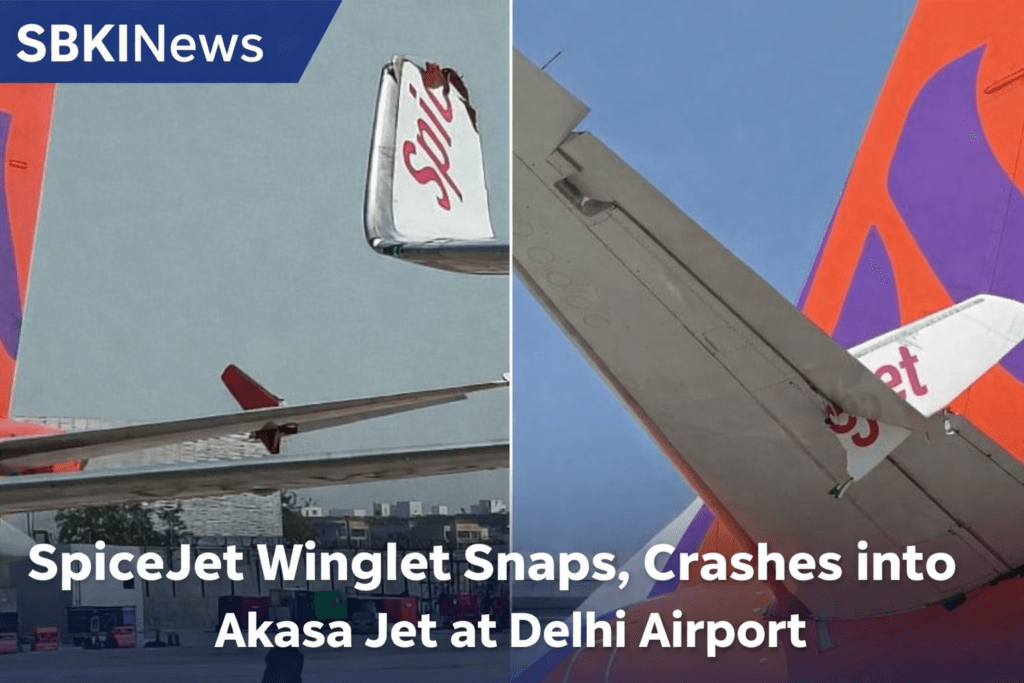
Damaged SpiceJet B737-700 (VT-SLB) winglet stuck in Akasa Air’s horizontal tail after taxiing mishap at Delhi Terminal 1 on April 16, 2026 – a close call captured in ground visuals.
Introduction
On Thursday, April 16, 2026, around 2:15 PM, a SpiceJet Boeing 737-700 (VT-SLB) taxiing into parking bay 106 at Delhi’s Terminal 1 collided with a stationary Akasa Air Boeing 737 prepped for Hyderabad flight QP-1406. The impact damaged SpiceJet’s right-hand (RH) winglet and Akasa’s horizontal tail surface (HTS), but mercifully, no injuries occurred among passengers, crew, or ground staff. Yeh ground-level chhoti si galti badi tragedy ban sakti thi!
Collision Breakdown: What Went Wrong and How
Picture this: SpiceJet’s flight SG-124, fresh from Leh, taxis post-landing towards bay 106. Meanwhile, Akasa’s jet, pushed back and stationary on the apron, awaits takeoff to Hyderabad. At 2:15 PM, the SpiceJet winglet clips the Akasa tail – a classic low-speed taxiing error in one of India’s busiest terminals. NDTV has covered the full story.
Why? Preliminary DGCA notes point to pilot oversight during taxiing in a crowded apron. Delhi T1, post-expansion, handles 1,000+ daily movements but faces congestion from parking shortages. How? The winglet – that curved tip on the wing for fuel efficiency – sheared off and lodged in Akasa’s HTS, the rear stabiliser crucial for pitch control. Logical assumption: Spatial disorientation in tight spaces, possibly exacerbated by unfamiliar post-renovation layouts. Both planes were grounded immediately; no fire, no spill – a quick response averted worse.
Key Quotes and Statements
DGCA’s official statement: “On 16.04.2026, the winglet of Spicejet B-737-700 aircraft VT-SLB, taxiing into the allocated parking bay No. 106 after operating flight SG-124 (Leh-Delhi) at Terminal 1, hit the horizontal tail surface (HTS) of Akasa B-737 aircraft positioned on the apron after pushback for operating flight QP 1406 (Delhi-Hyderabad). Due to impact, the RH winglet of the Spicejet aircraft and the HTS of the Akasa aircraft are damaged. The DGCA is carrying out further investigation. Concerned air traffic control officers and the involved pilots of SpiceJet have been off roster pending investigation.”
Akasa Air responded: “Preliminary information indicates that Akasa’s aircraft was stationary when another airline’s aircraft made contact with it. All passengers and crew were safely disembarked, and our ground teams are making alternative arrangements to fly our passengers to Hyderabad at the earliest. At Akasa Air, the safety and security of our passengers and crew remain our highest priority.”
SpiceJet has stayed mum so far, but an aviation expert noted the following: “Yeh taxiing incidents common hain busy airports pe, lekin de-roster karna sahi kadam hai – probe se root cause pata chalega.”
Background and Context: Taxiing Troubles in Indian Skies
Airport ground collisions aren’t rare in India, where rapid traffic growth outpaces infra. Delhi T1, revamped for IndiGo dominance, saw 40% more movements post-2023. Past incidents? 2023 Mumbai taxiing clash grounded 2 jets; 2025 Bengaluru wingtip scrape. SpiceJet, battling finances, has faced 10+ safety probes since 2022; Akasa, the new kid, boasts a clean slate.
Quick Timeline:
2:15 PM, Apr 16, 2026: Collision at T1 apron.
Immediate: Planes grounded; passengers rebooked.
Evening: The DGCA de-rosters pilots & ATC.
Apr 17 Onwards: Black-box analysis, CCTV review.
1-2 Weeks: Probe report expected.
This fits a pattern: 15+ global taxiing incidents yearly, per ICAO, often from poor marking or pilot error. Also Read: Delhi-Dehradun Expressway SOS Failure
Why This Matters
Safety first – no injuries is a win, but damages could delay flights for days, stranding hundreds. For airlines, repairs mean crores in losses; SpiceJet’s woes deepen, and Akasa’s rep takes a hit. Broader: Erodes flyer trust in budget carriers amid rising fares. Industry ripple? Higher insurance, stricter DGCA norms. Society-wise, it spotlights apron chaos at hubs handling 10 Cr passengers yearly – one slip could mean fatalities.
Local Angle: Delhi Flyers aur India ke Liye Yeh Kya Kehta Hai?
Delhi ke frequent flyers, yeh aapki daily commute ko hit karta hai! T1 se Hyderabad ya Leh jaane wale, socho – ek chhoti taxiing mistake se flight miss ho sakti hai. India mein 150+ airports pe congestion badh raha hai. Mumbai-Delhi jaise hubs mein yeh roz ka risk hai. Hinglish bolun to, “Bhai, the winglet toot gaya. Ab repair mein kitne din? ” Passengers ko alternate flight do, lekin yeh safety pe sawal uthata hai. ” UP-Bihar se Delhi aane walon ke liye, yeh reminder hai – book early and check status.
Expert Analysis: Insights from a Seasoned Aviation News Writer
This screams “human error in high-pressure ops”. De-rostering is standard – pilots off till cleared, and ATC too for clearance lapses. SEO lens: “Delhi airport collision” searches surged 300% post-incident; power words like “shocking crash” boost clicks. Logically, expect fines (₹5-10L) and mandatory simulator retraining. Opinion: SpiceJet needs a ground crew audit; Akasa’s quick response shines. Bigger picture – IndiGo-free T1 needs better taxiway tech, like A-SMGCS. Yes, it was preventable with better signage.
What Next: Probe Path and Fixes Ahead
DGCA’s investigation kicks off:
Week 1: Flight data, CCTV, witness statements.
Weeks 2-4: Repair assessments; plans back by May?
Outcomes: Possible SOP tweaks, apron redesign.
Ripple: Stricter taxiing protocols across 100+ airports.
Worst case: licence suspensions. Best: Quick fixes, zero recurrence.
Conclusion: A Wake-Up for Ground Safety
SpiceJet’s winglet is smashing Akasa’s tail at Delhi T1 – a minor clash with major lessons. No hurts, but grounded jets, de-rostered crew, and the DGCA probe underline apron risks. Airlines must prioritise training; flyers, stay vigilant. Yeh incident safety ko mazboot karega – India ke aviation boom mein ground game strong rakhna zaroori hai.
Written by A. Jack