A 25-day-old baby was rescued from Rohini; Garima Jain and Satish Jain were arrested. The baby was allegedly bought for Rs 8 lakh, 6 infants were recovered and 13 were held. An interstate racket linked to Rajasthan, Gujarat, Haryana, Madhya Pradesh, and Delhi was uncovered. Delhi child trafficking probe update.
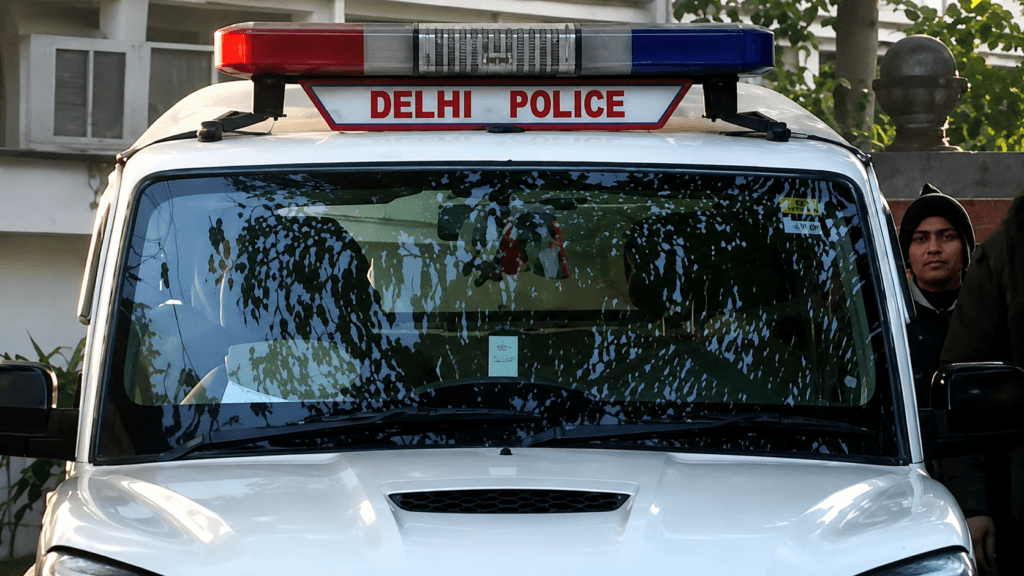
Delhi Police officers investigate the child trafficking case after rescuing a 25-day-old infant from Rohini. Image Credit: File Photo
Delhi Police has rescued a 25-day-old infant from Rohini and arrested two people for allegedly buying the baby for Rs 8 lakh, officials said on Monday. The accused, Garima Jain and her father-in-law Satish Jain, were arrested after investigators tracked the child as part of a wider probe into a trafficking syndicate busted earlier this month.
Police said the newborn had allegedly been purchased around two-and-a-half weeks ago through a woman linked to the racket, taking the number of infants recovered in the case to six. The child has now been placed in protective custody and produced before the Child Welfare Committee, which is arranging care and rehabilitation.
Why and HOW the Probe Unfolded
This rescue was not a random breakthrough; it was the result of a long-running investigation into a structured trafficking network. The case first came to light after a decoy operation near R K Ashram Metro Station in Paharganj on June 5, when three people were caught allegedly trying to sell a four-to-five-day-old infant. That operation opened the door to a much bigger network involving suppliers, transporters, middlemen and allegedly even a private hospital. NDTV has covered the full story.
Police believe the 25-day-old infant may have been taken from a low-income family in Rajasthan’s Pali district for around Rs 1.5 lakh to Rs 2 lakh, then transported to Delhi and sold for Rs 8 lakh to a childless couple. That gap between the source price and the resale price is one of the clearest signs of organized criminal activity. It suggests a supply chain built around vulnerability, profit and secrecy rather than any form of legal adoption.
Investigators also say the syndicate used forged birth and medical records to make illegal transfers appear legitimate. That makes the crime far more serious than a single unlawful transaction, because it points to document fraud, possible hospital involvement and a wider interstate support system. In simple terms, this was not just about one baby—it was about an entire machinery built to move infants across state lines and hide the trail.
What Police Have Found So Far
Police have said that the Jain family, residents of Rohini, allegedly bought the newborn because they did not have children. That motive may explain why the couple allegedly turned to illegal channels, but it does not lessen the crime. Buying a child outside lawful adoption procedures is a serious offense and it also endangers the infant’s safety, identity and future legal status.
So far, 13 people have been arrested, including alleged traffickers, mediators, buyers and the owner of a private hospital in outer Delhi. Police also arrested the alleged key supplier, Saybabhai Ghamar alias Kalia, from Gujarat on June 17. The network is now believed to have operated across Delhi, Haryana, Rajasthan, Gujarat and Madhya Pradesh, which means the investigation is still far from over.
Authorities suspect that nearly 30 infants may have been sold over the last 18 months. That number is deeply alarming because it suggests the racket was not occasional but continuous. If confirmed, it would point to a highly organized and profitable trafficking model that preyed on poor families and desperate buyers alike.
Police and Child Welfare Response
Once rescued, the infant was taken into protective custody and presented before the Child Welfare Committee. The committee has arranged for the baby’s care and rehabilitation, which is standard procedure in cases where a child’s immediate family situation is unsafe or unknown. The legal and emotional priority now is to ensure the infant is protected while investigators work to identify the biological parents.
Police said efforts are underway to trace the child’s natural family, but the families of all six rescued infants are still yet to be found. That is a painful reminder of how difficult these cases can be. A child may be recovered physically, but the bigger challenge is restoring identity, family links and legal documentation.
Background and Context
This case began with a decoy operation and has since expanded into a multi-state trafficking probe. That background matters because child trafficking networks often operate in layers. There may be a recruiter who identifies vulnerable families, a middleman who handles transportation, a fixer who arranges papers and a buyer who pays the final price.
The probe has already revealed an alleged system that targeted tribal and low-income families in Rajasthan and Gujarat. Police say babies were sometimes bought for as little as Rs 10,000 to Rs 20,000 and then sold for Rs 6 lakh to Rs 10 lakh. That profit margin is horrifying, but it also explains why such networks keep operating until they are disrupted by sustained police action.
In India, illegal child buying often gets disguised as adoption or family arrangement, which is why document verification and hospital records become so important. When forged paperwork enters the picture, it becomes harder for authorities to separate legal adoption from criminal trafficking. Yeh issue kaafi important hai because it affects not only law enforcement, but the basic rights of children.
Timeline
June 5: Police uncover the racket after a decoy operation near R K Ashram Metro Station in Paharganj, where three people are caught allegedly trying to sell a four-to-five-day-old infant.
June 17: Police arrest alleged key supplier Saybabhai Ghamar, alias Kalia, from Gujarat.
Mid-June: Investigators trace multiple children and expand the probe across several states.
Around two and a half weeks ago: The 25-day-old infant is allegedly bought by the Rohini-based Jain family for Rs 8 lakh.
Monday: Delhi Police rescue the infant from Rohini and arrest Garima Jain and Satish Jain.
Current status: Six infants recovered, 13 arrests made and raids ongoing in five states.
Also Read: Woman Stabbed To Death, Husband Injured in Parking Fight Over Motorcycle in Delhi’s Bindapur
Why This Matters
This matters because child trafficking is not just a criminal case; it is a child protection emergency. Every recovered infant represents a life potentially saved from exploitation, identity loss and unsafe living conditions. The rescue of this 25-day-old baby shows how vulnerable newborns can be when poverty, desperation and organized crime intersect.
It also matters because such networks damage trust in institutions. If forged records, private facilities or middlemen are involved, people start questioning whether the system is capable of protecting children at the earliest stage of life. That is a serious issue for society, not just the police.
For Indian families, the emotional impact is huge. We often read such stories and think they are isolated, but the numbers here suggest a larger problem. Six infants recovered and nearly 30 allegedly sold over 18 months is not a small case — it is a sign of a dangerous network that could have touched m
India Angle
From an India-focused perspective, this case hits hard because it brings together poverty, child safety, interstate crime and the loopholes in adoption and hospital documentation. In a country where many families still struggle with access to proper healthcare, legal awareness and social support, traffickers often exploit the weakest points.
In Hinglish, seedhi baat yeh hai: jab ek newborn ko Rs 8 lakh mein kharida ja raha ho, toh samajhna chahiye ki yeh sirf illegal deal nahi, balki ek badi human tragedy hai. Poor families ko target karna aur phir forged papers ke through baby ko shift karna, yeh sab kaafi disturbing hai. Indian readers will see this as a reminder that stronger checks are needed at hospitals, adoption channels and interstate transport points.
There is also a public-policy angle here. India needs more awareness around legal adoption, better tracking of birth records, and sharper coordination between state police units. Otherwise, such rackets keep finding gaps to exploit.
Analysis
My opinion is that the most disturbing part of this case is not just the number of arrests but the possibility that nearly 30 infants may have been moved through the network. That suggests repeat business, planning and customer demand. Once a racket becomes profitable enough to scale, it can become extremely hard to dismantle unless police keep following every link.
The other big takeaway is that this is not a one-off Delhi story. The trail stretches into Rajasthan, Gujarat, Haryana and Madhya Pradesh, which means the issue is regional and structural. If authorities do not strengthen record verification and child protection systems, similar networks can reappear under new names.
What Next
The next phase will likely focus on tracing the biological parents of the rescued infant and the other five recovered babies. Police will also continue raids in multiple states to identify more people in the syndicate.
Investigators may also examine the role of the private hospital and forged records and transport routes used to move infants. If those links are proven, more arrests are likely. The case may also lead to tighter scrutiny of birth records, adoption documentation and hospital-level reporting.
For the child, the immediate priority is care and rehabilitation under the Child Welfare Committee. For the police, the priority is to map the full network and determine how many more infants were trafficked before the decoy operation exposed the racket.
Conclusion
Delhi Police rescuing a 25-day-old infant from Rohini has exposed a larger interstate child trafficking racket that may have sold nearly 30 babies over 18 months. With 13 arrests already made and raids continuing across multiple states, the case has become a serious test of India’s child protection and criminal enforcement systems. The recovery of the baby is a relief, but the deeper story is a warning: organized trafficking networks still find vulnerable families, weak records, and legal loopholes to exploit.
Written B y A. Jack