Ajit Doval is leading the BRICS NSA meeting in New Delhi, where security chiefs are discussing emerging threats, counter-terrorism cooperation and technology-related risks. The gathering comes as India steers BRICS under the theme “Building for Resilience, Innovation, Cooperation and Sustainability.”
National Security Advisor Ajit Doval chairs the BRICS National Security Advisers meeting in New Delhi. Image Credit: PTI
The BRICS National Security Advisers meeting began in New Delhi today, bringing together top security officials from the bloc’s 11 member countries for a two-day discussion on emerging global security challenges. Chaired by National Security Advisor Ajit Doval, the meeting is centered on the theme of “Non-traditional security challenges confronting the world today,” with special attention on cybersecurity, digital vulnerabilities and artificial intelligence-driven risks. The gathering comes as India holds the BRICS Chairship for the fourth time in 2026, underscoring New Delhi’s growing role in shaping the bloc’s security and strategic agenda.
Why and How the Meeting Matters
The meeting is important because the nature of security threats has changed dramatically in recent years. Traditional concerns like border tensions and terrorism still matter, but governments are now also dealing with cyberattacks, online disinformation, financial fraud, digital espionage and the misuse of artificial intelligence. These threats can affect governments, businesses and ordinary citizens all at once, which is why BRICS is discussing them at the highest level. Akashvani News has covered the full story.
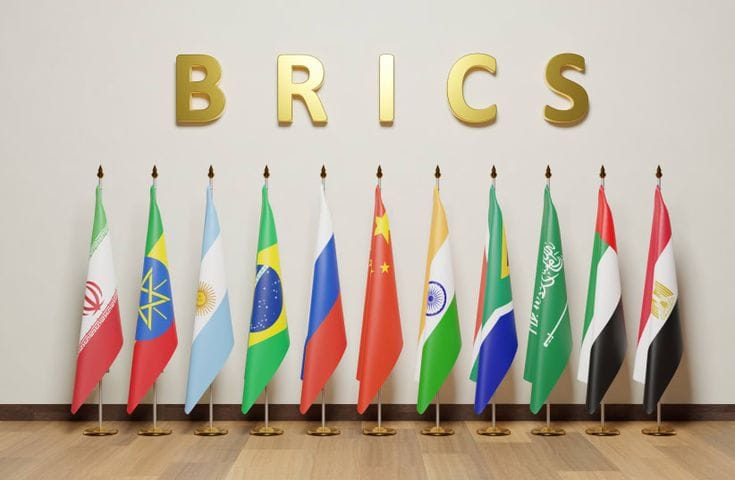
The format of the meeting reflects this broader shift. Delegates from India, Brazil, China, Egypt, Ethiopia, Indonesia, Iran, Russia, Saudi Arabia, South Africa and the UAE are expected to review outcomes from recent BRICS Joint Working Groups on Counter-Terrorism and Security in the Use of Information and Communication Technologies. That tells us the bloc is not treating these issues as abstract policy debates; it is trying to build practical coordination around evolving threats.
Ajit Doval’s chairmanship gives the meeting an especially strong security lens. India has long emphasized that technology can be both a tool for growth and a source of vulnerability. In simple terms, yeh issue kaafi important hai because a single cyber breach or AI-enabled attack can create cross-border consequences much faster than older forms of conflict.
India’s BRICS Role
India’s BRICS Chairship in 2026 is its fourth time leading the grouping, after earlier chairships in 2012, 2016 and 2021. This matters because chairing BRICS allows India to shape the discussion agenda, push policy priorities and present its own strategic view of global security. Under the theme “Building for Resilience, Innovation, Cooperation and Sustainability,” India is clearly positioning itself as a bridge between development, technology and security.
That approach also reflects Prime Minister Narendra Modi’s people-centric vision, which was articulated at the 2025 Rio Summit. The idea is not just to discuss security as a military concern but to link it to resilience in digital systems, social stability and international cooperation. This is a broader and more modern understanding of security, and it fits the current global environment.
Background and Context
BRICS began as an economic grouping, but over time its scope has widened significantly. Today, its agenda includes three major pillars: political and security cooperation, economic and financial partnership, and people-to-people exchanges. That expansion is important because it shows how the bloc has evolved from a development-focused forum into a much more complex international platform.
Security cooperation within BRICS has become more relevant as global threats have become less predictable. Cyberattacks can disrupt public services. Misinformation can undermine trust. AI tools can be used for deception, surveillance or automation of harmful content. Against that backdrop, the current meeting in New Delhi is not just routine diplomacy—it is part of a broader attempt to keep pace with a fast-changing risk environment.
The inclusion of newer BRICS members also changes the dynamics. With the bloc now spanning major economies and geopolitically significant states across several regions, coordination on security becomes both more important and more complicated. That makes consensus-building a key challenge but also a potentially valuable outcome.
What the Delegates Are Discussing
The meeting is expected to focus on the rapidly evolving nature of national security threats and the role of new technologies in creating or amplifying risk. Cybersecurity is likely to be one of the most important topics because attacks on digital infrastructure are becoming more common and more damaging. Digital vulnerabilities, especially in critical systems, can affect everything from banking to energy and transport.
Artificial intelligence is another major concern. AI can improve national security tools, but it can also be weaponized through deepfakes, automated misinformation, phishing, surveillance and faster cyber intrusion techniques. That dual-use nature makes it one of the most sensitive topics on the table. Delegates are likely discussing how countries can cooperate without losing control over their own digital sovereignty.
Counter-terrorism remains part of the conversation too. Even though the meeting emphasizes “non-traditional” threats, terrorism has not disappeared from the security agenda. The real change is that terrorism now exists alongside cybercrime, hybrid warfare and information manipulation, all of which can interact with each other.
Quotes and Expert-Style Statements
A senior Indian security official said the meeting reflects the need to “prepare for threats that do not respect borders, time zones or traditional defense lines.” That is a useful way to understand the shift in security thinking.
A strategic affairs analyst noted that the BRICS platform is increasingly becoming “a place where major powers and rising states can compare notes on the future of conflict, data protection and digital resilience.” That interpretation fits the direction of the agenda.
Another observer said India’s leadership this year gives it an opportunity to “shape the conversation around technology governance in a way that connects security with development.” That is especially relevant because India has been pushing digital public infrastructure and innovation as part of its broader international image.
Why This Matters
This matters because security today is no longer limited to soldiers, borders and weapons. The biggest threats often arrive silently through malware, stolen data, false information or AI-generated manipulation. For governments, that means policy must evolve. For citizens, it means awareness and resilience are becoming as important as physical protection.
It also matters because BRICS is one of the most visible forums where non-Western powers can frame global issues on their own terms. If these countries can agree on practical steps for cyber cooperation and counter-terrorism, that could shape future norms in international security discussions. In a world where trust is fragile, such coordination has real value.
For India specifically, the meeting is important because it reinforces New Delhi’s position as a serious security agenda-setter. It shows that India is not just participating in global forums but helping define what those forums should talk about next.
India Angle
From an Indian perspective, this is a strong diplomatic moment. New Delhi hosting the BRICS NSA meeting gives Indian policymakers a chance to showcase the country’s growing expertise in cyber governance, digital public infrastructure and security coordination. Indian readers should care because decisions made in these talks can eventually affect how countries work together on data security, digital threats and cross-border investigations.
In Hinglish, seedhi baat yeh hai: aaj security ka matlab sirf border par army nahi hai, balki phone, data, AI aur cyberspace bhi hai. India ka role isliye important hai because it can help shape smart, practical responses to modern threats. That is especially relevant for a country like India, where digital adoption is huge and security sensitivity is high.
There is also a broader message here. India is presenting itself as a country that can handle both development and defense conversations. That balance is becoming a major part of its international identity.
Also Read: Vladimir Putin and Xi Jinping Likely to Attend BRICS Summit in New Delhi in September
Timeline
2012: India first chairs BRICS.
2016: India chairs BRICS for the second time.
2021: India takes over the BRICS Chairship again.
2025: Prime Minister Narendra Modi outlines a people-centric vision at the Rio Summit.
2026: India assumes BRICS Chairship for the fourth time.
Today: The BRICS National Security Advisers meeting begins in New Delhi.
Next two days: Delegates discuss cybersecurity, AI-driven threats, counter-terrorism, and non-traditional security challenges.
Analysis
My view is that this meeting is more important than a typical diplomatic event because it reflects where global security is heading. The old model of security focused heavily on state conflict. The new model is messier, faster and more digital. BRICS discussing these issues openly suggests the bloc is trying to stay relevant in a changing world.
It also gives India a chance to project leadership without sounding overly aggressive. That is smart diplomacy. If India can help guide BRICS toward practical cooperation on cyber resilience and technology risks, it will strengthen its standing not only in the bloc but in wider global forums too.
What Next
Over the next two days, delegates are expected to refine their common language on cyber threats, information security and counter-terrorism cooperation. The key question is whether BRICS can move beyond general agreement and produce concrete follow-up mechanisms.
India will likely continue to highlight resilience, innovation and sustainability as core themes of its chairship. If the meeting produces meaningful consensus, it could feed into later BRICS discussions on digital safety, AI governance and coordinated security responses. That would make this gathering more than symbolic.
The bigger outcome to watch is whether BRICS can become a credible platform for shaping norms around non-traditional threats. If that happens, the New Delhi meeting may be remembered as one of the early steps in that shift.
Conclusion
The BRICS National Security Advisers meeting in New Delhi is a timely and strategically important event as the bloc turns its attention to cybersecurity, AI-driven threats and other non-traditional security challenges. With Ajit Doval chairing the talks and India using its 2026 chairship to push a resilience-focused agenda, the meeting highlights how security thinking is expanding beyond borders and armies into the digital and technological realm. For India and for BRICS, this is about preparing for the threats of tomorrow, not just the problems of today.
Written By A. Jack