A Delhi court on Saturday dismissed bail pleas of Umar Khalid and Sharjeel Imam in the larger conspiracy case related to the 2020 North East Delhi riots. The trial court said it had “no choice” but to follow the Supreme Court’s order in January that laid out specific terms before the accused could revive their requests.
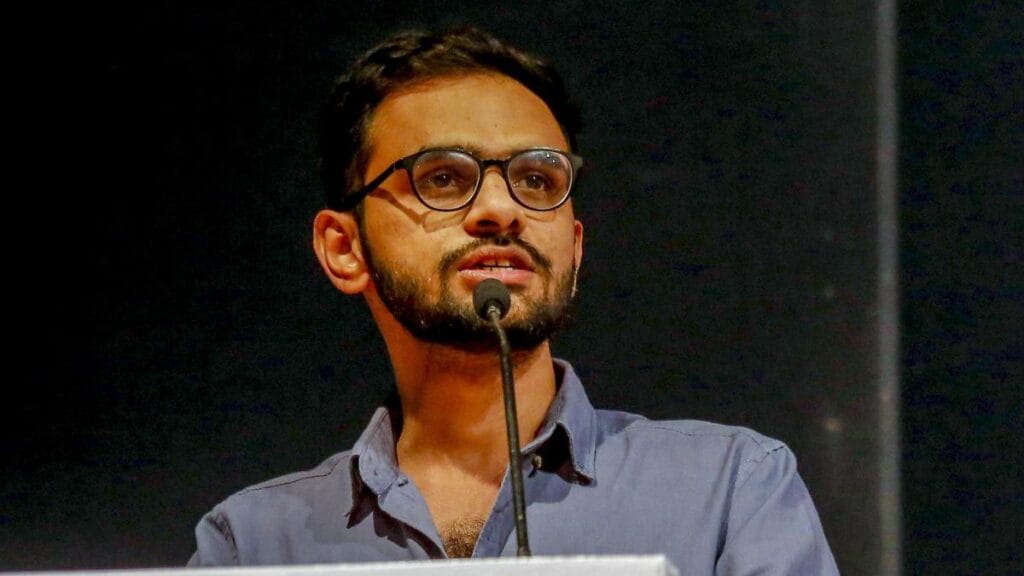
A Delhi court rejected the bail pleas of Umar Khalid and Sharjeel Imam in the 2020 Delhi riots larger conspiracy case, citing the Supreme Court’s earlier order. Image Credit: The Hindu
A Delhi court has rejected the bail applications of Umar Khalid and Sharjeel Imam, both accused in the larger conspiracy case connected to the 2020 North East Delhi riots. The trial court said on Saturday, July 4, 2026, that it was bound by the Supreme Court’s January 5 order, which had already placed conditions on when the two could seek bail again. The decision keeps both accused in judicial custody as the case continues to move through the legal process.
The matter has remained one of the most closely watched cases arising out of the 2020 riots, not only because of the seriousness of the allegations but also because of the prolonged legal battle over custody and trial delays. At the center of the latest hearing was a narrow legal question: whether the trial court had any room to consider the new bail pleas or whether it was strictly tied to the earlier order of the Supreme Court. The court answered that question by saying it had no choice but to follow the higher court’s directions.
What the Court Said
According to the report, the trial court noted that the Supreme Court on January 5, 2026, had rejected the bail pleas of Umar Khalid and Sharjeel Imam and had expressly permitted them to renew their requests only after the protected witnesses in the case were examined or after one year from that date, whichever came earlier. Since that condition had not yet been met, the trial court held that it was not free to take a different view. The Hindu has covered the full story.
That reasoning is significant because it shows how strongly lower courts are bound by specific directions from the apex court. In simple terms, the trial court was saying that even if the defense presented new arguments, the prior order limited what it could legally do. Yeh point kaafi important hai because it shows the hierarchy of judicial directions in a high-profile criminal case.
The defense, however, pointed to the Supreme Court’s later ruling in Syed Iftikhar Andrabi v. NIA, arguing that the judgment reaffirmed the principle that prolonged incarceration can be a valid ground for bail. That argument was meant to show that continued detention, especially in a case moving slowly, should be looked at more favorably. But the trial court was not persuaded to depart from the January order.
Why the Defence Argued for Bail
The defense position, as reflected in the report, was built around the issue of prolonged incarceration. In many bail matters, especially in complex conspiracy cases, the accused argue that if a trial is taking too long, continued custody begins to look punitive rather than preventive. That is often the central tension in bail jurisprudence: the law must protect both the rights of the accused and the integrity of the investigation.
By relying on Syed Iftikhar Andrabi v. NIA, the defense tried to place this case within a larger judicial principle that long detention without trial completion may justify bail. This is not unusual in serious criminal cases, where lawyers often cite newer rulings to strengthen an argument for release. But here, the difficulty was procedural. The earlier Supreme Court order had already created a specific waiting period and witness-examination condition.
That meant the trial court had to decide between two competing ideas: the general principle of prolonged incarceration and the specific instruction from the Supreme Court in this very case. It chose the latter. In legal terms, that is a cautious and conventional approach.
Background of the Case
Umar Khalid and Sharjeel Imam are among the accused in the larger conspiracy case linked to the 2020 North East Delhi riots. The case has drawn sustained public attention because of the scale of the violence, the political sensitivity around the allegations and the extended timeline of proceedings.
The riots in Delhi remain one of the most discussed episodes in recent years because they triggered multiple investigations and raised difficult questions about accountability, protest, speech and conspiracy. The larger conspiracy case is especially significant because it focuses not only on the violence itself but also on the alleged planning behind it. That has made every bail hearing closely watched by both legal observers and the public.
The January 5, 2026 Supreme Court order is now the key reference point in this phase of the case. By setting conditions for renewed bail applications, the top court effectively defined the procedural path for future hearings. The latest dismissal shows how that order continues to shape the legal strategy on both sides.
Timeline
2020: North East Delhi riots take place, followed by multiple investigations and arrests.
January 5, 2026: The Supreme Court rejects the bail pleas of Umar Khalid and Sharjeel Imam and allows fresh requests only after protected witnesses are examined or after one year, whichever is earlier.
July 4, 2026: A Delhi court dismisses their renewed bail pleas, saying it is bound by the Supreme Court’s January order.
After the order: Defense refers to Syed Iftikhar Andrabi v. NIA, arguing that prolonged incarceration can support bail.
Current status: The accused remain in custody as the case continues.
Also Read: Delhi Man Allegedly Kills Wife Over Phone Call Suspicion and Dies by Suicide After Consuming Poison
Why This Matters
This matters because it sits at the intersection of criminal law, constitutional rights and procedural discipline. Bail hearings are not just technical events; they reflect how the justice system balances liberty and investigation. When a court says it is bound by a higher court’s specific order, it reinforces how legal hierarchy operates in practice. Yeh issue kaafi important hai because it affects not just this case but also how similar cases may be handled in the future.
It also matters because the case has become a marker for how long high-profile conspiracy trials can take. When custody extends over a long period, the question of fairness becomes unavoidable. Courts then have to weigh the seriousness of allegations against the principle that an undertrial should not be kept in jail indefinitely without trial progress.
For the public, this case continues to be a reminder that complex riot-related prosecutions can stay unresolved for years. That has consequences for confidence in the justice system, for the accused, and for the broader legal conversation about due process.
India Angle
For Indian readers, this case touches on a debate that goes far beyond one courtroom. In Hinglish, seedhi baat yeh hai: jab bail aur custody ka issue itna lamba chale, toh log naturally poochte hain ki justice timely hai ya nahi. This is a very Indian legal issue because long-running cases, especially in politically sensitive matters, often remain in the public eye for years.
The 2020 Delhi riots case is already part of India’s broader conversation about protest, communal violence and legal accountability. Any fresh order in the case tends to attract attention because it carries both legal and political weight. That makes the latest rejection important not only for the accused, but also for people watching how Indian courts manage prolonged criminal trials.
It also matters because Indian courts regularly face the challenge of balancing liberty with the seriousness of allegations. This case is a strong example of that balancing act. The trial court has now signaled that it will stick closely to the Supreme Court’s instructions, which is a reminder that procedural discipline remains central in Indian criminal law.
Analysis
My opinion is that the court’s decision was predictable once the Supreme Court’s January order was cited as controlling. Trial courts generally avoid stepping outside explicit directions from the apex court, especially in a sensitive matter like this. So while the defense’s argument about prolonged incarceration is legally meaningful, it was always going to face a tough hurdle in this hearing.
What stands out to me is the tension between general bail principles and case-specific instructions. On one hand, the law recognizes that long custody can be unfair. On the other hand, the judicial system also values consistency and hierarchy. This case shows how those two ideas can collide and how the specific order often wins in the short term.
I also think the broader public conversation will continue because the case is not just about custody. It is about how long such cases take to reach a final outcome. Until that happens, every bail order will be read as a signal of how the system is managing delay, rights and accountability.
What Next
The next step is likely to depend on whether the protected witnesses in the case have been examined or whether the one-year period from January 5, 2026 has expired. If either condition is met, the accused may renew their bail attempts under the terms already laid down by the Supreme Court.
The defense may continue to rely on arguments about prolonged incarceration and the later Supreme Court ruling cited in support of bail. The prosecution, meanwhile, will likely emphasize the gravity of the allegations and the existing apex court order.
For now, the case remains where many high-profile criminal matters often sit: legally active, procedurally complex and still unresolved. That means more hearings, more arguments and likely continued public attention.
Conclusion
The Delhi court’s rejection of Umar Khalid and Sharjeel Imam’s bail pleas is a reminder that specific directions from the Supreme Court can tightly shape what lower courts are allowed to do. By saying it had “no option” but to follow the January order, the trial court has kept the focus on procedure, witness examination and judicial hierarchy. At the same time, the defense’s reliance on the principle of prolonged incarceration shows that the legal debate is far from over. As the larger conspiracy case linked to the 2020 North East Delhi riots continues, the question of bail will remain closely tied to the pace of the trial and the terms already set by the top court.
Written By A. Jack