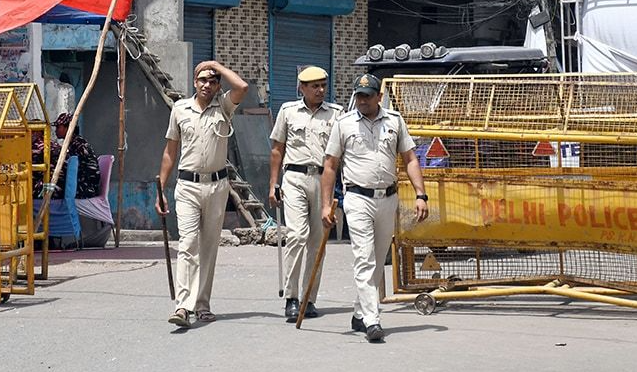
A 17-year-old student was shot at a restaurant in southeast Delhi after he objected to a group of young men brushing past his chair, leaving him in a critical condition on a ventilator. Police say the group returned a few minutes later and one of them fired a single round before fleeing the scene.
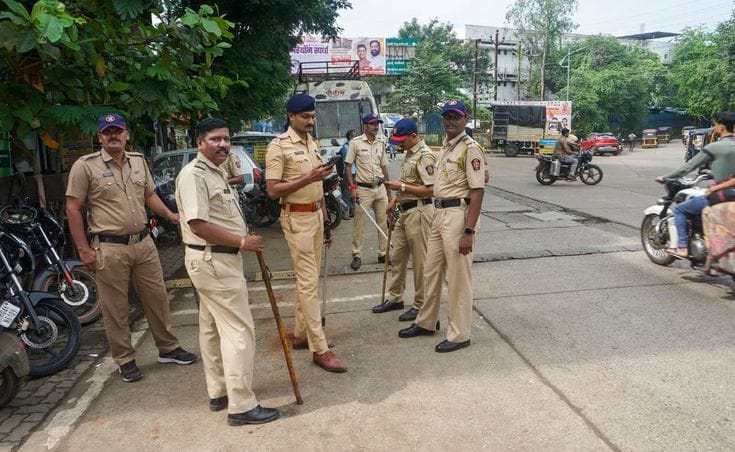
Police investigate a southeast Delhi eatery after a 17-year-old student was shot following a brief altercation over a chair being touched.
A shocking shooting at a Delhi eatery has left a 17-year-old student battling for life after a minor argument reportedly escalated into gunfire. The incident took place on Tuesday evening in southeast Delhi’s Amar Colony area, where the teenager, identified as Sahil, was shot after objecting to a young man touching his chair while passing by.
According to police, the incident was reported at 7:54 pm and triggered an immediate response from local officers. The victim was first taken to Moolchand Hospital and later referred to the AIIMS Trauma Centre, where he is currently on ventilator support. The condition is said to be critical but stable. Yeh case kaafi serious hai because it shows how quickly a small public argument can turn into a violent crime.
What Happened
Police said Sahil had gone to the eatery with his friends when a group of boys passed by their table. During the movement, one of them brushed past or touched the victim’s chair. Sahil objected and reportedly asked him to walk properly. That exchange appears to have irritated the group. NDTV has covered the full story.
According to the account given by police, the boys left the restaurant after the initial confrontation but returned around four to five minutes later. At that point, one of them fired a single round at Sahil and fled. Police said only one bullet was fired and no one else at the spot was injured. The fact that the group returned after leaving suggests that the shooting may not have been a spontaneous reaction alone; it may have involved some degree of intent or retaliation.
In such cases, timing matters. A person leaves, waits a few minutes, and then comes back with a weapon — that is not the same as a heated argument erupting instantly. Investigators will likely focus on whether the shooters had come prepared, whether they had prior enmity, or whether the act was a sudden revenge attack after being challenged in public.
Police Response at the Spot
Once the PCR call was received, local police, along with the SHO and ACP, rushed to the eatery. By the time they arrived, the victim had already been taken to Moolchand Hospital. Senior officers then reached the hospital and found the teenager unconscious and on ventilator support.
A crime team inspected the scene, and multiple police teams were formed to scan CCTV footage and use technical surveillance to identify the accused. One of the visuals reportedly shows three boys running away after the incident. That kind of footage can be crucial in a fast-moving case like this because it helps police match clothing, movement, and escape routes.
Police also said they are examining the area carefully to piece together the sequence of events. In incidents involving multiple young suspects, CCTV and nearby camera networks often become the most important evidence. Since the attackers fled immediately, tracing them will depend heavily on that digital trail.
Victim’s Condition
Sahil was first admitted to Moolchand Hospital and then referred to the AIIMS Trauma Centre for advanced care. He remains in critical condition and is on ventilator support, though doctors reportedly say his condition is stable.
For the family, this is a nightmare situation. A teenager out with friends for what should have been a normal evening ended up in an ICU because of a trivial confrontation. That is what makes this case so disturbing. The injury is not just physical; it also reflects how vulnerable young people can become when guns enter ordinary city life.
Why Did It Happen?
At the surface level, the trigger was simple: one boy brushed against the chair of another, and the victim objected. But the deeper issue is the ease with which such an argument escalated into firearm violence. That says something worrying about the mindset of the accused, and possibly about how casually some young people may be carrying or using weapons.
If the police version is accurate, then the attack was a deliberate retaliation after the initial exchange. That would make the case more than a street quarrel. It would become a planned act of violence over a small perceived insult. In simple words, chhoti baat ko bahut bade aur khatarnak step mein badal diya gaya.
There is also a wider urban pattern here. In crowded cities like Delhi, public spaces such as eateries, malls, and roadside restaurants often become pressure points where ego, impatience, and group behavior collide. When one person refuses to back down, and the other side responds with force, the situation can spiral within seconds.
Background and Context
Delhi has seen repeated concern over youth violence and weapon-related crime, especially in public spaces. While not every dispute leads to a shooting, the presence of illegal firearms or easy access to weapons makes such incidents far more dangerous. Eateries, markets, and public hangouts can become flashpoints because they bring together strangers, friends, and rival groups in close proximity.
Teenagers and young adults are especially vulnerable in these settings because arguments are often impulsive, and peer pressure can make conflicts worse. A small act, like touching someone’s chair or bumping into them, can become a matter of pride for a group. If one person returns armed, the situation can move from verbal hostility to life-threatening violence in moments.
This case also reflects how security at everyday public venues is now under fresh scrutiny. People expect an eatery to be a casual, safe space. When gunfire breaks out there, it changes how residents think about public safety in their own neighborhoods.
Timeline
Tuesday evening: Sahil goes to the eatery with his friends.
Around 7:54 pm: Police receive a call reporting the incident.
Initial altercation: A boy touches the victim’s chair; Sahil objects.
Group leaves: The boys exit the restaurant.
Four to five minutes later: The group returns.
Shooting: One boy fires a single round at Sahil and flees.
Afterward: The victim is taken to Moolchand Hospital and later shifted to AIIMS Trauma Centre.
Current status: Sahil remains critical but stable on ventilator support.
Also Read: Delhi Heatwave Melts Ladoos in Viral Video as Summer Takes an Unusual Turn
Why This Matters
This matters because it shows how quickly public violence can erupt from something that should have ended with words. A 17-year-old student is now fighting for his life over an argument that started with a chair being touched. That is a frightening reflection of how fragile everyday safety can be.
It also matters because the case may reveal whether firearms are becoming too easy to use in casual urban disputes. If a young person can be shot at a public eatery after a brief argument, then residents will naturally worry about what that means for safety in restaurants, markets, and social spaces. Yeh issue kaafi important hai because public confidence in basic safety depends on how quickly such crimes are solved and punished.
India Angle
For Indian readers, the story hits home because it involves a school-going teenager, a Delhi public space, and a seemingly minor dispute turning violent. Families across the country can relate to the idea of a child going out with friends and returning home injured because of someone else’s aggression.
The India angle is also about the broader issue of youth behavior, weapon access, and public order in major cities. In Hinglish, seedhi baat yeh hai: jab ego aur gun ek saath aa jayein, toh result bahut dangerous hota hai. Indian cities are growing fast, but social discipline and law enforcement need to keep pace so that ordinary disagreements do not end in tragedy.
Analysis
My view is that the most alarming part is the alleged return of the group after the initial argument. That suggests more than a spur-of-the-moment reaction. It indicates either planning or at least a decision to escalate a minor social conflict into violent revenge. The police response also matters here. Multiple teams and CCTV scanning are the right approach, because in urban crime cases like this, speed is crucial. If the accused are identified quickly, it sends a stronger message that public violence will not go unanswered. But the bigger lesson is societal: we need less aggression, less weapon culture, and more restraint in public spaces.
What Next
The next step will likely involve examining CCTV footage from the eatery and nearby roads, checking witness statements, and identifying the three boys seen fleeing in visuals. Police may also trace mobile phone records or other technical data to narrow down the suspects.
Doctors at AIIMS Trauma Centre will continue monitoring Sahil’s condition closely, and his recovery will remain a major concern for his family. From the investigation side, the key question is whether the accused had a prior connection with the victim or whether the incident was a random altercation that turned violent. If the latter, it will raise fresh questions about gun access and public safety. If the former, investigators will look for motive and any prior dispute.
Conclusion
The shooting of a 17-year-old at a Delhi eatery after a dispute over a chair is a disturbing reminder of how quickly everyday arguments can become life-threatening. What began as a small objection reportedly ended with a gunshot, a critical injury, and a teenager on ventilator support.
Police are now searching for the accused using CCTV and technical surveillance, while the victim remains under treatment at AIIMS Trauma Centre. The incident is not just a crime story; it is a warning about the growing danger of impulsive violence in public spaces. For Delhi residents, and for families across India, the message is clear: even ordinary outings can turn dangerous when anger and weapons come together.
Written By A. Jack