Minor among dead as first-floor warehouse goes up in flames in Raghubir Nagar; Delhi Fire Services bring the blaze under control in under 45 minutes.

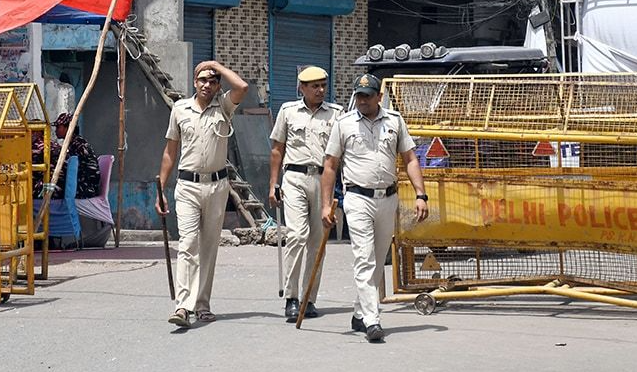
This image is only for illustrations.
Two people, including a minor, were killed after a fire broke out in a godown in west Delhi’s Raghubir Nagar early on Monday (August 17, 2026) morning, following a suspected blast in an e-rickshaw battery.
The Delhi Fire Services (DFS) received a call about the fire at around 4.42 a.m. from R-17A, Masjid Gurudwara Road, Raghubir Nagar, under the Moti Nagar police station jurisdiction. Three water tenders and a water tender were rushed to the spot, and after considerable efforts, the fire was brought under control at 5.25 a.m.
The victims have been identified as Sufaid (17), son of Mohammad Naseeb, and Mohd. Samid (38), son of Sheikh Ridki. Both sustained burn injuries in the incident and were rescued from the building but were declared brought dead at Guru Gobind Singh Hospital in Raghubir Nagar.
Why and How the Fire Started
According to the Delhi Fire Service, the fire involved domestic articles stored on the first floor of the building and was triggered by a suspected blast in an e-rickshaw battery kept there. The exact circumstances that led to the battery blast and subsequent fire are yet to be ascertained, but initial reports point to a thermal runaway or short circuit in the battery as the likely cause.
The blaze broke out on the first floor of a building that has a ground floor and four upper floors, with the godown occupying part of the first level. Domestic items and other stored material quickly caught fire after the battery explosion, leading to intense heat and smoke in a confined space. This story was also covered by The Hindu.
Fire officials said the rapid spread was aided by the nature of stored goods and the enclosed layout of the godown, which can trap heat and smoke, making escape difficult for anyone inside. Two other people sustained burn injuries in the incident and were rescued from the building; they were also taken to Guru Gobind Singh Hospital for treatment.
Statements and On-Ground Accounts
Delhi Fire Service account:
A DFS official confirmed that the fire was reported at 4.42 a.m. from R-17A, Masjid Gurudwara Road, Raghubir Nagar. “The fire involved domestic articles and was triggered by a blast in an e-rickshaw battery stored on the first floor of the building,” the official said, adding that three water tenders and one water bowser were deployed. After considerable efforts, the fire was brought under control at 5.25 a.m.
Victims identified:
The deceased were identified as 17-year-old Sufaid, son of Mohammad Naseeb, and 38-year-old Mohammad Samid, son of Sheikh Ridki. Both were rescued from the burning godown but were declared brought dead at the hospital.
Local context:
While detailed local statements were still emerging, residents in similar west Delhi industrial-residential pockets have often raised concerns about mixed-use buildings, where godowns, workshops, and living spaces coexist, sometimes without adequate fire safety measures.
E-Rickshaw Battery Fires and Delhi’s Godown Safety
E-rickshaws have become a staple of last-mile connectivity in Delhi and other Indian cities, prized for their low running costs and zero tailpipe emissions. However, incidents of battery fires—linked to substandard cells, improper charging, or faulty battery management systems—have been reported with increasing frequency across the country.
Lithium-ion and lead-acid batteries used in e-rickshaws can catch fire if they overheat, are overcharged, or suffer internal short circuits. In confined spaces like godowns, a single battery blast can quickly ignite surrounding material, turning a small incident into a deadly blaze.
Delhi has a long history of fire incidents in commercial and mixed-use buildings, from narrow lanes of Old Delhi to industrial clusters in west and northwest Delhi. Past tragedies have prompted repeated promises of stricter enforcement of fire safety norms, regular inspections, and action against illegal storage of hazardous material, but implementation remains uneven.
Timeline
Early morning, August 17, 2026 (around 4.42 a.m.): Delhi Fire Services receive a call about a fire at R-17A, Masjid Gurudwara Road, Raghubir Nagar, west Delhi.
Initial response: Three water tenders and one water bowser were dispatched to the spot; a fire was reported on the first floor of a multi-story building housing a godown.
Cause identified (preliminary): The Fire involves domestic articles and was triggered by a suspected blast in an e-rickshaw battery stored on the first floor.
Rescue and casualties: Two people were rescued with burn injuries and taken to Guru Gobind Singh Hospital, Raghubir Nagar, where they were declared brought dead.
5.25 a.m.: Fire brought under control after considerable efforts by DFS teams.
Post-control operations: Police and fire officials begin a preliminary inquiry into the exact cause, battery storage practices, and compliance with safety norms; further details on property damage are awaited.
Also Read: Delhi Mercedes Crash: Elderly Woman Killed in Narela, Driver Arrested After Chain Collision
Why This Matters
Yeh issue kaafi important hai kyunki yeh seedha asar pad raha hai public safety, e-vehicle adoption, aur urban fire-risk management par.
Human cost: Two lives lost, including a minor, underscore how quickly a technical fault can turn into a human tragedy in densely populated urban areas.
EV safety perception: As India pushes for electric mobility, high-profile battery-fire incidents can erode public trust in e-rickshaws and other EVs if not addressed with robust standards and enforcement.
Godown and mixed-use risks: Many Delhi neighborhoods have buildings where storage, small workshops, and residential units coexist, often with inadequate fire exits, extinguishers, and electrical safety checks.
Regulatory gap: The incident highlights the need for clearer rules on battery storage, charging infrastructure, and fire safety compliance for small businesses and warehouses.
India Angle
This is not just a Delhi story; it’s an India-wide e-mobility and urban safety moment.
EV boom vs. safety: India’s push for electric two-wheelers and three-wheelers is central to its climate and pollution goals. But without strong battery standards, certified chargers, and safe storage practices, the risk of such fires will persist.
Urban fire patterns: From Mumbai godowns to Kolkata markets and Chennai warehouses, fire incidents linked to electrical faults and stored goods are a recurring theme. Raghubir Nagar fits a familiar pattern of dense, mixed-use urban pockets where fire spreads fast and escape is hard.
Policy pressure point: Incidents like this add pressure on central and state governments to tighten battery certification, mandate fire safety on commercial premises, and run public awareness campaigns on safe charging and storage.
Agar har battery fire ke baad sirf inquiry hoti rahegi aur standards, enforcement, aur infrastructure par kaam nahi hoga, toh yeh silsila rukne wala nahi hai.
Analysis
But beyond search, the narrative is structurally significant:
EV narrative tension: India wants more e-rickshaws on the road, but every battery-fire headline chips away at confidence. The challenge is to separate teething issues from systemic safety gaps.
Mixed-use building risk: The Raghubir Nagar incident is a microcosm of Delhi’s larger urban planning problem: commercial activity spilling into residential zones without proportional safety infrastructure.
Enforcement vs. reality: Rules exist for fire safety, electrical wiring, and hazardous storage, but ground-level compliance is often weak, especially in small godowns and workshops.
For follow-ups, newsrooms can track the police and fire department’s final cause-of-fire report, any action against illegal storage or unsafe electrical setups, and whether this incident prompts broader inspections in west Delhi’s industrial pockets.
What Next
Cause investigation: Fire investigators and police will examine the battery type, charging setup, wiring, and storage conditions to determine whether it was a technical fault, human error, or negligence.
Safety inspections: The incident may trigger spot checks in nearby godowns and workshops, focusing on battery storage, electrical wiring, and fire extinguishers.
Policy conversation: Expect renewed calls for stricter battery certification norms, mandatory fire safety training for small businesses, and clearer guidelines on where and how e-rickshaw batteries can be stored and charged.
Community awareness: Local resident welfare associations and market bodies may organize awareness drives on fire safety, emergency exits, and basic firefighting equipment.
Conclusion
The Raghubir Nagar godown fire is more than a local tragedy; it is a warning sign for India’s rapidly expanding e-mobility ecosystem. Two people—Sufaid, 17, and Mohd. Samid, 38—have lost their lives after a suspected e-rickshaw battery blast triggered a blaze in a west Delhi warehouse.
While the Delhi Fire Services brought the fire under control in under 45 minutes, the incident underscores how vulnerable dense urban pockets are to such disasters. As India races to electrify its transport, the Raghubir Nagar fire should prompt a serious conversation about battery safety, godown regulations, and fire preparedness.
Written By A. Jack