The Delhi High Court has indicated it may initiate contempt proceedings against “some” respondents after objectionable and allegedly defamatory remarks were made against Justice Swarana Kanta Sharma during hearings in the liquor policy case. The matter comes as the judge was hearing the CBI’s plea challenging the discharge of several accused, including Arvind Kejriwal and Manish Sisodia.
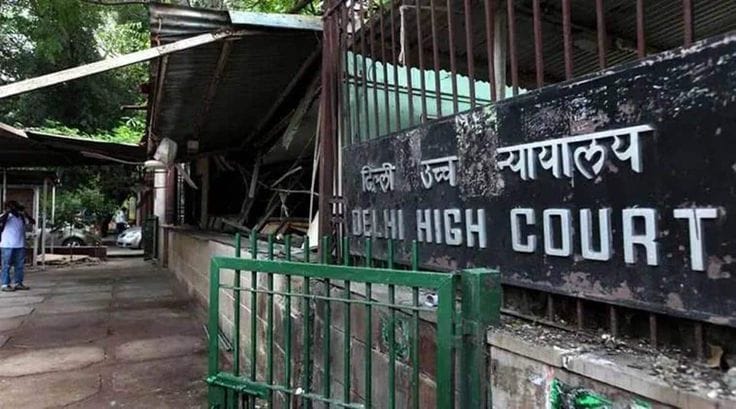
A view of the Delhi High Court as proceedings in the liquor policy case trigger a fresh row over alleged defamatory remarks and possible contempt action.
Delhi High Court
The Delhi High Court on Thursday signaled that it may take contempt action against certain respondents in the liquor policy case after allegedly defamatory, vilifying, and contemptuous content was posted against Justice Swarana Kanta Sharma. The judge, who was hearing the CBI’s plea against the discharge of several accused, including former Delhi chief minister Arvind Kejriwal and ex-deputy chief minister Manish Sisodia, said she could not remain silent on the issue. Her remarks came amid an already tense legal battle that has repeatedly drawn public and political attention in New Delhi.
This development adds a fresh layer of seriousness to an already high-profile case. The liquor policy matter has been closely watched because it involves senior political leaders, central investigative agencies, and questions of judicial conduct, recusal, and courtroom dignity. In plain terms, yeh sirf ek legal hearing nahi hai; it has now become a larger test of how the judiciary responds when its authority is challenged publicly.
What Happened
Justice Sharma was hearing the CBI’s challenge to the discharge of several accused in the liquor policy case when she said she had initially planned to announce the names of amicus curiae who would assist the court after some respondents chose not to participate. According to her remarks, she later came across “extremely defamatory content” posted against her by some respondents, which changed the course of the proceedings. NDTV has covered the full story.
She stated that she could not stay silent and would pass a detailed order at 5 pm, while also hinting that contemptuous action may follow. Although the judge did not name anyone directly, the comments were widely seen as referring to Arvind Kejriwal, who had earlier boycotted the proceedings after seeking her recusal. The case has therefore moved beyond the core liquor policy dispute and into a separate controversy around personal allegations and courtroom propriety.
Why It Escalated
The tension in this matter has been building for some time. Kejriwal had asked Justice Sharma to step aside, arguing that she had participated in events linked to the RSS, which he claimed raised concerns about impartiality. The judge rejected that request, saying there was no material to substantiate allegations of bias and that recusing herself without cause would amount to abandoning her duty.
Her response was sharp and direct. She reportedly said that Kejriwal’s supposed doubts were merely “illusions in the mind” and not a valid legal basis for recusal. After that, the AAP chief declared that he would not appear before her and argued that his participation, either personally or through counsel, would not achieve anything meaningful. This confrontation created the backdrop for the latest contempt warning, making the case as much about judicial trust as about the original liquor policy allegations.
Reported Statements
The most striking line from the bench was Justice Sharma’s observation that she had come across “extremely defamatory content” and could not remain silent. That statement matters because judges usually avoid reacting publicly unless they believe the issue has crossed a serious line. Her decision to initiate contempt action suggests the court views the matter not as ordinary criticism but as conduct that may undermine the dignity of the institution.
At the same time, Kejriwal’s own position has been consistent: he has argued that the proceedings in her court do not satisfy the principle that justice must not only be done but also be seen to be done. He has also said that his appearance would not make a meaningful difference. These opposing stances show why the dispute has become so charged, with each side framing the issue as one of principle rather than personal conflict.
Background
The liquor policy case has been one of the most politically sensitive legal matters in recent years. It has involved allegations around the Delhi excise policy, scrutiny of decisions taken during the AAP government’s tenure, and investigations by central agencies. Because of the names involved, every hearing has attracted national attention and quick political interpretation.
The discharge of several accused, including Kejriwal and Sisodia, had already become a major turning point. The CBI’s challenge to that discharge kept the matter alive, and the recusal request created yet another flashpoint. Once a judge is publicly accused of bias without supporting evidence, the risk of institutional tension rises sharply. That is why this latest development is more than a procedural update; it reflects a deeper conflict between courtroom authority and political resistance.
Timeline
Earlier hearings: The CBI challenged the discharge of accused persons in the liquor policy case.
Recusal request: Arvind Kejriwal sought Justice Swarana Kanta Sharma’s recusal on alleged bias grounds.
Judge’s refusal: Justice Sharma declined to step aside, saying there was no material for bias claims.
Boycott: Kejriwal later said he would not appear before the judge.
Latest hearing: The judge said defamatory content had been posted against her and hinted at contempt action.
Also Read: Petrol, Diesel Price Hike LIVE: Centre Raises Fuel Rates by Rs 3 Per Litre Amid Middle East Crisis
Why This Matters
This matters because the judiciary depends not only on legal powers but also on institutional respect. If judges begin facing public vilification during active hearings, it can affect confidence in the system and make courtroom proceedings more combative. For India, where political and legal disputes often overlap, the line between criticism and contempt becomes especially important.
There is also a wider public interest angle. Citizens follow such cases to understand whether leaders are subject to the same legal standards as everyone else. When a court responds to alleged defamatory attacks, it sends a message that the rule of law cannot be casually undermined. Yeh baat kaafi important hai because legal accountability and judicial independence go hand in hand.
India Angle
For Indian readers, the story matters because it sits at the intersection of politics, law, and public trust. Delhi is often the center of such high-voltage cases, and anything involving Kejriwal, Sisodia, and the High Court immediately becomes a national topic. People across India watch these developments not just for legal outcomes, but also to understand how institutions handle conflict under pressure.
There is also a democratic lesson here. In a country where public debate is loud and often polarized, criticism of judges and courts can quickly become personal or political. The challenge is to maintain healthy scrutiny without crossing into abuse or defamation. In short, the case is not just about one hearing in Delhi; it is about the standards expected in public life across India.
Analysis
My view is that the judge’s warning is significant because it shows the court is drawing a line around personal attacks. Even if parties disagree with a judge’s views or conduct, the legal system gives specific routes for challenge. Public allegations without evidence can damage discourse, but they also risk muddying the core legal questions in the case. That is why the next order from the bench will likely be watched closely, not only for what it says about contempt, but also for what it signals about courtroom discipline in politically sensitive cases.
What’s Next?
The immediate next step is the detailed order Justice Sharma said she would pass at 5 pm. That order may clarify whether contempt proceedings will be formally opened against whom or whether the court will first seek responses before moving further. Either way, the legal temperature in the case is likely to rise.
Going ahead, the respondents may have to decide whether to participate in the proceedings or continue their boycott strategy. If contempt action is initiated, the matter could branch into a separate legal track, adding more complexity to an already layered case. The broader outcome will depend on how the court balances free expression, judicial dignity, and procedural fairness. For now, the proceedings have clearly entered a more sensitive phase.
Conclusion
The Delhi High Court’s warning over alleged defamatory remarks has turned the liquor policy case into an even bigger legal and institutional flashpoint. What began as a challenge to the discharge of accused persons has now expanded into a question of contempt, judicial respect, and courtroom conduct.
With Justice Swarana Kanta Sharma signaling that she may not stay silent, the next order could shape the direction of the case in a major way. For the public, the key takeaway is clear: in a democracy, the right to disagree exists, but so does the duty to protect the dignity of the justice system.
Written By A. Jack