The Centre on Friday increased petrol and diesel prices by Rs 3 per litre, citing disruption in oil and gas supplies due to the Middle East war and the blockade of the Strait of Hormuz. The move has immediately raised concern for households, cab operators, transport businesses and daily commuters across India.
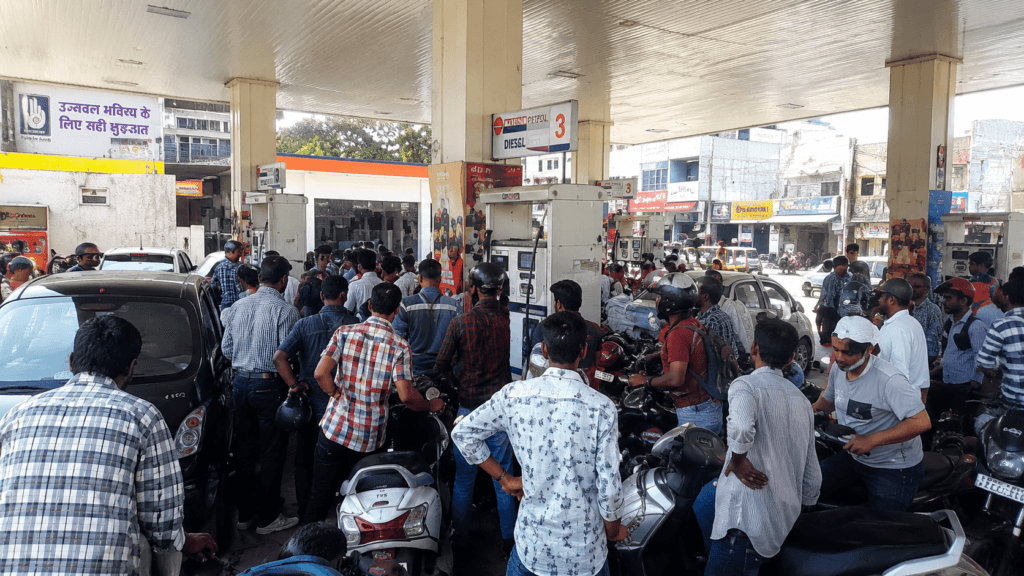
Fuel prices are displayed at a petrol pump as India faces a fresh hike in petrol, diesel, and CNG rates amid global supply disruptions.
Petrol and diesel prices in India have been hiked by Rs 3 per litre, with revised retail prices now showing a sharper burden for consumers in major cities. In Delhi, petrol now costs Rs 97.77 per liter, while diesel stands at Rs 90.67 per liter, according to the latest update. The price revision comes at a time when the global oil market is under pressure because of the Middle East conflict and supply disruptions linked to the Strait of Hormuz.
The fuel price hike is not just a number update; it directly affects transport costs, daily travel budgets, and inflation sentiment. In metro cities and tier-1 urban centers, where private vehicles, cabs, delivery fleets, and public transport all depend on fuel, even a Rs 3 rise can quickly ripple through the economy. Yeh issue kaafi serious hai because fuel is one of those costs that touches almost every household in some way.
What Changed
The latest rates place petrol at Rs 97.77 per liter in Delhi, Rs 108.74 in Kolkata, Rs 106.68 in Mumbai, and Rs 103.67 in Chennai. Diesel has risen to Rs 90.67 in Delhi, Rs 95.13 in Kolkata, Rs 93.14 in Mumbai, and Rs 95.25 in Chennai. CNG prices were also raised in Delhi, where the rate now stands at Rs 79.09 per kg.
These changes are particularly painful for commercial vehicle users. A Delhi cab driver told NDTV that the rise in CNG alone could increase his monthly expenses by around Rs 3,000 to Rs 3,500. That estimate makes sense because fuel is a recurring operating cost, and even small increases compound quickly over a month. For drivers already dealing with loan EMIs, maintenance, and city congestion, the squeeze can be immediate.
Why It Happened
The government’s explanation points to the ongoing Middle East war and the blockade of the Strait of Hormuz, a critical global energy route through which a large share of oil and gas supplies move. When supply chains in such a major region are disrupted, global crude prices usually move up, and importing countries feel the pressure soon after. India, being heavily dependent on imported crude, is especially exposed to those international shocks.
Government sources also said the decision was aimed at “shielding citizens instead of passing oil shock” in one go. That suggests the Centre may be trying to avoid a bigger one-time price shock and instead spread the impact through a controlled revision. This approach is often used when policymakers want to balance market realities with public pressure. In simple terms, they are trying to soften the blow, not eliminate it.
Reported Statement
According to government sources quoted in the coverage, the aim is to shield citizens rather than fully pass on the oil shock immediately. That statement reflects a familiar policy dilemma: absorb some of the global increase, or let retail prices jump more sharply. In this case, the government appears to have chosen a middle path.
From a consumer point of view, however, the difference may not feel small. People at the pump only see a higher bill, not the broader policy calculation behind it. Cab operators, delivery workers, and middle-class families generally respond to the final price, not the reason behind it, and that is why this development has such wide impact.
Background
India has long been vulnerable to global oil volatility because it imports most of its crude needs. Whenever there is tension in the Gulf region, the first reaction is usually in the international oil market, followed by pressure on domestic fuel pricing. Over the years, fuel prices have become one of the most closely watched daily indicators of cost-of-living stress.
The Strait of Hormuz matters because it is one of the world’s most important energy chokepoints. Any blockade or disruption there can affect oil shipments, tanker movement, and freight insurance costs. For a country like India, this is not just a foreign policy headline — it becomes a domestic economic concern almost immediately. Petrol and diesel prices often serve as the first visible sign that a global crisis has reached the Indian consumer.
Timeline
Before Friday: Global oil markets remained under pressure due to the Middle East war and Strait of Hormuz disruption.
Friday morning: The center announced a Rs 3 per liter hike in petrol and diesel prices.
Friday onward: Retail prices were revised in major cities, and CNG rates in Delhi were also increased.
Immediate impact: Cab drivers, fleet operators, and daily commuters began assessing monthly cost increases.
Also Read: Premium Petrol Price Rises To Rs 160 Per Litre, Jet Fuel Hiked By 8.5%
Why This Matters
This matters because fuel prices influence almost every part of the economy. Higher petrol and diesel rates increase travel costs, logistics expenses, food transportation charges, and operating costs for businesses that depend on vehicles. Eventually, that can feed into prices of everyday goods, which is why fuel hikes often create broader inflation worries.
For ordinary consumers, the effect is both direct and indirect. A private car owner pays more at the pump, a cab rider may see higher fares, and a shopkeeper may face rising delivery charges. In India, where personal mobility is tied closely to fuel affordability, such a hike affects daily life in a very real way. Yahan se pressure sirf drivers par nahin, poore supply chain par padta hai.
India Angle
For Indian households, this fuel hike is especially relevant because transport and commuting are already major monthly expenses. In cities like Delhi, Mumbai, Kolkata, and Chennai, people depend heavily on fuel-linked services such as app cabs, autos, delivery vehicles, and small commercial transportation. So when petrol, diesel, and CNG rise together, the impact feels immediate and very local.
There is also a strong psychological effect. Even when the increase is modest, consumers begin to expect higher bills for groceries, school transport, and office travel. This is why fuel hikes often trigger public concern faster than many other policy changes. In the Indian context, fuel price news is never just about energy—it is about the cost of living.
Analysis
From an editorial standpoint, the most important angle is the gap between policy language and public experience. Government sources may say the move is about shielding citizens, but for the average commuter, the effect is still a higher bill. That is why the article should balance the official explanation with the human impact—especially on cab drivers, logistics workers, and urban families.
What’s Next?
The next few days will likely show how oil companies and transport operators respond to the revised rates. If global crude prices remain elevated, there could be more pressure on domestic fuel pricing, especially in cities where logistics dependence is high. Transport unions and cab drivers may also push for fare revisions to absorb the increased operating cost.
Consumers should also watch for knock-on effects in local markets. If diesel stays expensive, delivery costs can rise, and that may eventually affect retail prices for essentials. The bigger question is whether the government will continue to absorb part of the shock or pass on more of it if the geopolitical situation worsens. For now, the situation remains fluid, and that uncertainty itself is a concern.
Conclusion
The Rs 3 per liter hike in petrol and diesel prices is more than a routine revision—it is a signal of how quickly international conflict can hit Indian consumers. With petrol, diesel, and CNG all moving upward, the burden will be felt by commuters, drivers, businesses, and households across the country.
The government says it is trying to shield citizens from a bigger oil shock, but the practical effect is still higher daily costs. If global supply disruptions continue, fuel prices may remain under pressure, making this one of the most important cost-of-living stories to watch in the coming days.
Written By A. Jack