“We should not tarnish the officer in black just for a video clip,” Justice Girish Kathpalia said, speaking of ground realities and the need to stop crowd breaches near Parliament. The order maintains the probe within the same supervisory chain despite public outcry over the alleged assault.
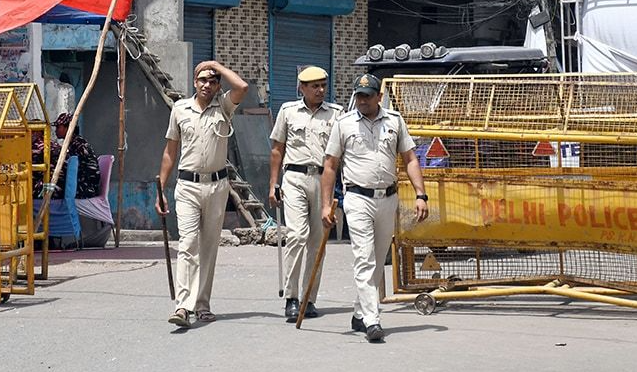
Additional DCP Sandeep Lamba, seen in a viral video allegedly slapping a woman during the July 20 protest. This image is only for illustrations.
In a significant order on police accountability and protest policing, the Delhi High Court on Tuesday refused to shift a 2025 inquiry into allegations of police excesses from Additional DCP Sandeep Lamba. The decision comes after a viral video surfaced showing Lamba allegedly slapping a woman during the July 20 ‘Chalo Sansad’ march, sparking widespread criticism and demands for an independent probe.
The court held that a police officer cannot be automatically presumed to be biased in every investigation just because of allegations arising from a separate incident. Justice Girish Kathpalia’s remarks during the hearing emphasised the complexity of crowd control near Parliament and suggested that removing the officer from the inquiry based solely on the video would be premature.
What the court said
Justice Kathpalia made it clear that the court is cautious about drawing conclusions from a single video clip without full context. “Just because he is caught on some video clip slapping a lady, we cannot tarnish him in black. Are we aware of the ground realities? How would the crowd have entered Parliament, and how would firing have started? So many people would have died,” he remarked. This story was also covered by The Hindu.
The judge’s comments suggest that the court is weighing the alleged misconduct against the broader security concerns of the day. The ‘Chalo Sansad’ march had drawn large crowds, and authorities were under pressure to prevent any breach of the high-security zone around Parliament. In that context, the court appears to be giving the officer the benefit of the doubt while the inquiry proceeds.
At the same time, the order does not dismiss the seriousness of the video. It simply refuses to transfer the inquiry at this stage, meaning the probe into police excesses will continue under the existing supervisory framework.
Why the court refused to transfer the inquiry
The court’s reasoning rests on two main points. First, it said that allegations in one incident do not automatically make an officer biased in every related investigation. Second, it highlighted the operational challenges of managing large crowds near sensitive locations like Parliament.
From a legal standpoint, this is a procedural order rather than a final finding on the merits of the assault allegation. The court is effectively saying that the inquiry can continue as planned unless there is concrete evidence of conflict of interest or procedural unfairness. That is a higher threshold than public outrage alone.
In simple terms, the court is separating the question of individual misconduct from the question of who should oversee the broader inquiry. Yeh issue kaafi important hai because it shows how courts balance accountability with operational realities.
Background and context
The July 20 ‘Chalo Sansad’ march was part of a larger wave of protests that drew thousands of participants to central Delhi. The agitation quickly turned tense as crowds pushed toward the Parliament area, prompting a heavy police response. Videos and photos from the day showed scuffles, detentions and allegations of excessive force.
The viral video of Lamba allegedly slapping a woman became one of the most controversial moments from the protest. It triggered demands for disciplinary action and an independent investigation. Critics argued that a senior officer involved in the alleged assault should not oversee an inquiry into police excesses from the same day.
The 2025 inquiry into police excesses was already in progress before the video went viral. The latest court order ensures that the inquiry remains under the same supervisory chain, at least for now.
Timeline
July 20: ‘Chalo Sansad’ march takes place; large crowds gather near Parliament.
Same day: Allegations of police excesses emerge; viral video shows Lamba allegedly slapping a woman.
Afterward, demands grow for an independent probe and removal of Lamba from the inquiry.
Tuesday: Delhi High Court declines to transfer the inquiry, citing lack of automatic bias and ground realities.
Also Read: Delhi High Court Gives Sonia Gandhi and Rahul Gandhi Three Weeks to Reply in National Herald ED Case
Why This Matters
This matters because it touches two sensitive issues: police accountability and the right to protest. When videos of alleged assault by officers surface, public trust in law enforcement can erode quickly. If the same officer continues to oversee related enquiries, concerns about fairness naturally arise.
It also matters because the court’s reasoning sets a tone for how similar cases may be handled in future. If courts routinely reject transfer requests unless there is clear evidence of bias, then procedural continuity will be prioritised. If they more readily order transfers in high-profile cases, then perceived independence may take precedence.
For protesters, the order sends a mixed message. On one hand, the court has not dismissed the allegations. On the other, it has not changed the supervisory structure of the inquiry. That leaves room for continued debate over whether the process is truly impartial.
India angle
For Indian readers, this story is directly relevant because protest policing and police accountability are recurring national issues. From farmers’ marches to student agitations, the question of how police respond to crowds is often in the news.
In Hinglish, seedhi baat yeh hai: jab video viral ho jata hai, public trust turant affect hota hai. But courts also have to look at procedure, evidence and operational context. That tension is at the heart of this case.
The India angle also includes the broader conversation about security around Parliament. The court’s reference to potential crowd breaches and the risk of firing shows how seriously authorities take the safety of high-security zones. Balancing that with civil liberties is a constant challenge.
Analysis
My opinion is that the court has taken a cautious, procedure-first approach. It has not endorsed the officer’s alleged conduct, but it has also not accepted the argument that he is automatically unfit to oversee the inquiry. That is a legally defensible position, even if it may not satisfy public sentiment immediately.
I also think the court’s emphasis on “ground realities” is important. Crowd control near Parliament is not a routine law-and-order situation; it involves national security considerations. That does not excuse misconduct, but it does complicate the narrative.
What Next
The next step will be the continuation of the 2025 inquiry into police excesses under the existing supervisory framework. If new evidence emerges showing conflict of interest or procedural unfairness, the issue of transfer could be raised again.
Separately, the alleged assault on the woman may be investigated as a distinct matter. Depending on the findings, disciplinary action or criminal proceedings could follow. The court’s current order does not prevent that; it simply keeps the broader inquiry in place.
Public reaction is likely to remain strong as long as the video circulates and the inquiry progresses. If the final report is perceived as lenient, pressure may build for external review or political intervention.
Conclusion
The Delhi High Court’s refusal to shift the probe into police excesses away from Additional DCP Sandeep Lamba keeps the inquiry under the same supervisory chain despite the viral video of the alleged slap. The court’s reasoning emphasises procedural continuity and the complexity of crowd control near Parliament, rather than making a final judgement on the alleged misconduct.
This order does not close the door on accountability, but it does signal that courts will require more than public outrage to change the structure of an ongoing inquiry. For protesters, police and the public, the bigger question remains: how to ensure fair investigations while respecting operational realities. That balance will define the outcome of this case.
Written By A. Jack