The ED is challenging a trial court order that refused to take cognisance of its chargesheet against the Gandhis and others. The latest order does not decide the merits of the case, but it keeps the dispute active and moving toward the next hearing.
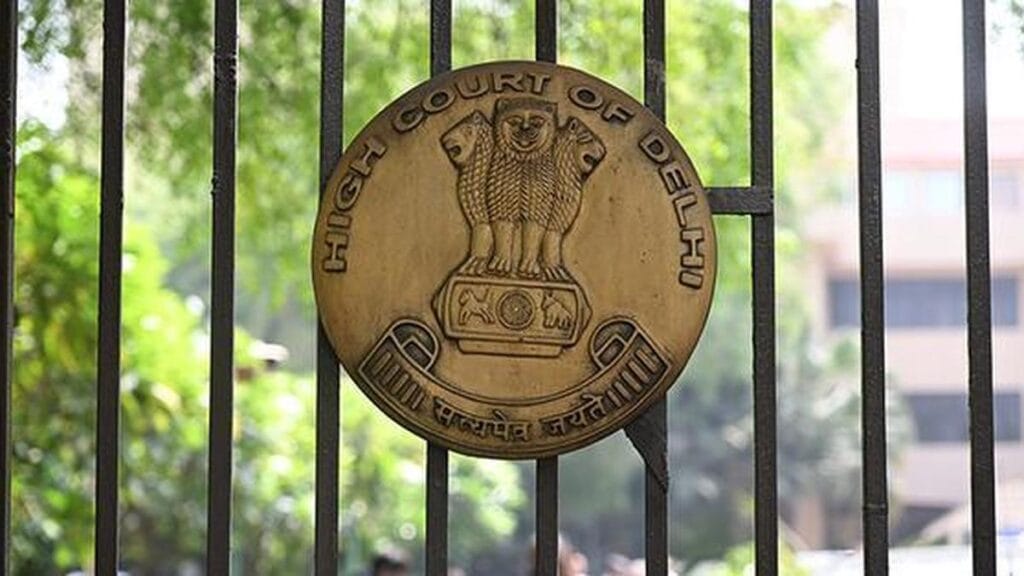
The Delhi High Court is to reply to the ED’s plea in the National Herald money laundering case. Image Credit: The Hindu
The Delhi High Court on Monday granted three weeks to Congress leaders Sonia Gandhi and Rahul Gandhi, along with other respondents, to file their reply to the Enforcement Directorate’s plea in the National Herald-linked money laundering case. The ED has challenged a trial court order that had refused to take cognisance of its chargesheet against the leaders and others.
The matter has now been listed for hearing on September 10. While this is not a final ruling on guilt or innocence, it is an important procedural step in a case that has remained politically significant and legally sensitive for years. In practical terms, the court has allowed the respondents more time to prepare their side before the next round of arguments.
What the order means
This order is about procedure rather than a final finding. The High Court’s decision to give Sonia Gandhi, Rahul Gandhi and others three weeks to reply means the court is ensuring that both sides have time to present their arguments properly. That is a standard part of the judicial process, especially in a complex financial case involving multiple parties and a detailed record. This story was also covered by The Hindu.
The ED’s plea is aimed at overturning the trial court’s refusal to take cognisance of the chargesheet. In simple terms, the agency wants the court to recognise and proceed with the chargesheet, while the earlier trial court order had said no to that at this stage. The current hearing does not settle that dispute, but it sets the stage for a more detailed legal contest in September.
For readers trying to understand why this matters, the key point is that cognisance is a major threshold in criminal proceedings. If a court refuses to take cognisance, the case cannot move forward in the usual way. If the higher court later allows the ED’s challenge, the case could gain renewed legal momentum. Yeh issue kaafi important hai because it decides whether the matter advances or stays paused.
Background of the case
The National Herald case has long been tied to allegations involving Congress leaders and money laundering claims connected to Associated Journals Limited and the National Herald newspaper’s assets and management structure. Over time, the issue has become one of the most politically loaded cases in the country because it involves senior opposition figures as well as a legacy media institution with historical significance.
The ED’s investigation is part of a broader money laundering probe. Such cases typically involve tracing the flow of funds, ownership transfers, asset structures and the role of linked entities. In the National Herald matter, the dispute has repeatedly moved between political attack, legal scrutiny and public debate.
That combination makes the case especially sensitive. When a case involves both high-profile politicians and a well-known institution, every procedural order gets attention far beyond the courtroom. The Delhi High Court’s latest direction is, therefore, being seen not just as a scheduling matter but as part of a larger political-legal narrative.
Why the case stays in focus
The reason the National Herald matter continues to attract attention is simple: it sits at the intersection of law, politics and public perception. Sonia Gandhi and Rahul Gandhi are among the most visible leaders of the Congress party, and any legal development involving them naturally becomes national news.
At the same time, ED cases often carry a strong political dimension because they involve corruption, financial wrongdoing or money trail allegations. Even before a final judicial determination, such cases can shape political discourse, election messaging and public debate. That is why this hearing matters beyond the courtroom.
The High Court’s decision also reflects the fact that the legal process is still active and being carefully handled. Courts often avoid rushing such matters, especially when the issues involve complex documentation and multiple respondents. A three-week window may seem routine, but in a case like this, routine steps can have outsized political implications.
Timeline
Earlier: The ED files a chargesheet in the National Herald-linked money laundering case.
Trial court stage: The court refuses to take cognisance of the ED’s chargesheet.
Monday, July 27, 2026: The Delhi High Court grants three weeks to Sonia Gandhi, Rahul Gandhi and others to reply to the ED’s plea.
September 10: The matter is listed for the next hearing.
Also Read: Delhi Police Use Facial Recognition to Identify 2,873 People at Jantar Mantar Protest
Why This Matters
This matters because legal delays and procedural orders can determine how fast a high-profile case moves forward. For the Congress leadership, the issue is not just legal but reputational. Even the continuation of proceedings keeps the matter in the public eye and allows political opponents to frame the narrative.
It also matters for Indian politics more broadly. Cases involving national leaders often become symbols of how institutions are functioning. Supporters may see the case as political pressure, while critics may see it as legitimate enforcement. Either way, the judicial process becomes part of the political conversation.
For ordinary citizens, the case is a reminder that legal accountability in India often unfolds over long timelines. The court’s current order shows the system moving step by step, not jumping to conclusions. That is important in a democracy because it reinforces due process, even in politically charged cases.
India angle
The Indian angle is very strong here because the National Herald case is not just about one party or one family. It touches on public trust in institutions, scrutiny of political financing and how enforcement agencies operate in high-stakes cases. These are issues that matter to voters across the country.
In Hinglish, seedhi baat yeh hai: jab case itna high-profile ho, log sirf legal order nahi dekhte, wo uske political signal bhi samajhte hain. That is why every date, every reply deadline and every hearing becomes part of the national conversation.
It also connects to a broader debate in India about whether accountability is being applied consistently across the political spectrum. Supporters of stricter enforcement argue that no one should be above the law. Critics, meanwhile, worry about selective targeting. This case naturally feeds both arguments.
Analysis
My opinion is that the High Court has taken a balanced procedural step here. It has not made a substantive ruling, but it has also not frozen the matter. Instead, it has given the respondents time to prepare while keeping the case on the calendar. That is exactly how complex matters often proceed in a functioning legal system.
The real significance lies in what happens after September 10. If the court sides with the ED, the case could move forward more aggressively. If it does not, the trial court’s refusal may stand, which would be a major relief for the Gandhis and the Congress party. For now, the legal tension remains intact.
What Next
The next step is straightforward: Sonia Gandhi, Rahul Gandhi and the other respondents will file their replies within the three-week window. The ED will likely prepare its arguments in response, and the court will review both sides when the matter comes up on September 10.
Depending on what the court hears, it may either uphold the trial court’s position, accept the ED’s challenge, or seek further clarification. Each of these possibilities carries different consequences for the pace of the case and its political visibility.
Meanwhile, the case will likely remain in the headlines because of the people involved. That means every legal update will continue to attract attention from both political observers and the general public.
Conclusion
The Delhi High Court’s order giving Sonia Gandhi, Rahul Gandhi and others three weeks to respond to the ED in the National Herald case is an important procedural development in a long-running and politically sensitive matter. The case itself is far from resolved, but the court has clearly kept the legal process moving.
For readers, the key takeaway is that the next hearing on September 10 could shape the future direction of the case. For India’s political landscape, the matter remains a high-stakes reminder that legal and political timelines often run side by side.
Written By A. Jack