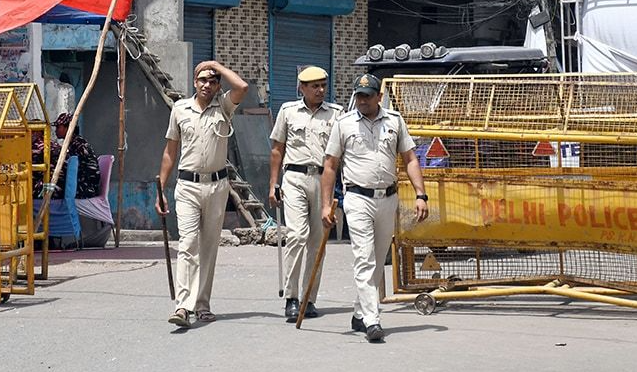
The bench of Chief Justice D.K. Upadhyaya and Justice Tejas Karia dismisses the petition on the ground of forum non conveniens, noting the dominant cause of action arose in Visakhapatnam and a similar PIL is already pending in the A.P. High Court.
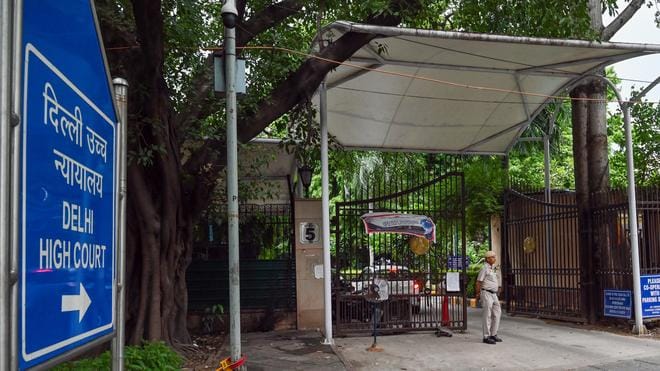
This Image is only for illustrations. Image Credit: The Hindu
The Delhi High Court on Wednesday, September 2, 2026, declined to entertain a public interest litigation (PIL) challenging the closure of Visakhapatnam Airport to scheduled commercial flights, saying the petitioner should approach the Andhra Pradesh High Court.
A Division Bench of Chief Justice D.K. Upadhyaya and Justice Tejas Karia dismissed the petition on the ground of forum non conveniens (inconvenient forum), noting that the “dominant cause of action” arose in Visakhapatnam and that a similar petition on the issue was already pending before the Andhra Pradesh High Court.
The court granted liberty to the petitioner, Gopala Krishna Kosaraju, to agitate his case before the jurisdictional High Court, while refusing to examine the merits of the challenge to the Centre’s decision to discontinue commercial operations at the existing Visakhapatnam airport and transfer its IATA code (VTZ) to the new Alluri Sitarama Raju International Airport at Bhogapuram. This story was also covered by The Hindu.
The order underscores the legal principle that when multiple courts could potentially hear a matter, the forum most closely connected to the cause of action and affected population should adjudicate.
The Delhi HC Order
The case came up for hearing before a Division Bench comprising Chief Justice Devendra Kumar Upadhyaya and Justice Tejas Karia.
Key aspects of the order:
Petition filed by: Gopala Krishna Kosaraju, through advocate Pranav Sachdeva.
Relief sought: Challenge to the closure of Visakhapatnam Airport (INS Dega) for scheduled commercial flights and transfer of the VTZ airport code to Bhogapuram International Greenfield Airport.
Court’s observation:
“Where is the order impacting people? When parts of the cause of action are in two High Courts, it is the dominant High Court which determines the forum. The dominant cause of action is in Visakhapatnam. File it there.”
The primary impact and suffering due to the closure are in Andhra Pradesh, particularly in and around Visakhapatnam.
Disposition: Petition dismissed on the ground of forum non conveniens, with liberty to approach the Andhra Pradesh High Court.
The court also took note of pending proceedings before the Andhra Pradesh High Court on the same issue and declined to duplicate or preempt that forum.
Why and How the Court Reached This Conclusion
The Delhi High Court’s reasoning rests on well-established jurisdictional principles:
Forum non conveniens: Even if a court has technical jurisdiction, it may decline to hear a case if another forum is more appropriate and convenient for the parties and the subject matter.
Dominant cause of action: When elements of a dispute span multiple states, the court where the dominant cause of action arises is considered the proper forum. Here, the airport closure directly affects residents, businesses and travellers in and around Visakhapatnam.
Avoidance of parallel litigation: A similar PIL was already pending before the Andhra Pradesh High Court; allowing the Delhi petition to proceed could lead to conflicting orders and forum shopping.
The Bench remarked that it was the people in Visakhapatnam who were “suffering” on account of the closure, reinforcing that the Andhra Pradesh High Court is the natural forum for grievances arising from the decision.
Quotes and Official Statements
Delhi High Court Bench: “Where is the order impacting people? When parts of the cause of action are in two High Courts, it is the dominant High Court which determines the forum. The dominant cause of action is in Visakhapatnam. File it there.”
Court order: “The petition is dismissed on the ground of forum non conveniens. It is needless to say that the petitioner will be at liberty to agitate his case before the jurisdictional High Court.”
Petitioner’s counsel: Advocate Pranav Sachdeva appeared for Gopala Krishna Kosaraju; the Bench directed him to approach the Andhra Pradesh High Court.
Context from Ministry of Civil Aviation (MoCA): A notification on July 28 stated that the civil enclave at Visakhapatnam Airport (INS Dega) would remain closed to scheduled commercial operations for 30 years, effective from 12.01 am on August 17, 2026, when operations commence at Bhogapuram International Greenfield Airport.
These statements capture both the legal logic and the policy backdrop.
Vizag Airport Closure and Bhogapuram Shift
The controversy stems from the Centre’s decision to shift scheduled commercial flight operations from the existing Visakhapatnam Airport (located at INS Dega) to the new Alluri Sitarama Raju International Airport at Bhogapuram.
Key developments:
July 28, 2026: Ministry of Civil Aviation (MoCA) issues a notification stating that the civil enclave at Visakhapatnam Airport will remain closed to scheduled commercial operations for 30 years.
August 17, 2026 (12.01 am): Closure of commercial operations at INS Dega takes effect; the IATA airport code VTZ is transferred to Bhogapuram International Greenfield Airport.
Public reaction: The move triggers protests and legal challenges from sections of the public, traders, and political groups in Visakhapatnam, who argue that the old airport is more conveniently located and that the shift will increase travel time and costs.
Litigation: Multiple PILs are filed, including one in the Andhra Pradesh High Court and the present petition in the Delhi High Court.
The new Bhogapuram airport, also known as Alluri Sitarama Raju International Airport, is a greenfield project located outside the city, designed to handle larger traffic and modern aircraft, but its distance from central Visakhapatnam has become a flashpoint.
Also Read: Mumbai, Kolkata at Risk as Sea Levels Rise Faster: UN Warns 14 Million Could Be Displaced
Timeline of the Airport Closure Dispute
Before July 2026: Visakhapatnam Airport (INS Dega) handles scheduled commercial flights; Bhogapuram greenfield airport is under development.
July 28, 2026: MoCA notifies 30-year closure of civil enclave at INS Dega for scheduled commercial operations; VTZ code to be transferred to Bhogapuram from August 17.
August 17, 2026 (12.01 am): Commercial operations at INS Dega cease; Bhogapuram International Greenfield Airport becomes the primary airport for the region with VTZ code.
Late August 2026: Public protests and legal challenges emerge; PILs are filed in the Andhra Pradesh High Court and Delhi High Court.
September 2, 2026: Delhi High Court dismisses PIL on the ground of forum non conveniens, directing the petitioner to the Andhra Pradesh High Court.
Why This Matters
Yeh issue kaafi important hai because it touches on urban planning, public convenience, regional development and access to justice.
Public convenience: The old airport is closer to the city; the new airport is farther away, affecting travel time, cost and accessibility for ordinary passengers.
Economic impact: Local businesses, hotels, transport operators and real estate around the old airport face uncertainty; new commercial hubs may emerge around Bhogapuram.
Legal precedent: The Delhi HC’s reliance on forum non conveniens reinforces that public-law challenges should generally be filed in the High Court closest to the affected population and cause of action.
Governance and consultation: The dispute highlights the need for transparent decision-making and stakeholder consultation when shifting critical infrastructure like airports.
For citizens, the core question is how to balance modernisation and capacity expansion with everyday convenience and equity.
India Angle
India has been aggressively expanding and modernising its airport infrastructure through greenfield projects, brownfield upgrades and privatisation.
Key issues highlighted by the Vizag case:
Greenfield vs existing airports: New airports like Bhogapuram, Jewar (Noida) and Navi Mumbai promise capacity and modern facilities but often face resistance over location, land acquisition and displacement of existing ecosystems.
Regional disparities: Tier-2 and tier-3 cities worry that shifting airports away from city centres may benefit developers and airlines more than ordinary travellers.
Judicial federalism: High Courts in different states often handle challenges to central policies; forum selection becomes crucial to avoid conflicting rulings.
Public interest litigation: PILs are increasingly used to challenge infrastructure decisions; courts must balance development needs with public grievances.
Yeh case dikhta hai ki sirf naya airport banana kaafi nahi hai; uska location, connectivity aur public acceptance bhi utna hi zaroori hai.
Analysis
The Delhi HC’s order is legally sound but politically sensitive:
Legally: The dominant cause of action clearly lies in Andhra Pradesh; the people most affected are there; a parallel PIL exists in the A.P. High Court.
Strategically: Petitioners sometimes file in Delhi for perceived advantages—speed, visibility or sympathetic benches—but courts are increasingly pushing back when the real impact is elsewhere.
Practically: The substantive issues—airport closure, 30-year ban on commercial flights, code transfer—remain unresolved; the A.P. High Court will now be the main arena for these arguments.
In my view, this approach is healthy for Indian federalism:
It discourages forum shopping and ensures that state High Courts take the lead on locally impactful issues.
It encourages petitioners to build stronger, locally grounded cases rather than relying on Delhi-centric litigation.
It may, however, delay resolution if the A.P. High Court is already overburdened or if multiple petitions proliferate.
The real test will be how the Andhra Pradesh High Court balances development policy with public convenience and whether it can deliver a time-bound, well-reasoned verdict.
What Next
The dispute will now primarily play out in the Andhra Pradesh High Court.
Likely developments:
Consolidation of petitions: The A.P. High Court may club multiple PILs and challenges into a single batch for efficient hearing.
Interim relief: Petitioners may seek stay on the 30-year closure notification or on full transfer of operations, though courts are often reluctant to halt operational shifts once implemented.
Government defence: The Centre and state will argue that Bhogapuram offers greater capacity, safety and long-term benefits, justifying the shift.
Public pressure: Protests, political debates and media campaigns may continue, especially if passengers face higher costs or longer commutes.
Possible compromises: Options could include limited revival of certain operations at INS Dega (e.g., regional connectivity scheme flights), improved road/rail links to Bhogapuram, or fare subsidies for affected passengers.
For travellers and local businesses, the next few months will be critical in shaping how the new airport ecosystem functions in practice.
Conclusion
The Delhi High Court has declined to entertain a PIL challenging the closure of Visakhapatnam Airport to commercial flights, dismissing the petition on the ground of forum non conveniens and directing the petitioner to approach the Andhra Pradesh High Court.
A Bench of Chief Justice D.K. Upadhyaya and Justice Tejas Karia held that the dominant cause of action arose in Visakhapatnam, where a similar petition is already pending, and that the people “suffering” from the closure are primarily in Andhra Pradesh.
The underlying dispute—over the 30-year closure of the civil enclave at INS Dega and transfer of the VTZ code to Bhogapuram International Greenfield Airport—remains live and will now be tested in the Andhra Pradesh High Court.
Yeh case ek important signal hai: infrastructure decisions may be taken in Delhi, but their real-world impact—and the legal battle—will be fought where people actually live and travel.
Written By A. Jack