The scheme, which was initially launched as the Mahila Samriddhi Yojana, is one of the major poll promises of BJP in Delhi. “The new rules say only one woman per family will benefit and only those who meet full criteria will be included.
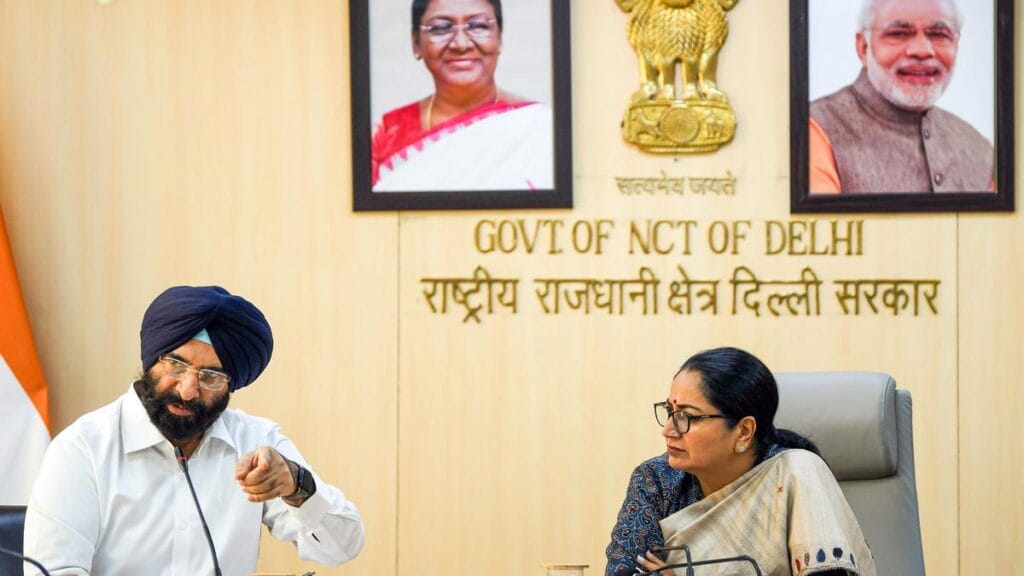
Delhi Chief Minister Rekha Gupta announces the renamed women’s aid scheme, Delhi Lakshmi Yojana, with eligibility rules and exclusions for beneficiaries. Image Credit: The Hindu
The Delhi government is set to roll out its women’s financial assistance scheme, now called the Delhi Lakshmi Yojana, by the end of August, according to an official release issued by the Chief Minister’s Office on Monday. Under the scheme, eligible women aged between 21 and 60 years will receive ₹2,500 every month.
This announcement is significant because the scheme was originally launched as one of the BJP’s key election promises under the earlier name Mahila Samriddhi Yojana. The updated announcement does not just rename the programme; it also clearly defines who can and cannot receive the benefit. Yeh announcement kaafi important hai because it turns a political promise into a more concrete welfare plan while also drawing firm boundaries around eligibility.
What the Scheme Says
According to the CMO, the scheme will be open only to women who, or whose families, have been residents of Delhi for at least 10 years. That means the benefit is being designed for long-term residents rather than recent arrivals. The government has also said that neither the woman nor her family should have any criminal record.
Another important condition is income-based. The family’s annual income must not exceed ₹2.5 lakh. That places the scheme squarely in the lower-income support category, where the government is targeting households that are likely to need direct monthly assistance the most. This story was also covered by The Hindu.
The release also says that within a family, only the eldest eligible woman will qualify, and only one woman from each family can receive the benefit. This is a major detail because it prevents multiple claims from the same household and helps control the scheme’s fiscal cost. In practical terms, the policy is built to be selective, not universal.
Why the Eligibility Rules Matter
Eligibility rules are always the most important part of a welfare scheme because they determine who actually benefits. In this case, the Delhi government has clearly tried to create a narrow and manageable support system. The age bracket of 21 to 60 years covers a large section of adult women, but the income, residency and criminal-record filters make the list much smaller.
That can be both a strength and a limitation. On one hand, it helps the government direct money to women who are likely to need it the most. On the other hand, some households may feel excluded even if they are economically vulnerable but do not meet one of the technical conditions. This is where implementation will matter a lot.
The rule that only the eldest eligible woman in a family can receive the aid is also noteworthy. It suggests that the government wants to avoid duplication and focus the benefit on one beneficiary per household. That may simplify administration, but it can also leave families debating which member should receive the support. In urban Delhi, where family structures vary widely, this could become a practical issue.
Political and Policy Background
The scheme was first known as Mahila Samriddhi Yojana and was one of the BJP’s key poll commitments in Delhi. By renaming it Delhi Lakshmi Yojana, the government appears to be giving it a stronger local identity. The name “Lakshmi” also carries a symbolic connection with prosperity and financial support, which fits the purpose of the programme.
This is not unusual in Indian politics. Welfare schemes often begin as campaign promises and later become formal administrative programmes with revised names, tighter rules and budgetary planning. The real test is usually not the announcement but the rollout. People want to know when payments will start, how they can apply and whether the process will be smooth. That is exactly why this story matters beyond the political headline.
The end-of-August timeline is also important. It suggests the government wants to move relatively quickly from announcement to delivery. For voters, that speed can be seen as a signal that the government is serious. For administrators, it means the groundwork has to be done fast and accurately.
Timeline
During the election campaign: Mahila Samriddhi Yojana is announced as a BJP promise.
Monday: The Delhi CMO issues an official release renaming it Delhi Lakshmi Yojana.
By the end of August: The government says the monthly ₹2,500 assistance will begin.
After launch: Eligible women will be identified based on age, residency, income and family criteria.
Also Read: Delhi Police Constable Shoots Wife Dead in Kalyanpuri After Argument, Leaves Her on Road
Why This Matters
This matters because direct cash assistance to women can have a real impact at the household level. For many families, an extra ₹2,500 each month can help cover essentials such as food, transport, medicines or school-related expenses. Yeh issue kaafi important hai because even a modest monthly amount can reduce day-to-day pressure in lower-income homes.
It also matters because women-focused schemes often have wider social effects. When financial support is given directly to women, it can strengthen their role in household decision-making and give them more economic independence. That is especially relevant in a city like Delhi, where the cost of living can be high and many families are managing tight budgets.
There is also a political significance. This scheme is one of the government’s early tests on whether election promises can be translated into actual welfare delivery. If rollout is efficient, it can build trust. If it is delayed or confusing, it could create criticism. So the stakes are higher than they may appear on paper.
India Angle
For Indian readers, this scheme fits into a bigger national pattern of cash-transfer politics and women-centric welfare. In Hinglish, seedhi baat yeh hai: jab government seedha paisa dene ki baat karti hai, toh log turant samajh jaate hain ki benefit ground level par kaise feel hoga. That makes this not just a Delhi story, but part of a larger Indian welfare trend.
Women’s financial assistance schemes have become an important part of state-level politics across India. They are often framed as empowerment measures, but they also need careful design so that the right people benefit. Delhi’s scheme will likely be watched by policymakers, political parties and voters in other states.
The residency condition is particularly Indian in its urban context. Delhi is a city with people who have lived there for decades as well as newer migrants who have come for work or education. By requiring 10 years of residency, the government is clearly trying to target established households. That may make administrative sense, but it also means some newer residents will be left out.
Analysis
My opinion is that the government is trying to strike a balance between political appeal and fiscal discipline. A cash transfer of ₹2,500 per month is attractive and easy to communicate, but the eligibility filters show that the scheme is not meant to be open-ended. The residency and income requirements will keep the beneficiary count under control, which is probably important for budget planning.
I also think the single-beneficiary-per-family rule is the most operationally significant part of the announcement. On paper it simplifies administration, but in practice it may require careful verification to avoid disputes. Families may need clear instructions on which member can apply, what documents are needed and how eligibility will be checked. If that process is not user-friendly, the scheme could face confusion even before the first payment is made.
Another thing worth noting is the symbolic power of the name change. “Delhi Lakshmi Yojana” sounds more local and more emotionally resonant than the earlier title. That may help with public messaging, but ultimately the scheme will be judged by delivery, not branding. The government will need to show that the promise is real and the payments are consistent.
What Next
The immediate next step is likely administrative preparation: finalising beneficiary verification, setting up application systems and ensuring funds can be transferred on schedule. If the government wants to start by the end of August, the window for implementation is short. That means departments will have to move quickly on documentation, digital systems and public communication.
After launch, the main question will be how many women actually qualify and how smoothly the rollout happens. Public response will depend heavily on whether the application process is simple and transparent. If people encounter delays or unclear rules, the scheme could face early criticism.
There may also be political scrutiny over whether the income cap and residency requirement are too restrictive. Some will argue the scheme is necessary and targeted, while others may say it excludes too many deserving women. That debate is likely to continue once implementation begins.
Conclusion
The Delhi government’s newly renamed Delhi Lakshmi Yojana is a significant welfare announcement because it turns a campaign promise into a concrete monthly assistance scheme for eligible women. With ₹2,500 per month on offer, the programme could provide meaningful support to lower-income households, but the strict eligibility rules make it a selective benefit rather than a universal one.
The end-of-August launch timeline adds urgency, while the single-beneficiary-per-family rule and residency requirement will likely shape how the scheme works in practice. For Delhi women and their families, the real test now is not just the announcement, but how quickly and smoothly the money reaches those who qualify.
Written By A. Jack