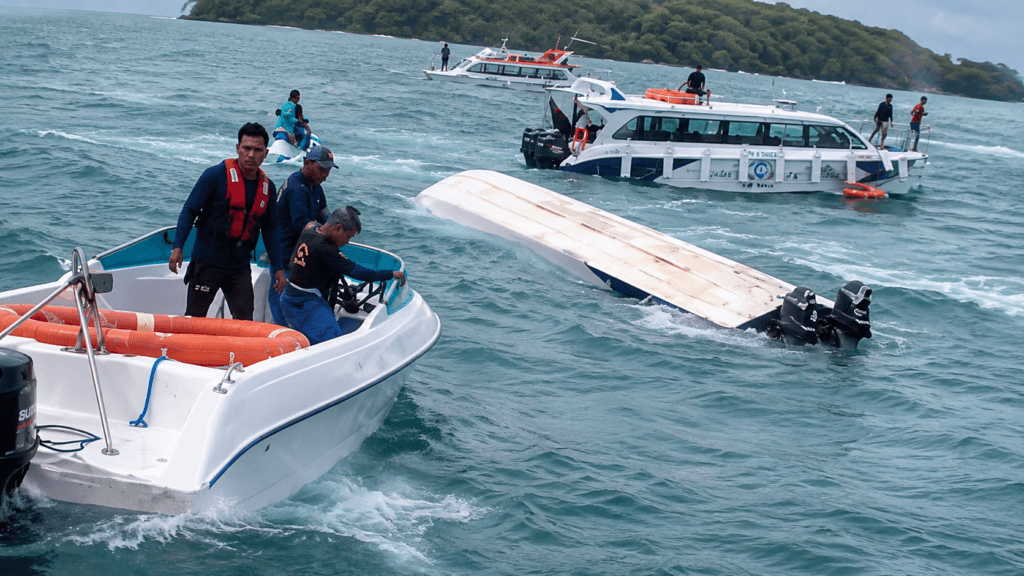
The victims died after a tourist speedboat carrying 36 people capsized near Hon May Rut Ngoai island off Phu Quoc on July 11. Indian and Vietnamese authorities collaborated to complete identification, documentation and repatriation.
Indian victims from the Vietnam boat tragedy arrive at Mumbai airport. Image Credit: ThePrint
Vietnam Boat Tragedy: The bodies of 15 Indians who lost their lives in the Vietnam boat tragedy arrived in Mumbai on Tuesday after being flown in on Vietnam Airlines flight VN979. The victims died in a tourist speedboat accident near Hon May Rut Ngoai Island off Vietnam’s Phu Quoc Island on July 11, when the vessel capsized in rough weather and threw all passengers into the sea.
The tragic incident has left families across India grieving, with the victims now being transported from Mumbai to their respective hometowns in coordination with state authorities. The dead included tourists from Tamil Nadu, Andhra Pradesh and Kerala, while one critically injured Indian survivor continues to receive treatment in Ho Chi Minh City. Yeh incident kaafi heartbreaking hai because it involves not just a travel accident, but the loss of Indian lives far from home, leaving families to deal with sudden and devastating grief.
What Happened in Vietnam
According to the information shared by Vietnamese authorities, the tourist speedboat was carrying 36 people in total — 32 Indian tourists and four Vietnamese crew members — when it capsized near Hon May Rut Ngoai Island. The boat, operated by Ocean Pearl Island Company, was travelling from Hon May Rut Islet to An Thoi Port when it encountered rough weather and overturned. This story was also covered by NDTV.
Nearby tourist boats responded quickly and rushed to the scene within minutes. Rescue teams later brought all passengers ashore. Of the 36 people on board, 21 survived and 15 tourists died. The speed and scale of the response likely saved more lives, but the storm and sudden capsizing made the accident extremely difficult to manage.
This type of tragedy is especially painful because it happened during what should have been a leisure trip. Tourists travel expecting rest, sightseeing and a memorable experience. Instead, the journey ended in disaster within minutes. When a boat overturns in rough waters, the window for escape is often very small, which is why marine safety and emergency response become so crucial.
Repatriation and Coordination
After the accident, Indian authorities worked closely with Vietnamese officials to complete the identification, documentation and consular procedures for the victims. That process is often one of the most difficult parts of a foreign tragedy because it involves matching identities, coordinating paperwork and ensuring that the bodies are transferred respectfully and legally.
The Indian Embassy and the Consulate General in Ho Chi Minh City also thanked several Vietnamese agencies, including the Phu Quoc Special Economic Zone authority, An Giang Province, the Department of Foreign Affairs in Ho Chi Minh City and Vietnam’s Ministry of Foreign Affairs, for their support after the tragedy. Such cooperation matters because repatriation is not only a logistical task but also a humanitarian one.
The bodies were brought to Mumbai first because it serves as a major international entry point for repatriation flights and onwards transfers. From there, the remains will be sent to Chennai, Hyderabad, Thiruvananthapuram and Coimbatore, where family members are waiting for the final rites. For the families, this is the last step in a painful journey that began with an overseas accident and ended in the return of their loved ones home.
Who the Victims Were
The fatalities included 10 victims from Tamil Nadu, three from Andhra Pradesh and two from Kerala. That regional spread shows how widely the tragedy has affected Indian families across the southern states. The news has likely struck a particularly deep chord in those communities because the victims were ordinary tourists, not public figures or officials.
The Embassy also provided an update on the lone critically injured Indian survivor, saying the patient had undergone a medical procedure and was then shifted from Phu Quoc to a hospital in Ho Chi Minh City for advanced treatment. That is an important piece of information because it suggests the medical response is ongoing and that at least one survivor remains in serious condition.
Even though 21 people survived, the loss of 15 lives in one incident is severe. For the families, every detail of the repatriation matters. For officials, every step of the identification and transportation process must be handled with care. Yahan emotional impact bahut zyada hai because the victims are returning home not as travellers, but as the dead.
Background and Context
Phu Quoc is a popular tourist destination in Vietnam, and boat trips are a common part of the visitor experience there. But like many marine tourism hubs, it is also vulnerable to sudden weather changes. Rough seas, unexpected squalls and poor visibility can turn a routine excursion into a dangerous emergency within minutes.
The accident highlights how quickly conditions can change at sea. A boat that appears stable in one moment can become unstable in rough weather the next. That is why marine safety protocols, weather checks and emergency preparedness are critical in island tourism areas. In this case, the speedboat capsized while transporting tourists from one point to another, which suggests the incident happened during a normal transfer rather than an extreme expedition.
For India, the tragedy also adds to the growing conversation around the safety of citizens travelling abroad. Many Indians now travel internationally for tourism, and such incidents remind families that overseas travel comes with risks that are not always visible at the planning stage. The responsibility of foreign authorities, local operators and Indian missions becomes very important when accidents happen.
Timeline
July 11: A tourist speedboat carrying 36 people capsizes near Hon May Rut Ngoai Island off Phu Quoc.
Soon after the accident: Nearby boats and rescue teams reach the site and bring passengers ashore.
After the incident: 21 people survive and 15 Indian tourists lose their lives.
Following days: Indian and Vietnamese authorities complete identification and consular formalities.
July 13: The Indian Embassy says the bodies have departed from Ho Chi Minh City on Vietnam Airlines flight VN979.
Tuesday: The bodies of the 15 Indians arrive in Mumbai.
Next phase: Bodies are sent to Chennai, Hyderabad, Thiruvananthapuram and Coimbatore for final rites.
Why This Matters
This matters because it is not just a transport update; it is a human tragedy involving 15 Indian citizens who died abroad. Repatriation of bodies is one of the most sensitive responsibilities in such cases, and the speed at which the process is completed often reflects the seriousness of government and diplomatic support. Yeh issue kaafi important hai because families need closure, and that closure begins only when the bodies return home with dignity.
It also matters because the incident raises awareness about tourist safety on water. Boat travel is often seen as routine, but accidents like this show how dangerous it can become when conditions change quickly. For Indian travellers, this is a reminder to pay close attention to safety briefings, operator reliability and weather warnings.
There is also a broader policy angle. When tragedies happen involving citizens abroad, embassies and state governments must coordinate fast. That coordination can reduce confusion, support families and ensure that legal and logistical issues do not add to the suffering. In this case, the system appears to have moved quickly, which is one positive aspect in an otherwise heartbreaking story.
India Angle
For Indian readers, the story is deeply personal because the victims were from our own states — mostly from the south — and the bodies are now coming home through Mumbai. In Hinglish, seedhi baat yeh hai: jab Indian families ka apna kisi foreign tragedy mein involved hota hai, toh emotional pain aur bhi bada ho jaata hai. The return of the bodies is the beginning of the final farewell, not the end of the grief.
The case also matters because Indian tourism abroad has grown sharply in recent years. More families are travelling overseas, which means safety standards and emergency response abroad matter more than ever. This incident will likely make travellers and travel planners think harder about boating activities, local weather conditions and insurance support.
Mumbai’s role as the arrival point is also significant. As one of India’s main international gateways, the city often handles the first domestic landing in repatriation cases. From there, airlines, hospitals, state governments and district officials usually coordinate the final journey home. That makes the city an important part of the humanitarian chain after overseas disasters.
Analysis
My opinion is that the most important aspect here is the balance between grief and process. Families need the return of the bodies, but the public also needs to know that authorities are handling the crisis properly. The Indian mission’s cooperation with Vietnamese agencies appears to have helped move the case forward in a dignified way. That kind of response matters because in tragedies abroad, delays can make suffering worse.
I also think this story highlights the vulnerability of tourists during water-based excursions. Many travellers assume such trips are safe because they are organised and routine. But boats are subject to weather, operator judgment and sea conditions that can change quickly. That is why better awareness and stricter safety measures are always worth emphasizing.
From an editorial perspective, the strongest angle is not sensationalism but the human cost. The story is about 15 people who never came home alive, families waiting at airports and a survivor still fighting for recovery. That is what makes it newsworthy and emotionally powerful.
What Next
The next step is the final handover of the bodies to the respective state authorities and local families. Once they arrive in Chennai, Hyderabad, Thiruvananthapuram and Coimbatore, funeral and final rite arrangements will begin. Those ceremonies will likely be private, but they will carry immense emotional weight for the communities involved.
Authorities may also continue investigating the cause of the accident, including weather conditions, operational decisions and safety compliance by the boat operator. Depending on the findings, there could be further questions about whether the excursion should have gone ahead at all. Such inquiries are important because they can help prevent similar tragedies in the future.
For the injured survivor, the focus will remain on advanced medical treatment in Ho Chi Minh City. Any updates on recovery will be closely watched by family members and officials alike. For everyone else, the immediate priority is closure, dignity and the safe return home of the victims.
Conclusion
The arrival of the bodies of 15 Indians in Mumbai brings a painful chapter of the Vietnam boat tragedy to Indian soil, where grieving families are now preparing for final rites. The accident near Phu Quoc on July 11 killed 15 tourists and left many others shaken, while one critically injured survivor continues treatment in Vietnam. The coordinated repatriation effort by Indian and Vietnamese authorities has helped ensure the victims are returned with dignity, but the grief remains enormous. For families in Tamil Nadu, Andhra Pradesh and Kerala, this is a sorrowful homecoming that no one wanted.
Written By A. Jack