The Delhi Lakshmi Yojana aims to provide economic empowerment to the “sisters of Delhi”, with an online portal now allowing women to register for the monthly ₹2,500 financial assistance.
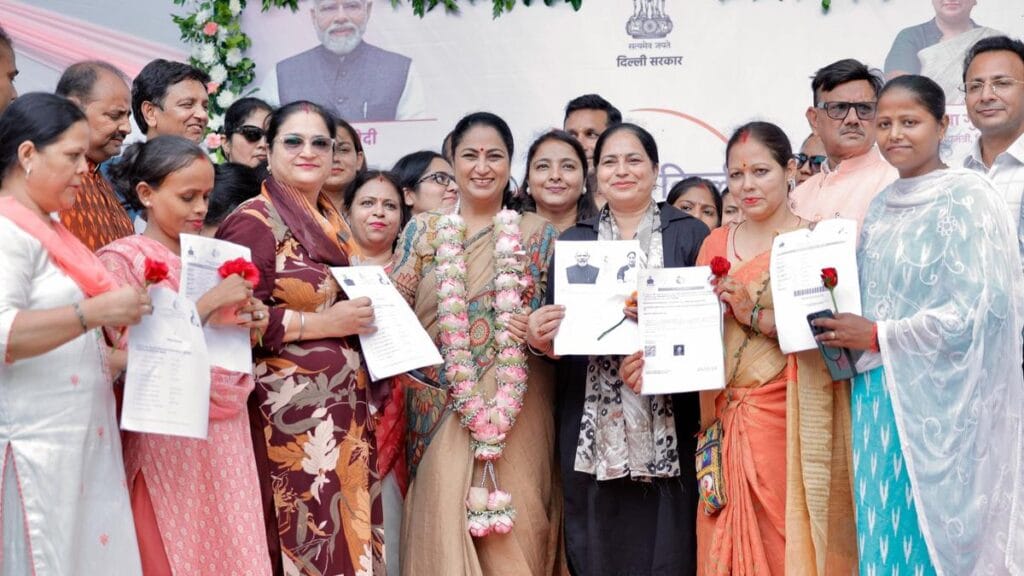
Delhi Chief Minister Rekha Gupta launches the Delhi Lakshmi Yojna portal. Image Credit: The Hindu
In a major push for women’s economic empowerment, Delhi Chief Minister Rekha Gupta launched the online portal for the Delhi Lakshmi Yojna on Saturday, August 1, 2026. Under the scheme, eligible women in the national capital will receive financial assistance of ₹2,500 per month, with the government allocating a total budget of ₹5,100 crore for its implementation.
Addressing the public at the launch event, CM Gupta said, “Delhi Lakshmi Yojana, which is a scheme that will provide economic empowerment to the sisters of Delhi. The government has allocated a budget of ₹5,100 crore for this. The portal has started from today, and registration has also begun.” The move positions the scheme as one of the flagship welfare initiatives of the current Delhi government, targeting households where women seek greater financial independence.
What the Delhi Lakshmi Yojna offers
The core benefit of the Delhi Lakshmi Yojna is straightforward: a monthly cash transfer of ₹2,500 to eligible women residents of Delhi. The amount is intended to help women meet household expenses, pursue skill development, or save for future needs, thereby improving their economic agency within the family. This story was also covered by TheHindu.
The scheme is being rolled out through a dedicated online portal, which allows women to register, upload documents and track the status of their applications. The government has emphasised that the process is designed to be simple and transparent, with minimal paperwork and digital verification to reduce delays and corruption.
While the detailed eligibility criteria are expected to be specified on the portal, such schemes typically consider factors such as:
Age of the applicant
Residence proof in Delhi
Income ceiling or socio-economic category
Exclusion of beneficiaries of certain other government schemes
The ₹5,100 crore budget suggests that the scheme is intended to run for multiple years, covering a large number of women across the capital.
Why and how the scheme was launched
The launch of the Delhi Lakshmi Yojna portal reflects the government’s focus on women-centric welfare as a key political and social priority. By providing direct cash assistance, the administration aims to:
Reduce financial dependence of women on male family members
Improve household decision-making power for women
Provide a cushion against inflation and rising living costs
Encourage women to invest in education, health or small enterprises
The decision to make the scheme fully online from the start is also significant. It aligns with the broader push for digital governance, where beneficiaries can apply from home, track their status and receive payments directly into their bank accounts. This reduces the need for middlemen and ensures that funds reach the intended recipients without leakage.
Yeh issue kaafi important hai because direct benefit transfer schemes have shown better outcomes in terms of transparency and reach compared to older, paper-based systems.
Statements from CM and officials
Delhi Chief Minister Rekha Gupta’s statement at the launch made it clear that the scheme is positioned as a tool for economic empowerment, not just welfare. By referring to beneficiaries as the “sisters of Delhi”, she framed the initiative as a rights-based entitlement rather than a discretionary handout.
“The government has allocated a budget of ₹5,100 crore for this. The portal has started from today, and registration has also begun,” Ms Gupta said, addressing the public. Her emphasis on the budget figure signals that the government is committed to funding the scheme over the medium term, even if fiscal pressures arise.
Officials from the Women and Child Development Department and the Finance Department are expected to issue detailed guidelines on eligibility, documentation and payment cycles in the coming days. The IT department is likely to manage the portal’s technical infrastructure, ensuring that it can handle high traffic during peak registration periods.
Background and context
Cash transfer schemes for women are not new in India. Several states have launched similar programmes, providing monthly or annual financial assistance to women from low-income households, single women, or specific socio-economic categories.
In Delhi, previous governments have also introduced women-focused welfare measures, including transport concessions, education scholarships and health initiatives. The Delhi Lakshmi Yojna builds on that legacy but shifts the focus to direct income support, which is increasingly seen as a more flexible and empowering form of assistance.
The timing of the launch is also politically significant. With the scheme announced and the portal opened in August 2026, the government is likely aiming to build a visible welfare record ahead of future electoral cycles. If implemented effectively, it could become a key differentiator in how the ruling dispensation is perceived by women voters.
Timeline
Earlier in 2026: The Delhi government finalises the design and budget for the women’s cash transfer scheme.
August 1, 2026 (Saturday): CM Rekha Gupta launches Delhi Lakshmi Yojna portal; registration begins.
Coming weeks: Detailed eligibility criteria and documentation guidelines expected to be published.
Next 1–3 months: First batch of applications processed; initial payments likely to begin.
Ongoing: Monitoring of scheme performance, grievances and potential expansion.
Also Read: Delhi Plans ‘Property Aadhaar Card’ For Every Land Parcel Under New Land Records Bill
Why This Matters
This matters because direct cash support to women can have a multiplier effect on household well-being. Studies have shown that when women control financial resources, they are more likely to spend on children’s education, nutrition and health, which improves long-term outcomes for families.
It also matters because economic empowerment is a key determinant of gender equality. When women have their own income, even a modest one, it can change power dynamics within the home and increase their participation in decision-making.
For Delhi’s economy, the scheme injects additional liquidity into households, which can boost local consumption. In simple Hinglish, jab mahilaon ke haath mein paisa aata hai, toh poora ghar benefit karta hai.
India angle
For Indian readers, this story is directly relevant because women’s financial empowerment is a national priority. From central schemes like Beti Bachao Beti Padhao to state-level cash transfers, there is a growing recognition that supporting women economically is essential for inclusive growth.
The India angle also includes the fiscal dimension. A ₹5,100 crore allocation is a significant commitment for a city-state like Delhi. It signals that the government is willing to prioritise women’s welfare even if it means tighter budgets elsewhere. Other states may watch Delhi’s experience to decide whether to launch similar schemes.
There is also the digital governance angle. As more welfare programmes move online, the challenge is ensuring that women with limited digital literacy can still access benefits. If Delhi can make the Lakshmi Yojna portal user-friendly and provide offline support where needed, it could set a benchmark for other states.
Analysis
My opinion is that the scheme’s success will depend less on the announcement and more on the implementation. Key questions include: How quickly will payments start after registration? How will the government handle errors or rejections? Will there be a grievance redressal mechanism that actually works?
I also think the political messaging is clear. By launching the portal with much publicity, the government is signalling that it is pro-women and pro-poor. But if delays, technical glitches or exclusion errors occur, the narrative could quickly shift.
What Next
The immediate next step will be the rush of registrations on the portal. Women across Delhi will seek to apply, and the system’s capacity to handle high traffic will be tested. The government may need to run awareness campaigns to inform women about eligibility, documents required and how to apply.
Once applications start coming in, the verification process will begin. This may involve cross-checking residence proofs, income data and other criteria. If the process is smooth, the first payments could start within a few months. If there are bottlenecks, it could lead to public frustration.
Longer term, the scheme’s impact will be measured by how many women are covered, how regularly payments are made and whether there are visible improvements in household well-being. If successful, it could be expanded or replicated in other states.
Conclusion
The launch of the Delhi Lakshmi Yojna portal marks a significant step in the capital’s push for women’s economic empowerment, with a ₹2,500 monthly aid and a ₹5,100 crore budget signalling strong political commitment. As registration begins, the focus will shift to how efficiently the scheme is implemented and how many women are able to benefit from it.
For Delhi, the Lakshmi Yojna is both a welfare measure and a statement of intent. If executed well, it can improve the lives of thousands of women and set an example for other states. The real test will be in the details: timely payments, minimal harassment and genuine empowerment on the ground.
Written By A. Jack