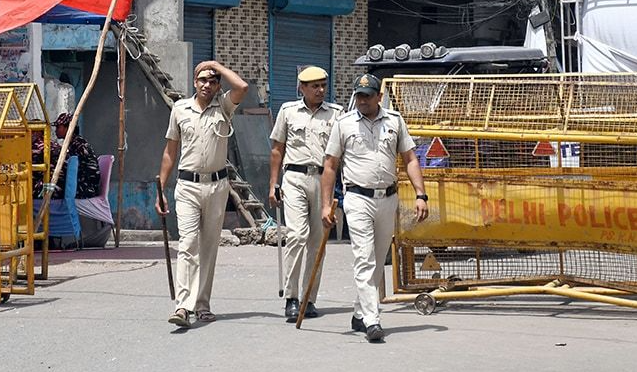
Delhi is on heightened security alert after intelligence inputs suggested a possible terror threat, prompting police and security agencies to intensify checks across sensitive locations in the capital. Security has reportedly been stepped up around the BJP headquarters, government buildings, crowded places and key transport hubs in central Delhi.
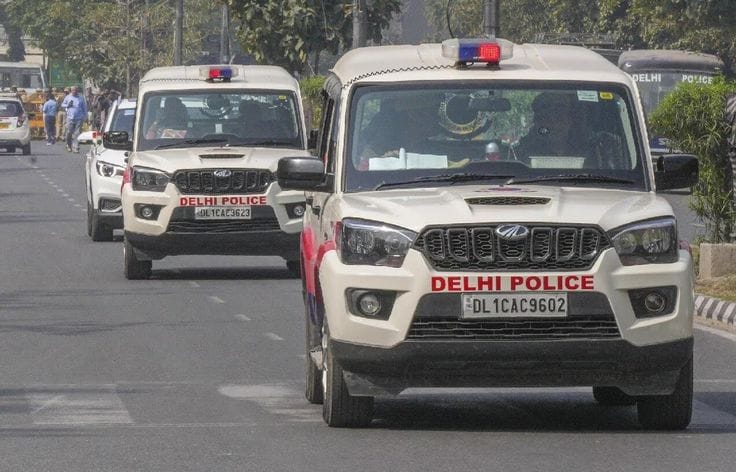
Security personnel maintain a strict vigil in Delhi after intelligence inputs pointed to a possible terror threat across sensitive locations.
Delhi on High Alerts
The national capital has been placed under a strong security umbrella after agencies received intelligence inputs warning of a possible terror threat, according to reports from Saturday. Delhi Police, along with other security agencies, has increased patrolling, vehicle checks, and anti-sabotage measures at important and crowded locations across the city.
What Happened
According to sources, security has been tightened at the Bharatiya Janata Party headquarters on Deen Dayal Upadhyaya Marg, nearby government establishments, and other sensitive zones in central Delhi. Additional armed personnel have been deployed, barricades have been placed, and vehicle checks have been intensified in key areas. NDTV has covered the full story.
The alert reportedly comes after intelligence inputs suggested possible attempts to target prominent offices and crowded areas using suicide attacks, vehicle-borne improvised explosive devices, shootings, and coordinated strikes. Anti-sabotage checks are also being carried out at government buildings, political offices, markets, transport hubs, and other public spaces.
In simple terms, Delhi’s security grid has been put into a more cautious mode. Police are not waiting for an incident; they are trying to stop risk before it can move from intelligence to action. Yeh issue kaafi important hai because the capital is not just a city—it is the political center of the country.
Why The Alert Was Raised
The trigger appears to be intelligence inputs pointing to a possible attack threat, though the exact source and nature of the alert have not been publicly disclosed. When such alerts emerge, agencies generally avoid sharing detailed operational information because that can compromise security preparations.
What is clear is that the warning has been treated seriously. Sources said bomb disposal squads, sniffer dog units, and quick reaction teams, including the Delhi Fire Service, have been asked to remain alert. That suggests agencies are not only concerned about crowd safety but also about the possibility of concealed explosive material or suspicious vehicles.
Security has also been strengthened in settlements and areas considered vulnerable from a law-and-order perspective. Local police are carrying out random verification drives and checking suspicious movement, unattended objects, and parked vehicles in sensitive zones. That combination of visible and invisible policing is standard in a high-alert environment.
How Security Has Been Tightened
Delhi Police and supporting agencies have taken a layered approach. First, the visible layer includes barricading, armed deployment, and more intensive vehicle checks at entry and movement points. This is meant to deter any attempt to use public movement as cover.
Second, the technical and tactical layer includes anti-sabotage inspections, dog squads, and bomb disposal teams. These units are trained to respond to concealed threats, unattended luggage, suspicious packages, or evidence of tampering.
Third, there is coordination. District units have been instructed to stay alert and maintain close contact with intelligence agencies and central paramilitary forces. That coordination matters because terror threats usually require fast information-sharing across multiple agencies, not isolated action by one police unit.
Background And Context
Delhi has often been placed under heightened watch during politically sensitive periods, public events, festivals, or after intelligence inputs. Because it houses major government institutions, political offices, foreign missions, and transport hubs, any threat alert immediately becomes a national concern.
The city’s security architecture is built on the understanding that even a limited incident can have wide psychological impact. A disruption near a major political office or market area can affect public movement, economic activity, and public confidence far beyond the immediate site. That is why capital security usually moves quickly from “routine patrol” to “high alert” once an advisory is received.
Historically, Delhi has also seen repeated upgrades in layered security over time: CCTV expansion, more checkpoints, specialized counter-sabotage units, and stronger monitoring of crowded public spaces. In that context, this latest alert is not an isolated action but part of a continuing security posture around the capital.
Timeline
Saturday, May 10, 2026: Intelligence inputs reportedly trigger a high alert in Delhi.
Same day: Security is increased at BJP headquarters, nearby government buildings, and central Delhi locations.
Same day: Anti-sabotage checks begin at government offices, markets, transport hubs, and crowded places.
Same day: Bomb disposal squads, sniffer dog units, and quick reaction teams are put on standby.
Ongoing: District police units coordinate closely with intelligence agencies and paramilitary forces.
This timeline shows that the response has been immediate and citywide rather than limited to one zone.
Also Read: Maharashtra to Challenge Bombay High Court Order in Mira Bhayandar Land Row Over 254.88 Acres
Why This Matters
This matters because Delhi is both a symbolic and functional target in security terms. If there is a credible threat to the capital, it can affect public confidence, traffic, business operations, and the sense of safety among residents and visitors.
It also matters because the reported threat types—suicide attacks, IEDs, shootings, and coordinated strikes—are serious and require a broad response. Even if no attack happens, the presence of a threat forces security agencies to work in preventive mode, which can mean more checks and more scrutiny for citizens. For the average person, that may mean longer travel times or more vehicle stops, but it is meant to reduce the risk of something far worse. In a city like Delhi, safety first is not just a slogan; it is a daily security necessity.
India Angle
For Indian readers, this is not just a Delhi story. The national capital is the political heart of the country, so any security alert here becomes a matter of national attention. Government offices, party headquarters, embassies, and major transport nodes all sit within the same urban security framework.
The local angle is also practical. Delhi residents, office workers, and commuters may notice increased frisking, barricades, and longer checks at strategic points. That can be inconvenient, but it is also part of how a large Indian metropolis responds to a threat advisory. The balance is always between normal life and emergency readiness. Delhi ki daily life par iska effect dikhna normal hai, but the larger goal is to keep the city stable and secure.
Analysis
My reading is that authorities are trying to avoid complacency. In security matters, waiting for certainty can be dangerous, especially when the possible threat includes vehicles, crowded areas, and coordinated strikes. The current response suggests a “better safe than sorry” approach, which is usually the correct one for a city like Delhi. At the same time, careful communication is necessary so that public fear does not outpace actual risk. That is why agencies often keep details limited while making visible security changes.
What Next
The next steps will likely include sustained surveillance, more vehicle checks, and continued coordination between Delhi Police, intelligence units, and central forces. If the alert level remains high, additional deployments may be made in sensitive areas and public spaces.
Security checks may also continue around political offices, transport terminals, and crowded markets until agencies feel the risk has reduced. Residents can expect more police presence and possibly more verification drives over the coming days. If intelligence inputs evolve, the security posture may tighten further; if the threat is assessed as lower, some measures may ease gradually.
Conclusion
Delhi has been placed on high alert after intelligence inputs pointed to a possible terror threat, prompting security agencies to step up checks across sensitive and crowded locations in the capital. The increased deployment at BJP headquarters, government buildings, markets, and transport hubs shows that authorities are treating the warning seriously.
While such alerts can create inconvenience for daily life, they are meant to reduce the risk of a larger tragedy. For a city as important as Delhi, caution is the first line of defense. The coming days will show whether this alert passes without incident, but for now the message is clear: the capital is under close watch, and the security net has been widened.
Written By A. Jack