Fahim was living under the false identity and working as a POP artisan and was constantly changing places across Maharashtra and Uttar Pradesh to evade arrest, police said. This year, the crime branch revived the case, one of the oldest pending murder cases of Delhi Police.

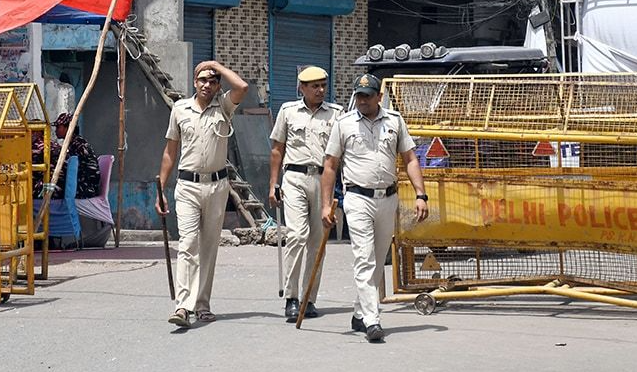
Delhi Police: This image is for illustrative purposes only.
Delhi Police Murder Case: A long-pending murder case from 1997 has finally seen a breakthrough, with the Delhi Police crime branch arresting Mohammad Fahim alias Ali Bhai after nearly 29 years on the run. Fahim was wanted in connection with the killing of 58-year-old Sharif Hasan Khan, whose body was recovered from a room at TC Camp in Raghubir Nagar on March 14, 1997. Police said the accused was arrested from Thakurganj in Lucknow on July 3 after months of fresh investigation and technical surveillance.
The case is a reminder that even decades-old crimes can still be pursued when investigators revisit old evidence with renewed focus. In this instance, police rebuilt the case from scratch because the original crime predated modern digital records, making the task far more difficult. Yet the arrest shows that time alone does not always erase accountability. Yeh arrest kaafi important hai because it shows how old cases can still be solved with persistence and intelligence gathering.
What Happened
According to police, Sharif Hasan Khan was killed after a dispute with Fahim over stolen money. Khan worked at a clothing shop in Rajouri Garden and had come to Delhi from Faizabad district, now Ayodhya, in Uttar Pradesh. Fahim, who had come to Delhi in search of work, became acquainted with him and allegedly committed the murder on March 13, 1997. This story is also covered by NDTV.
Police say the altercation turned violent after Fahim stole money from the victim. During the fight, he allegedly attacked Khan repeatedly with an iron rod and later strangled him with a rope to make sure he died. After that, he reportedly hid the body inside a wooden bed box and fled the city.
The next day, March 14, 1997, police recovered the body from TC Camp in Raghubir Nagar. The case quickly became a murder investigation, but Fahim managed to evade arrest. Later in 1997, he was declared a proclaimed offender by the court. From that point onwards, he remained at large for nearly three decades.
The recent arrest happened only after the crime branch reassigned the case to its central range for reinvestigation. Officers re-examined the old file despite lacking recent photographs, dependable identification records and modern digital evidence. That is a major challenge in a case this old, and it explains why the investigation took time to rebuild.
How Police Traced Him
Police said the breakthrough came after fresh intelligence was developed in Fahim’s native village. Investigators received information that he was still alive and occasionally visited the area. That led to continuous surveillance, which eventually traced his movements to Lucknow.
Once the team narrowed down the location, officers carried out a planned operation in Thakurganj and arrested him on July 3. The arrest shows that old-fashioned field intelligence still matters, even in an era of digital policing. Sometimes the key to solving a case is not only databases and surveillance tech but also ground-level information from people who know the suspect’s habits and movements.
During interrogation, Fahim reportedly confessed to the killing and admitted that the murder was linked to a monetary dispute. He also told police that after fleeing Delhi, he moved to Nagpur and spent the next 29 years shifting between Maharashtra and Uttar Pradesh, including Mumbai, Lucknow and Nagpur. To avoid detection, he allegedly used a false identity and lived as Ali Bhai.
Police further said he worked as a Plaster of Paris artisan during his years in hiding. That detail is important because it shows how a fugitive can blend into ordinary labour networks, change locations frequently and remain out of sight for long periods. For investigators, this kind of mobility makes tracking extremely difficult.
Why the Case Took So Long
There are several reasons why a case like this can remain unresolved for so long. First, the crime happened in 1997, before the era of extensive digital records, facial recognition systems and widespread databanks. Second, the accused kept changing places and used a fake identity, which made routine verification much harder. Third, decades-old cases often lose momentum when witnesses grow older, records get scattered and leads become thin.
That does not mean the case was forgotten forever. Instead, it sat among Delhi Police’s older pending cases until the crime branch took it up again. The recent focus on old unsolved or long-pending crimes reflects a wider trend in policing: even cases that appear dormant can be reopened if new intelligence becomes available.
There is also a human factor. Families of victims in such cases often wait for years for some form of closure. When an arrest finally happens after decades, it does not erase the pain, but it does offer a measure of justice. That emotional dimension is often overlooked in crime reporting, but it is very real.
Background and Context
The murder dates back to a period when Delhi’s crime investigations relied far more on witness statements, physical records and manual tracking than on digital evidence. In that era, once a suspect fled and changed identity, the odds of immediate arrest dropped sharply. That is why proclaimed offender cases from the 1990s often remained open for years.
Fahim’s case is also notable because he reportedly moved across several major cities, including Mumbai and Nagpur. Large urban centres can make fugitives harder to trace because they offer anonymity, casual labour opportunities and enough population density to disappear into. Working as a POP artisan would have allowed him to stay mobile while avoiding deeper scrutiny.
The reactivation of such a case also shows how crime branches use a mix of local intelligence and technical methods. Even when there are no recent images or strong documentary clues, officers can still build a new lead chain from village contacts, movement patterns and location-based surveillance. In this case, that strategy appears to have worked.
Timeline
March 13, 1997: Fahim allegedly kills Sharif Hasan Khan in a dispute over stolen money.
March 14, 1997: Khan’s body is recovered from TC Camp, Raghubir Nagar.
Later in 1997: Fahim is declared a proclaimed offender.
Following years: He allegedly moves between Maharashtra and Uttar Pradesh under a false identity.
Recent months in 2026: Delhi Police crime branch reopens the case for reinvestigation.
July 3, 2026: Fahim is arrested in Thakurganj, Lucknow.
After arrest: He allegedly confesses to the murder during interrogation.
Also Read: Delhi Man Allegedly Kills Wife Over Phone Call Suspicion and Dies by Suicide After Consuming Poison
Why This Matters
This matters because it shows that serious crimes do not necessarily fade with time. For the justice system, that is an important message. Yeh issue kaafi important hai because if old murder cases can be solved, it strengthens the idea that hiding for years does not guarantee safety from the law.
It also matters for victims’ families who may have waited decades for answers. An arrest may not bring back the lost person, but it can provide closure and accountability. In a country like India, where long-pending cases are common, such breakthroughs matter emotionally and institutionally.
For police work, the arrest is a reminder that revisiting old files can still produce results. Cold-case style policing is slowly gaining more importance, and this case is a good example of why that approach can be valuable.
India Angle
For Indian readers, this story connects to a familiar reality: many serious cases in India stay unresolved for years because suspects move cities, change names and work in informal sectors. In Hinglish, seedhi baat yeh hai — agar koi aadmi apni identity badal kar alag-alag shehron mein ghul-mil jaye, toh usse pakadna bahut mushkil ho jaata hai. That is why this arrest stands out.
It also reflects the importance of local intelligence in India’s policing system. In large, crowded cities like Mumbai, Lucknow and Nagpur, a person can hide in plain sight if no one connects the dots. This case shows how village-level information can become the key to a big-city arrest.
There is also a broader public trust angle. When people hear that a 1997 murder case has been solved in 2026, it sends a strong message that the system can still act on old injustices. That matters in a democracy where citizens want to see continuity in accountability.
Analysis
My opinion is that the most striking part of this case is not just the murder itself but the persistence required to solve it after almost 29 years. Old cases often disappear into archives, but this one was brought back to life through fresh work. That is a good sign for policing credibility.
I also think the use of a false identity and repeated relocation illustrates a common weakness in fugitive tracking. Without updated records or continuous monitoring, suspects can remain hidden for years. The fact that the accused worked as a POP artisan while on the run shows how ordinary jobs can help fugitives blend into the background. That does not mean the system failed completely, but it does show where enforcement can improve.
From an editorial perspective, this case also has strong human-interest value. Readers respond to stories where justice catches up after a long delay. There is a natural sense of closure in such reporting, but it is important not to oversell it. The arrest is a major breakthrough, but the legal process still has to follow.
What Next
The next step will be formal court proceedings, where the accused is likely to face charges in the decades-old murder case. Police may also try to reconstruct the original sequence of events with whatever documentary and witness evidence is still available. Depending on the surviving record, the prosecution may rely heavily on the confession, old case files and any remaining witness testimony.
Investigators may also look into whether anyone helped him remain hidden for so long or whether he had support networks in the cities where he lived. That could become relevant if the case expands beyond the original murder charge.
For the family of the victim, the arrest may offer some long-awaited closure, even though it cannot undo the loss. For police, the case may become a model for how old unsolved crimes can be revived with the right mix of fieldwork and persistence.
Conclusion
Delhi Police’s arrest of Mohammad Fahim after 29 years brings a long-dormant 1997 murder case back into public view and underlines the value of persistent policing. Fahim is accused of killing co-worker Sharif Hasan Khan in west Delhi and then escaping under a false identity while moving across several cities. His arrest in Lucknow shows that even decades-old cases can still be solved when investigators return to the basics: local intelligence, surveillance and patience. In the end, this is not just a crime story — it is a reminder that justice can be delayed, but not always defeated.
Written By A. Jack