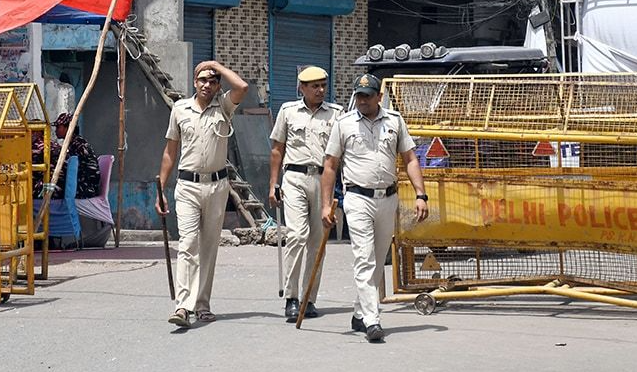
Thousands of truck, cab and autorickshaw drivers went on a three-day strike across Delhi-NCR on Thursday, but the shutdown was only partial on the ground. The protest is called to protest against rising fuel costs, higher Environment Compensation Charge (ECC) concerns, fare stagnation and what unions call anti-transport policies.
Rows of parked trucks and autorickshaws near Delhi transport hubs during the three-day strike as drivers demand relief on fares, fuel costs, and ECC-related burdens.
Delhi’s transport sector saw a tense but uneven strike on Thursday as truckers, cab drivers, and autorickshaw operators began a three-day protest against what they describe as anti-transport policies in Delhi-NCR. The agitation, called by the All-India Motor Transport Congress, brought pockets of disruption across the capital, even though many vehicles continued to move and the shutdown was not as complete as organizers had projected.
At locations such as Ramlila Ground, Anand Vihar, and Kashmere Gate Bus Terminus, rows of stationary vehicles stood as a visible sign of protest under the harsh May heat. At the Apsara border, transport workers gathered with placards and urged fellow drivers to support the movement. The strike may not have fully paralyzed the city, but it clearly signaled deep frustration within the transport community. Yeh issue kaafi important hai because it affects not just drivers but also daily commuters, goods movement, and the broader cost of doing business in the capital.
Why the Strike Started
The core grievances driving the strike are rising fuel prices, the Environment Compensation Charge, fare stagnation, and restrictions that transporters say are hurting livelihoods. The AIMTC says transport workers are under financial pressure from a mix of costs that keep rising while earnings remain stuck. According to the union, small operators and independent drivers are being squeezed by fuel expenses, ECC hikes, and policy decisions that they believe do not reflect ground realities. NDTV has covered the full story.
Harish Sabherwal, president of the AIMTC, said the strike is not aimed at ordinary residents. He framed it as a fight against policies that are “suffocating the transport sector,” adding that small operators and drivers are slipping into financial distress. He specifically demanded a rollback of what he called indiscriminate ECC increases and argued that BS-VI vehicles should be exempted, while empty trucks and vehicles carrying essential commodities should not be burdened.
That is a crucial part of the protest message. The unions are not asking for a symbolic gesture; they want concrete policy changes. In simple words, their argument is this: costs are going up, rules are getting tighter, but income is not keeping pace. For a sector that works on thin margins, that is a serious pressure point.
What Was Seen on the Ground
The strike was not a total shutdown, but it was visible in key transport nodes and border points. At Ramlila Ground and Anand Vihar, parked trucks and autorickshaws became the visual face of the protest. At Kashmere Gate Bus Terminus, similar scenes played out, with stationary vehicles lined up under the sun as drivers waited, discussed, and signaled their discontent.
At the Apsara border near Uttar Pradesh, transport workers waved placards and encouraged passing vehicles to join the protest. The idea was to build momentum over the three-day period and keep pressure on the administration until Saturday. The AIMTC claimed “massive support” across Delhi-NCR and pointed to a sharp fall in truck entries into Delhi, saying only 100 to 200 trucks came in on the first day compared with the usual 70,000. Even if participation was partial, the symbolic value of the protest was clear: transporters wanted the government to notice.
The general mood also showed how financially strained many drivers feel. Several cab and auto drivers spoke about long working hours, high maintenance costs, heavy penalties, and the commissions they pay to aggregators. Their complaints reveal that this is not just a policy dispute; it is a livelihood crisis for many families.
Drivers’ Voices
The most powerful part of the protest was the human side. Rajesh Kumar, a taxi driver who joined the protest at Anand Vihar, said daily costs are rising while passengers still bargain hard on fares. He argued that the government must revise fares immediately or drivers will not survive. That sentiment was echoed by several others who said they are trying to manage fuel, maintenance, and family expenses on incomes that no longer match the cost of living.
Ashok, an elderly taxi driver, described how fares have remained fixed since 2013 while fuel prices, traffic penalties, and aggregator commissions have climbed sharply. He said many drivers work 14 to 18 hours a day with no weekly off, no social security, and very little left after expenses. Rohit, an autorickshaw operator, said the strike is also about waiting for a meaningful meeting with the Lieutenant Governor and the implementation of court directions. Another driver, Suresh Yadav, broke down while saying they are not asking for charity, only fair fares that match today’s reality.
These statements matter because they show the strike is not just an industrial protest. It is a cry of economic exhaustion. The emotional tone from the ground makes it clear that many drivers feel trapped between rising costs and a system that has not adjusted fast enough. In Hinglish, seedhi baat yeh hai: drivers ka burden badh raha hai, lekin unki earning wahi purani hai.
ECC and Pollution Rules
One of the most controversial parts of the protest is the Environment Compensation Charge. Transporters allege that ECC collections crossed Rs 1,500 crore in 2024, but the money has not been transparently used for pollution control and welfare as intended. They argue that the charge has effectively become another cost burden rather than an environmental corrective measure.
The strike also opposes the impending ban on BS-IV vehicles from November 2026 and other curbs announced by the Commission for Air Quality Management. Transporters say these measures ignore practical realities and threaten livelihoods without producing a matching improvement in air quality. The point here is not that pollution control is unimportant. Rather, the argument is that policy design must be realistic, phased, and fair to the people who keep the city moving.
Former Delhi Transport Department official and transport expert Anil Chhikara also weighed in, saying BS4 trucks are not extremely dirty and should not be scrapped suddenly because that hurts transporters. He suggested that instead of outright bans, authorities should consider proper low-speed norms. His comment adds a technical perspective to a debate that is often emotionally charged. Policy, after all, should reduce pollution without breaking the transport ecosystem.
Also Read: Stalker Throws Acid on 21-Year-Old Woman Over Her Relationship With Another Man
Background
Delhi’s transport sector has long been caught between pollution rules, fare disputes, and the economics of survival. Drivers of trucks, taxis, and autorickshaws operate in a highly regulated environment where costs can change quickly but fares often lag behind. This creates recurring tension between transporters and authorities.
The current strike is part of a broader pattern. Transport unions across India have repeatedly raised similar complaints about fuel taxes, fare revisions, aggregator commissions, and compliance costs. In metro regions like Delhi-NCR, the pressure is sharper because traffic congestion, fuel consumption, and regulatory oversight are all heavier than in smaller cities. When rules tighten without a compensating income increase, strikes become the outlet.
Timeline
Before Thursday: AIMTC announces a three-day strike from Thursday to Saturday.
Thursday morning: Parking of trucks, cabs, and autorickshaws is seen at Ramlila Ground, Anand Vihar, and Kashmere Gate.
Thursday afternoon: Transport workers gather at the Apsara border with placards and calls for wider participation.
Same day: AIMTC leaders demand rollback of ECC hikes and relief for BS-VI and essential-commodity carriers.
During the strike: A meeting with Delhi Chief Minister Rekha Gupta takes place, but the union says it does not fully resolve the issue.
Next days: The strike is expected to continue until Saturday unless there is a breakthrough.
Why This Matters
This matters because transport is the backbone of a city like Delhi. If trucks slow down, supply chains feel it. If cabs and autos are disrupted, commuters feel it. Even a partial strike can affect daily routines, travel costs, and the movement of goods. It also matters because the protest reflects a real livelihood crisis for thousands of drivers who are often left out of policy debates.
The situation is also important from a governance perspective. Cities can’t just impose environmental and regulatory rules without ensuring that those rules are practical and fair. If drivers believe that policy is hurting them without delivering visible benefits, resentment builds quickly. This matter is important because it sits at the intersection of public policy, environmental action, and everyday survival.
India Angle
For Indian readers, this strike has strong wider relevance because it is not only a Delhi story. Transport unions across India are watching how the capital handles fuel, fare, and ECC issues. If the government offers concessions or a new framework, it could influence similar debates in other cities.
The India angle is also about how urban India manages pollution without crushing informal workers. Millions of people depend on transport jobs, many without social security or stable pay. When policy changes are made, they need to reflect ground realities in Indian cities, not just paperwork and court directions. In Hinglish, yeh sirf Delhi ke truckers ka mamla nahi hai — yeh poore desh ke drivers aur workers ki tension ko show karta hai.
Analysis
My take is that the protest highlights a familiar gap in urban governance: policy often moves faster than affordability. Environmental restrictions may be necessary, but if they are not paired with transitional support, fare adjustments, or clearer compensation mechanisms, they create resistance. The partial shutdown also tells us something important: the sector is angry, but it is still fragmented. That may limit immediate impact, yet it does not reduce the seriousness of the grievances. If the administration wants stability, it will need to negotiate, not just regulate.
What Next
The next step depends on whether talks between the union and the government produce any concrete assurances. If the issues around ECC, fare revision, and vehicle restrictions are not addressed, the strike could continue to create disruption through Saturday or even spark a larger protest later.
Transporters will likely keep pushing for rollback or exemption demands, especially for BS-VI vehicles and essential goods carriers. Authorities, on the other hand, will have to balance pollution policy, public convenience, and labor unrest. A partial compromise is possible, but only if both sides see some political and economic value in stepping back. For commuters and businesses, the immediate concern is whether the protest stays symbolic or expands into a wider shutdown.
Conclusion
Delhi’s public transport drivers’ strike began with a partial shutdown, but the message from the ground was loud and clear: drivers and transporters feel squeezed by rising costs, ECC charges, fare stagnation, and regulatory pressure. The protest may not have fully stopped movement across the capital, but it revealed real frustration in one of India’s most important transport hubs.
If the government and unions cannot bridge the gap soon, the dispute could deepen. For now, the strike stands as a reminder that transport policy must work for both the environment and the people who keep the city moving. Without that balance, the system will keep producing the same cycle of anger, protest, and partial disruption.
Written By A. Jack