Air India flight AI2802 landed safely in Delhi after the cockpit crew received a fire indication from one of the engines during the final approach from Bengaluru. All passengers and crew are safe, the airline said, although the incident came just hours after another Air India aircraft suffered a tailstrike in Bengaluru.
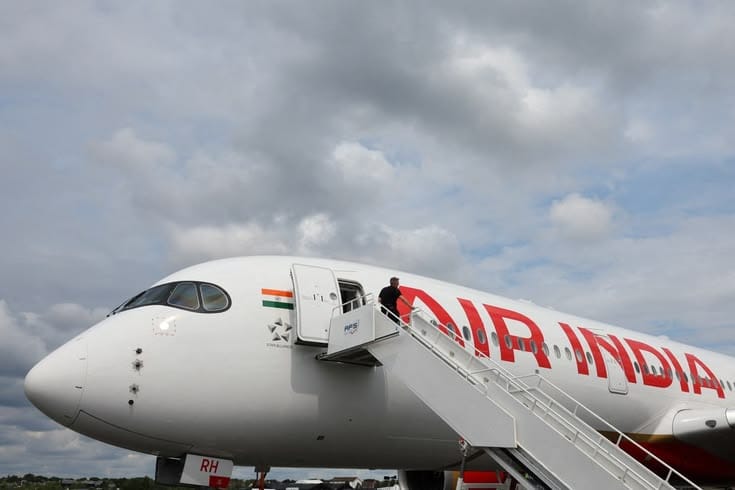
Air India flight AI2802 after making an emergency landing in Delhi following a fire indication in one of its engines.
A tense aviation incident unfolded in Delhi on Thursday evening when an Air India flight from Bengaluru landed under emergency conditions after the pilots received a fire indication from one of the engines. The aircraft, operating as AI2802, touched down safely at Delhi airport, and all passengers and crew disembarked normally, according to the airline.
This was the second Air India-related incident reported in a single day, adding to passenger concern and drawing attention to aircraft safety protocols. Earlier, another Air India flight had suffered a tailstrike during landing in Bengaluru. While both incidents ended without injuries, the sequence has made aviation safety and operational checks a major talking point. Yeh issue kaafi important hai because even when no one is hurt, such events remind passengers how quickly routine flights can turn into emergency situations.
What Happened
According to Air India, the cockpit crew on AI2802 received a fire indication from one of the engines during the aircraft’s final approach into Delhi. The airline said the indication was subsequently confirmed as true, which means the alert was not a false warning. The crew followed standard operating procedures and completed a safe landing at Delhi airport. NDTV has covered the full story.
Emergency procedures in aviation are designed precisely for this kind of situation. Once a fire indication is detected, pilots must act quickly, follow checklist protocols, and bring the aircraft down safely while coordinating with air traffic control and ground emergency teams if required. In this case, the aircraft was landed safely, and everyone on board was reported to be safe. The airline also said a full investigation will be carried out in coordination with regulatory authorities.
That safe outcome matters a lot. A fire indication on an engine is one of the most serious alerts in commercial aviation, and the fact that the pilots handled it according to procedure likely prevented escalation. In simple words, the technical problem was serious, but the crew’s response was professional and timely.
Why the Incident Happened
Air India has not yet given the exact reason for the engine fire indication. At this stage, the airline has only said that the cockpit crew received the alert and that it was later confirmed as genuine. A full investigation will now determine whether the issue was caused by a mechanical fault, sensor problem, engine malfunction, or some other technical factor.
What is known is that the alert came during final approach, when the aircraft was already close to landing. That timing can be especially stressful because the crew must make quick decisions while maintaining control and ensuring a safe descent. Even if the issue had developed earlier in the flight, the final approach is when any irregularity becomes operationally urgent.
It is also important to note that the incident happened on the same day as another Air India event in Bengaluru, where a Boeing 747 had just departed before AI2651 began its final approach, and a go-around was reportedly called due to possible wind turbulence caused by the larger aircraft’s engines. The narrow-body Airbus A321 involved in that earlier incident was grounded for inspection after the tailstrike, and its return flight to Delhi was cancelled. The coincidence of two separate incidents in one day is what makes this story especially notable.
Air India’s Statement
Air India said the crew acted exactly as they should have. The airline stated: “During the aircraft’s final approach into Delhi, the cockpit crew received a fire indication from one of the engines. The indication was subsequently confirmed as true.”
It added that “the crew followed all standard operating procedures and landed the aircraft safely at Delhi airport. All passengers and crew are safe and have disembarked normally.”
The airline also said that a full investigation into the cause of the incident will be done in coordination with regulatory authorities. That is the right step because aviation safety depends on transparent technical review after any serious warning, especially one involving an engine fire indication. In many cases, the public sees only the emergency landing, but the real work happens afterwards in maintenance checks, cockpit data analysis, and regulatory review.
Background
Aviation incidents often make headlines because passengers understand how serious they can be, even when the final outcome is safe. Modern aircraft are designed with multiple safety layers, and pilots are trained extensively to handle emergency alerts like fire indications, bird strikes, engine warnings, and landing abnormalities. What makes this case especially sensitive is that it comes amid another Air India incident on the same day.
The Bengaluru tailstrike report adds to that sense of operational concern, even though the two incidents may be unrelated. A tailstrike usually occurs when an aircraft’s tail touches the runway during landing or takeoff, often because of angle, weight, or approach conditions. In this case, the Airbus A321 was grounded for inspection, which is standard procedure after such an event. The return leg to Delhi was also cancelled, affecting flight continuity and likely inconvenience for passengers.
Together, these incidents create a broader safety narrative. They do not automatically mean a systemic fault, but they do underline how aviation is a high-precision industry where even small disruptions can have large consequences. A single day with two incidents from the same airline naturally draws public attention and raises questions that investigators will now need to answer carefully.
Timeline
Earlier in the day: Another Air India flight suffers a tailstrike during landing in Bengaluru.
During final approach in Delhi, AI2802 receives a fire indication from one engine.
Emergency response: The cockpit crew follows standard procedures and continues the landing.
After landing: The aircraft touches down safely at Delhi airport.
Post-landing: All passengers and crew disembark safely.
Next step: A full technical investigation is announced with regulatory coordination.
Why This Matters
This matters because aviation safety is one of the most closely watched areas in public transport. Even when the outcome is safe, an engine fire indication is not a small event. It affects passenger confidence, airline operations, maintenance planning, and regulatory oversight. People may not remember every routine flight, but they do remember the flights that end with emergency messages and safety alerts.
It also matters because India’s aviation sector is growing fast, with more passengers flying than ever before. As traffic increases, so does the pressure on airlines to maintain high standards across aircraft, crew training, and maintenance systems. A serious incident, even without casualties, becomes a reminder that operational reliability must stay ahead of demand. For passengers, yeh issue is important because it touches the basic trust they place in flying.
India Angle
For Indian readers, this story has a direct local relevance because it involves one of the country’s biggest airlines and two major cities, Bengaluru and Delhi. Air travel is now a normal part of life for business travelers, families, and students across India. When an airline faces back-to-back incidents in a single day, the news naturally resonates with a wider audience.
The India angle also lies in how civil aviation handles emergencies. Indian crews are trained to international standards, and the quick, safe landing in Delhi shows that emergency protocols are working as intended. At the same time, Indian passengers increasingly expect transparency, reliability, and timely communication from airlines. In Hinglish terms, yeh sirf ek flight ka issue nahi hai—yeh poore aviation system ki trust aur readiness ka matter hai.
Analysis
My view is that the most important point here is not panic but procedure. The crew’s response appears to have been correct, which is exactly what passengers want in an emergency. The bigger question is what caused the indication in the first place and whether the same day’s other incident points to routine operational stress or just coincidence. Aviation systems are built to handle individual faults, but when multiple incidents happen close together, they always trigger public scrutiny. That scrutiny is healthy because it pushes airlines and regulators to be transparent and precise. Still, the safe landing shows that the core emergency response system worked.
What Next
The next step will be a detailed inspection of the aircraft and engine systems, along with a technical review by Air India and the relevant aviation authorities. Investigators will likely examine flight data, maintenance logs, cockpit procedures, and any signs of mechanical failure.
Passengers may not hear the full findings immediately, but the airline will need to restore confidence through clear communication. If the incident is found to be maintenance-related, corrective action will follow. If it turns out to be a sensor or systems issue, the focus will shift to calibration and monitoring. Either way, the central aim now is to determine why the engine fire indication appeared and how to prevent a repeat.
Conclusion
Air India flight AI2802’s safe emergency landing in Delhi after a fire indication in one engine could have been a far more serious story. Thanks to the crew’s quick and correct response, all passengers and crew are safe, and the aircraft landed without further harm.
Still, the incident matters because it came on a day when another Air India aircraft also faced a separate problem in Bengaluru. Together, the cases put a spotlight on aircraft safety, maintenance checks, and emergency readiness. For now, the reassuring part is that the system worked and no lives were lost. The real test will be what the investigation finds next.
Written By A. Jack